Start With the Floor Activity Your Family Uses Most
For a family room with frequent floor play, a suitable resilient floor plus a manageable soft play layer is a useful first shortlist: it combines accessible everyday wiping with comfort where children sit. Where recurring pet accidents and wet outdoor traffic dominate, begin with suitable textured porcelain and accept its harder feel, while reviewing joints and traction. Wood or carpet can still win where renewal, softness, and the actual care routine are the stronger priorities. These defaults help you start shopping without promising that one material solves every family demand. Match the leading use first, then compare furniture contact, noise, pet movement, and the complete installation around that choice.
Observe a Normal Day Before Making the Shortlist
Watch where children play and where pets spend time. A favorite patch beside the sofa can have different needs from the door used after outdoor walks. Notice whether toys spread across a circulation route, whether the dog hesitates on the current surface, and where food or water is routinely handled. These observations help you identify both material requirements and arrangement changes that can make the room more practical.
Include the people responsible for cleaning. The proposed floor needs an approved routine they can actually repeat, not an ideal process that exists only during the buying conversation. Ask which current tasks feel inconvenient and which tools are regularly used. A suitable new material can help, but maintaining it will still require access, compatible methods, and realistic expectations about ordinary family use.
Think about near-term changes in the family as well. A room used mainly for crawling or block play may later include a desk, different seating, or another pet resting area. You cannot anticipate every future arrangement, but obvious planned uses should be included in the conversation. They may change the value of access, suitable accessories, or a professional repair route without requiring one material to accommodate every imaginable activity.
Separate Cleanup From Resistance to Physical Wear
A floor that wipes easily is not automatically the one that best tolerates scratches, impact, or furniture contact. Pet claws, dropped belongings, chair movement, and incoming grit create different events. Ask the supplier which documented characteristics address the events common in your household and which limits remain. Avoid treating a pet-friendly or kid-friendly description as a complete specification. Those labels become useful only when the actual product’s use, fitting, care, and warranty conditions fit the room where your family will live with it.
Review Tile for Its Whole-Room Experience
Porcelain or ceramic tile can be a practical choice in a suitable location, particularly when the selected surface and care routine fit frequent cleanup. Evaluate the exact product’s intended use, finish, and relevant traction requirements with the supplier. A glossy sample chosen for its appearance may not be the best proposal for the room’s actual conditions. Daltile’s porcelain-and-pets discussion describes reasons to consider porcelain, but the installed choice should still reflect the specific home rather than a universal endorsement of every tile finish.
Think about how the room is used at floor level. A hard surface may be easy to wipe while offering a different feel for long play sessions or a pet’s preferred resting spot. Appropriate rugs or other suitable accessories can change the experience, but they introduce their own care and compatibility needs. Count those layers in the room plan and budget rather than comparing bare tile with another material that is already assumed to include comfort accessories.
Grout and joints remain part of the maintenance discussion. Ask about the actual products and layout, including the areas around fixed furnishings and transitions. Large formats can change joint frequency without eliminating the need for appropriate preparation and fitting. Review cleaning directions for the assembly so a method suitable for the tile face is not automatically applied to every adjoining component. A family floor should have a clear care plan for the whole installation.
Compare Vinyl Products With the Household Brief
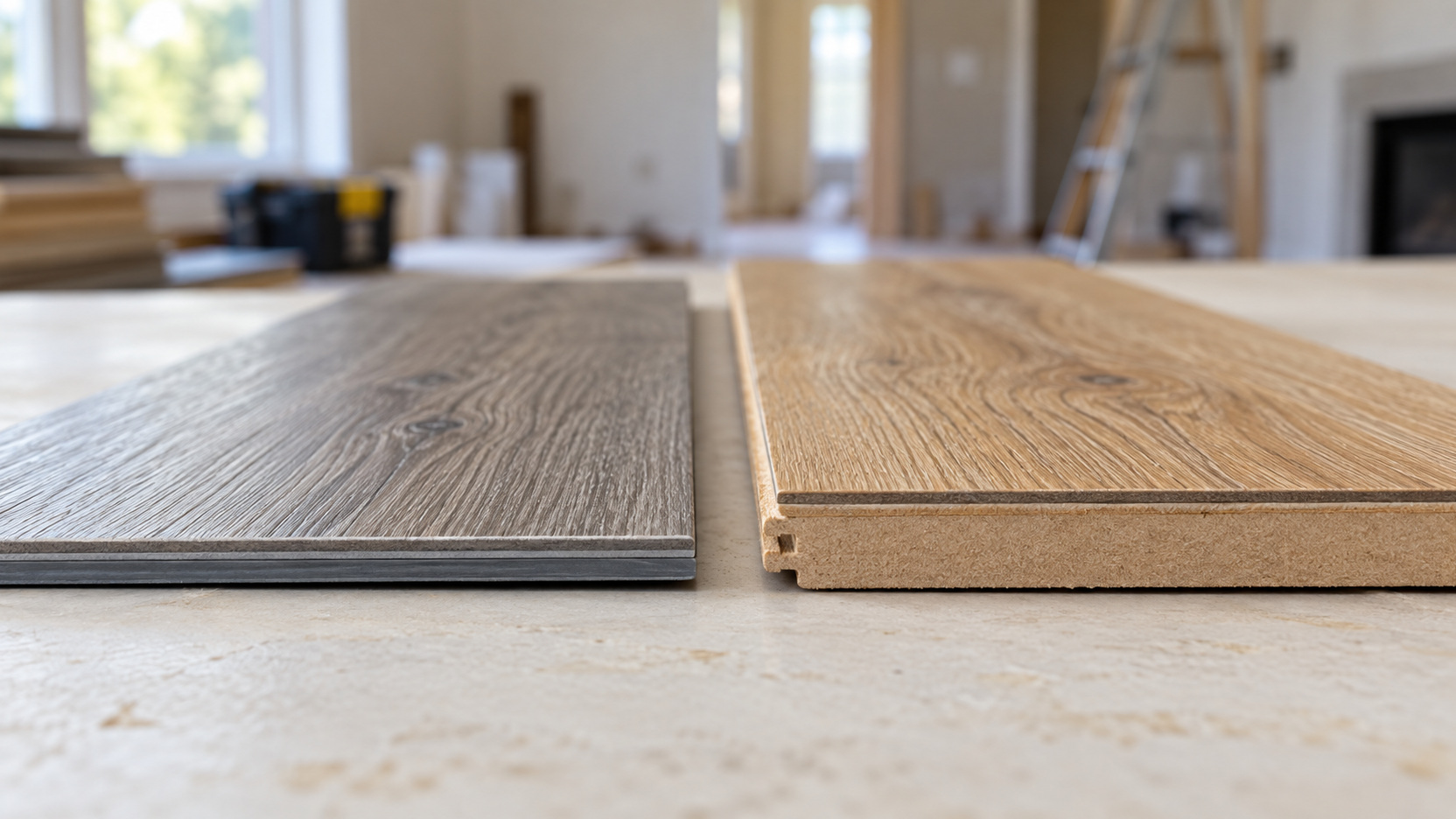
Luxury vinyl may be worth considering when the chosen product’s construction, care, and location permissions fit the room. Review documented surface performance and the installation conditions rather than assuming all vinyl products offer identical family-use benefits. Ask how furniture contact and repeated movement should be managed. A supplier should be able to connect the exact model’s information to your household events without turning its material name into an unlimited promise.
Bring a substantial sample home to review texture, sheen, and appearance under your lighting. Evaluate how the surface fits the furnished room and how the approved routine handles the debris you commonly remove. Strong embossing can look convincing while requiring deliberate care for fine particles. A visually forgiving pattern can be useful, provided you keep its effect on appearance separate from claims about preventing actual damage.
Give Laminate a Product-Specific Review
Laminate products should be compared individually rather than rejected or endorsed through a category-wide assumption. Some collections advertise defined water and pet-related features; Pergo Elements is one example. Read the current documentation for the model you are considering, including use, fitting, and coverage conditions. An advertised benefit from another product does not establish what your proposed floor will do.
Check the room’s conditions with the installer before the decorative choice is finalized. The Pergo FAQ directs buyers to product-specific wet-area guidance because installation methods can differ. Ask which instructions apply in your room and keep those answers with the order. The family-use comparison should begin with an appropriate permitted installation rather than relying on a reassuring claim after the floor has already been chosen.
Relate surface-performance information to actual behavior. Children may move chairs, pets may bring grit inside, and a busy route can concentrate contact near one doorway. Ask which characteristics address those events and what suitable protection remains necessary. This gives you a more dependable basis for comparing laminate with another candidate than assuming either material is automatically family-proof.
Decide Whether Wood Care Fits Family Habits
Wood can suit a family home when the selected product, finish, and maintenance responsibilities fit the household. Discuss care, furniture protection, and any appropriate professional renewal options before purchase. The National Wood Flooring Association’s guidance advises against wet and steam mopping wood floors, which is relevant if abundant-water cleaning is central to your routine. Confirm what applies to the exact floor rather than assuming that every wood product has identical needs or future service options. If the required habits feel realistic and the appearance appeals to you, wood can remain on the shortlist; if those habits conflict with everyday use, that mismatch deserves attention now.
Give Floor Play a Manageable Soft Zone
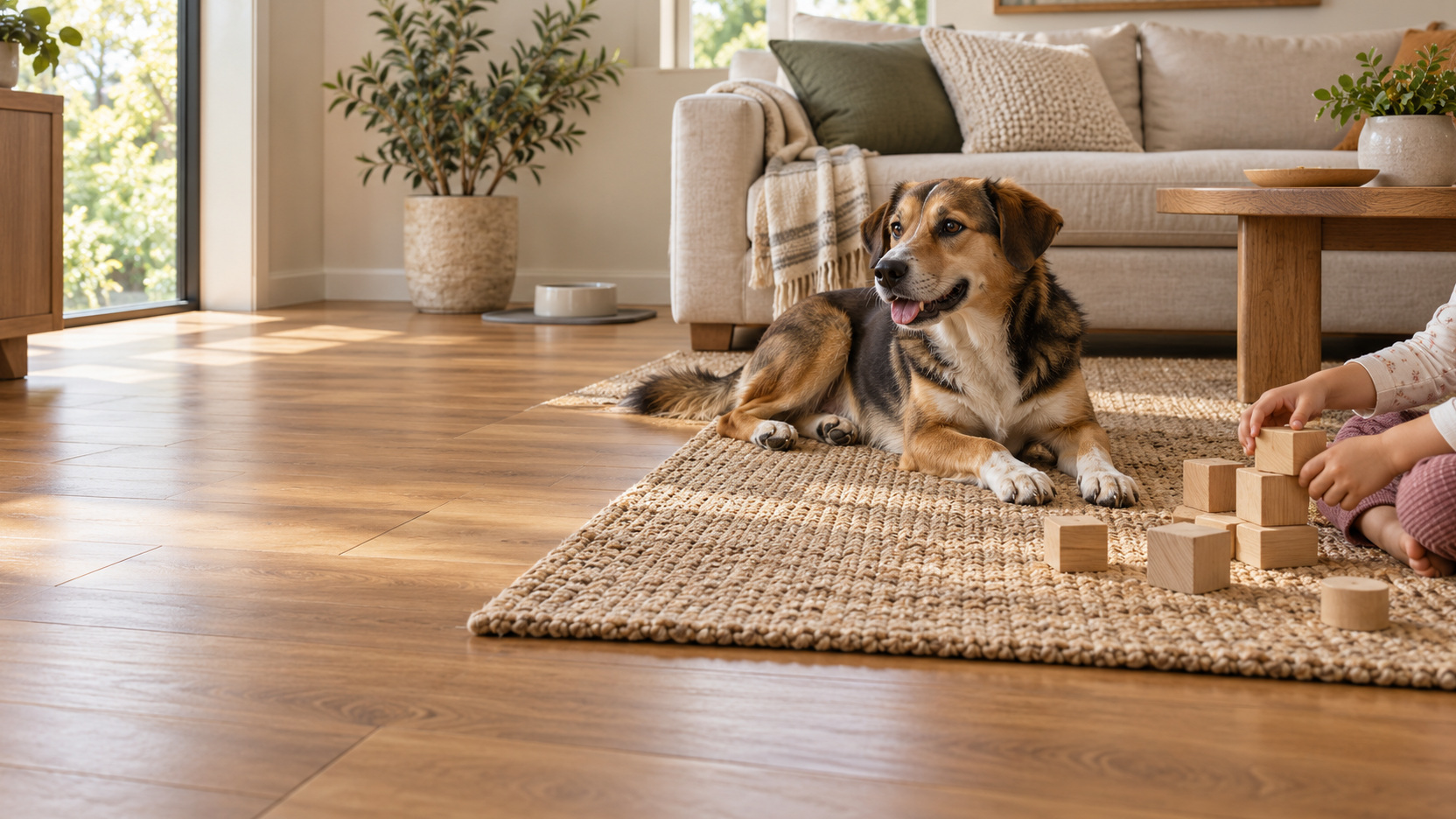
Picture a child building on the floor while a dog crosses the room from the garden. A washable play rug over an approved hard floor can separate the soft activity area from the messy route, provided the rug remains secure and its pad suits the floor. Choose a size you can actually handle when wet and check the stated washing and drying process before calling the arrangement convenient. A huge washable label is little help if the household cannot lift, wash, or dry the rug as directed. Keep the main doorway path clear rather than spreading the comfort layer over every movement line.
For a household with settled pets and long floor-reading sessions, installed carpet or a substantial rug may offer the comfort the room needs. Compare that benefit with the actual vacuuming and spill routine, including access beneath movable furnishings. The Carpet and Rug Institute’s maintenance information provides a starting point for planning ordinary care. The choice should follow what people do on the floor, not an assumption that all softness is incompatible with family use. An owner who enjoys and maintains the layer can make a more coherent decision than one who chooses hard flooring yet immediately covers it with an unmanageable rug.
Keep the pet feeding area and the child’s soft play area from sharing the same cleanup problem where the layout permits. A reachable water-bowl location on the approved hard surface can make small spills easier to address without moving a large rug. The rug still needs its own care, and the floor beneath must be checked and dried appropriately after an accident. This layout example gives each layer a defined purpose: comfort for sitting, an accessible route for traffic, and a reachable spill zone. It turns the hard-floor-plus-rug compromise into a workable room arrangement rather than two overlapping maintenance promises.
Notice Pet Movement Without Diagnosing It Yourself
Observe how your pet uses the room rather than relying solely on your impression of the sample. A surface that looks attractive may provide a different experience when the animal turns, approaches a favorite resting area, or enters after being outdoors. Discuss location-appropriate finish and accessories with the flooring professional. If a pet repeatedly struggles or changes its movement, seek suitable veterinary advice rather than assuming the flooring explains every cause. The design goal is to support comfortable ordinary access while keeping health decisions with the relevant professional and product suitability with the installer.
Plan Food, Water, and Outdoor Access
Pet bowls and frequently used entrances can create repeated cleanup zones. Choose their locations with access and floor-care guidance in mind, and check any tray or mat for compatibility. A protective layer still needs attention beneath it rather than being left indefinitely as a substitute for cleaning. Keep the area straightforward enough to inspect and maintain during the normal household routine.
At the door, manage incoming debris through a suitable maintained mat and practical storage. Check backing restrictions and clearance, and avoid adding an obstacle where children or pets move through the room. Shoe and bag destinations should support the route rather than force people into a narrow strip. A convenient entry routine can help any appropriate floor choice by reducing the amount of grit carried farther into the home.
Keep Play and Furniture Movement in the Layout
Children need usable space for ordinary activities without every game taking over the main circulation route. Identify a practical area and nearby storage so floor use can change through the day. A rug can define that space when its placement and compatibility are appropriate. The room arrangement should make tidying and cleaning manageable rather than depending on moving heavy furnishings every evening.
Check the flooring maker’s guidance for furniture protection and movement. Dining chairs, toy storage, and other frequently moved pieces should be included in that review. Do not assume that choosing a tougher-sounding material removes the need for suitable pads or careful handling. Repeated contact is often predictable, which makes it worth planning before the installation becomes part of daily life.
Listen to household complaints about the existing arrangement. A child may avoid a cramped play area while a pet repeatedly blocks the only route beside the sofa. Some problems can be improved by placement rather than by material alone. Use those observations to refine the room before deciding which flooring best supports the resulting layout. That produces a more honest comparison than expecting a replacement surface to solve circulation, storage, comfort, and wear without any other change.
Choose the Complete Family-Room Proposal
Compare installed scopes that include preparation, fitting, transitions, and necessary accessories. Add any planned rugs or protective layers and their care needs to the ownership picture. Ask how a damaged area would be assessed and what service or replacement options apply to the exact system. The practical choice should be understandable as a complete proposal rather than a material sample with several unresolved responsibilities.
Select the floor whose documented benefits match your family’s real activities and whose care everyone can keep. Save product identification, installation records, instructions, and service contacts together. Review the arrangement once the room is in use so obstacles or recurring messes can be addressed through appropriate routines. A successful family floor supports children, pets, and adults sharing the same space while allowing ordinary household life to continue with manageable care and realistic expectations.