Buy for the Route, Not Just the Room
High-traffic flooring earns its keep along the routes people use repeatedly: the entry to the kitchen, the hall outside bedrooms, or the passage between the sofa and the back door. Those routes can place concentrated wear on a small part of a large room. Start by tracing them before comparing materials. The right choice needs to suit the location, tolerate the expected use, and remain practical to clean and repair. A durable-looking sample is only one part of that decision. Surface finish, installation, incoming grit, furniture movement, and the household’s maintenance habits help determine how well the finished floor will serve a busy home.
Locate Concentrated Traffic Before Shopping
Walk through an ordinary day and identify where people repeatedly turn, pause, or carry belongings. The area beside a favorite kitchen entrance may experience more contact than the rest of the room combined. A hallway outside a bathroom can have different exposure from a corridor leading to bedrooms. Mark these routes on a simple plan so the buying conversation reflects actual use instead of treating every square foot as equally busy.
Include the way dirt enters the house. A front entry used occasionally by guests is a different brief from the door used after gardening, dog walks, and school pickup. Consider where shoes are removed, whether bags interrupt the route, and how often debris gets carried farther inside. These observations identify both the demands on the floor and changes in the surrounding arrangement that could help the material you select.
Break Durability Into Useful Questions
Durability includes several different kinds of performance, including surface wear, scratches, dents, response to moisture, and the possibility of repair. A product that performs well in one area is not automatically the strongest in every other area. Ask which documented characteristics address your particular traffic route rather than accepting a single adjective such as tough. A busy entrance may emphasize grit removal and location suitability, while a dining route may add chair movement and concentrated contact. Decide which demands are most important before comparing products so the recommendation remains tied to your home rather than a universal ranking that overlooks how the floor will be used.
Evaluate Tile With Its Installation Included
Porcelain and ceramic tile can be practical options for suitable busy locations, but the exact tile and its installed assembly need review. Ask about suitability for the proposed use, surface texture, and any relevant traction requirements. A tile chosen mainly for a glossy showroom appearance may create a different experience in a household entrance. Review the manufacturer’s product information and have the installer explain the planned preparation and installation rather than assuming a hard face is enough.
Grout and joints are part of ownership. Their care needs and appearance can differ from the tile itself, and the layout can determine how many narrow corners you must reach. Large tile sizes may change joint frequency without removing the need for appropriate preparation or cutting. Daltile’s care guidance helps frame tile and joint maintenance as part of the finished floor’s routine. Use the actual products’ directions when deciding which tools and cleaners belong in your home.
Discuss localized damage and access before installation. A suitable spare tile can be useful, but replacement also depends on the installation, the affected area, and professional assessment. Ask how many matching pieces should be retained and where you can store them properly. A repair plan becomes more realistic when it names the actual product and installation instead of promising that any damaged tile can always be swapped effortlessly.
Compare Resilient Flooring as Specific Products
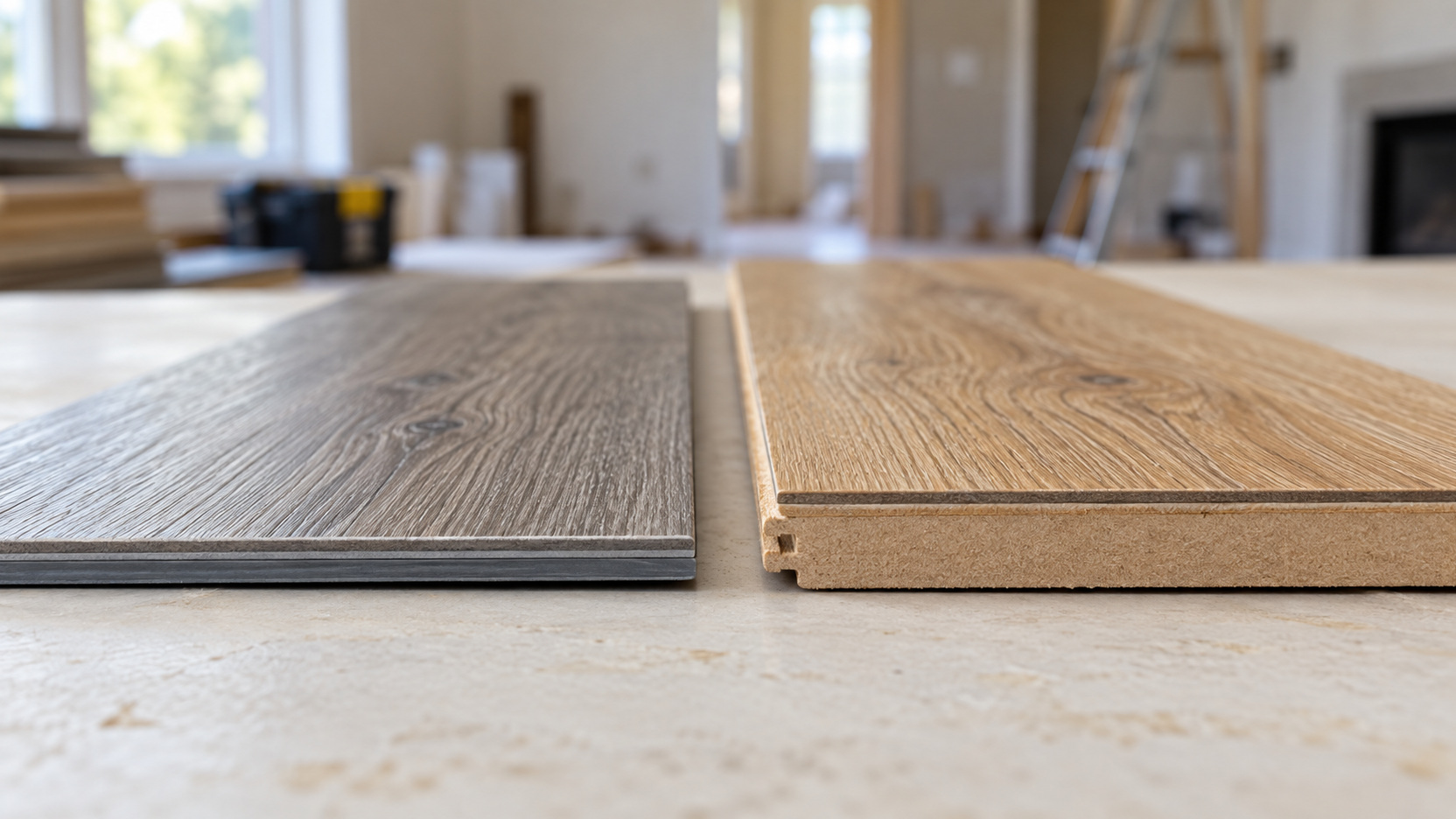
Luxury vinyl products vary in construction, installation method, wear layer, finish, and documented use conditions. Compare the proposed product rather than assuming everything called luxury vinyl has the same traffic performance. Request its residential use information and care requirements, and ask how the selected installation suits the existing substrate. Product specifications become useful when they are connected to the route and conditions in your house, not when a single figure is treated as a complete prediction of ownership.
Look at texture and edge detail as well as the printed design. A strongly embossed surface may feel visually convincing but require more deliberate removal of fine debris. Review furniture-protection directions and any limits affecting rolling or concentrated contact. Consider how a damaged area could be addressed under the proposed installation method. An attractive plank that is easy to wipe still needs a realistic plan for movement, care, and service in a busy location.
Read Laminate Claims in Their Product Context
Laminate may deserve a place on a shortlist when its documented surface performance and location permissions fit the room. Check the exact product’s care directions and water-related conditions rather than transferring the strongest claim from one collection to another. The Pergo FAQ illustrates why use and installation conditions need attention alongside material labels. Keep the selected model’s documents with the order so the advice can be checked later against the floor that was actually installed.
A named rating helps when its meaning is stated. In its laminate documentation, Pergo associates AC4 with class 32 normal commercial use and AC5 with class 33 heavy commercial use. For a busy domestic route, that can support a conversation about documented surface wear rather than accepting an undefined heavy-duty label. It does not certify every scratch, dropped object, or prolonged moisture event, and an AC rating is not a vinyl wear-layer measurement. Ask which exact product carries the stated classification and whether its location and installation instructions fit your route. Compare those separate answers before treating the higher number as a complete durability verdict.
Surface appearance also deserves a practical test. Bring the proposed finish into the home’s lighting and inspect it at the angles from which you normally see the route. Dark, shiny, or very uniform designs can reveal dust and marks differently from varied matte finishes. Those visible differences affect satisfaction between cleaning sessions even when the materials have similar care requirements. Judge the appearance you will live with instead of assuming that hiding a mark and preventing it are the same benefit.
Consider Wood Through Its Finish and Service Options
Wood flooring offers choices in construction, finish, and long-term service that need product-specific discussion. Ask how the proposed floor can be maintained and whether any later refinishing or repair is suitable for that product and installation. Do not assume every wood floor has the same capacity for renewal. The National Wood Flooring Association’s maintenance guidance also makes clear why routine care methods matter, including avoiding wet and steam mopping wood floors. A household willing to follow the relevant process may find wood practical; another may prefer a surface whose approved routine better matches its habits. Compare those responsibilities before selecting the appearance.
Decide Where Soft Flooring Still Makes Sense
Carpet can suit comfort goals in some busy living areas, but its care and repair profile differ from hard flooring. Traffic paths can create concentrated maintenance demands even when most of the room remains lightly used. Review the exact carpet’s suitability, vacuuming guidance, cleaning requirements, and warranty conditions. The Carpet and Rug Institute’s maintenance information provides a useful framework for understanding routine care rather than deciding on softness alone.
A hard floor with a rug is another arrangement to consider, but it creates two materials to maintain. Check how the rug and pad interact with the floor, whether the placement obstructs the route, and how readily the rug can be moved for cleaning. The combination should provide a practical comfort benefit while preserving appropriate use and access. Count rug cleaning in the ownership routine instead of treating it as a maintenance-free decoration over a durable foundation.
Protect the Entry Without Creating a New Obstacle
An entrance mat and sensible shoe storage can help control incoming debris. Choose accessories compatible with the floor and keep them maintained, because a heavily loaded mat no longer offers the same practical benefit. Check backing restrictions and the door’s clearance before adding layers at the entrance. The arrangement should allow people to enter comfortably and should remain straightforward to lift or move when the area needs cleaning.
Storage belongs beside the route rather than across it. A bench or shoe unit may simplify routines if it fits the space and leaves usable circulation. A cramped arrangement can push traffic into an awkward narrow strip or require repeated shuffling of objects before cleaning. Measure the actual pieces and test the proposed placement with the door open. Protecting the floor works best when the entrance arrangement is easy enough for the household to use consistently.
Furniture movement needs its own plan farther into the home. Check the floor manufacturer’s guidance for pads, lifting, and any other protection applicable to the pieces you own. A busy route beside dining chairs can involve different contact from people simply walking through a hall. Include these repeated actions in the traffic brief so you address the cause rather than hoping a new finish will absorb every consequence of the same movement habits.
Put Transitions and Preparation in the Quote
Compare complete installed proposals that include substrate work, transitions, movement details, and any other required preparation. A low material price does not necessarily produce the lowest suitable project total. Ask how changes in height will be handled where the new floor meets adjoining rooms, and how the installation will accommodate normal access and maintenance. These details can affect satisfaction every day, while an incomplete quote may postpone the decision until work is already underway. Request a clearly defined scope for each shortlisted product so you can compare practical finished routes rather than unlike bundles of materials and omitted labor.
Choose Differently for Three Busy Routes
For a frequently wet side entrance, begin with suitable porcelain tile and examine traction, grout layout, and the transition into the next room. The hard feel may be acceptable along a short circulation route, whereas recurring wet grit makes care and installation more important than softness. An owner who prefers resilient flooring can still compare a location-approved product, but should resolve perimeter and seam conditions explicitly. Keep grit-control equipment reachable so the chosen floor is not asked to do the job of the entrance mat.
For a dry family-room path crossed repeatedly in ordinary shoes, a documented wear-resistant laminate can be a sensible first shortlist. Its rating helps address repeated surface use, while furniture pads and grit removal remain necessary. For a dining route, shift attention toward chair contact and localized repair: a floor that handles footsteps well can still need protection beneath repeatedly moved legs. If resilient flooring supplies the comfort you want there, examine the manufacturer’s indentation and furniture-protection instructions instead of assuming that softness is a free benefit. These three routes create three different priorities, even within one home.
Choose the specific proposal that answers the route’s leading demand and leaves a routine you will keep. Retain spare-material information, installation records, and service contacts so a localized problem can be addressed without starting the research again. Also verify transitions and doors in the complete quote; a durable open floor is not the whole route. Revisit grit collection and chair contact after normal use begins, following the selected care guidance. The result should be a floor chosen for wet entry cleanup, repeated dry movement, or furniture contact with a clear reason for that choice.