Choose a Tabletop for Meals and Everything Between Them
A dining table can host dinner, homework, board games, parcels, and the occasional project that outgrows a desk. The best scratch-resistant material depends on which of those jobs it actually performs and how you want it to look after ordinary use. A surface that shrugs off many contacts may be less easy to restore, while a surface that accepts some working marks may have a useful professional renewal route. Compare the tabletop, finish, base, and protection routine together. That gives you a table you can comfortably use rather than a purchase judged only by its appearance before the first place setting arrives.
Define the Activities Beyond Dining
List the objects that regularly land on the table. Plates, laptop feet, craft supplies, game pieces, and bags can create quite different contact. You may be able to separate messy projects with a suitable protective work surface, which changes the demands on the table beneath it. Do not expect a dining finish to act as a cutting board or workshop bench simply because the furniture feels substantial.
Think about how the table is cleared between uses. A household that moves everything onto a tray has a different contact pattern from one that slides objects across the top. Notice where people put serving dishes and whether placemats are conveniently stored. These routines provide a more useful buying brief than a broad request for the toughest table available.
Include your preference for aging. Some owners enjoy the changing character of a wood surface; others find a small mark distracting on a uniform polished finish. Neither preference is wrong, but it should influence the shortlist. Choose a material whose ordinary appearance and service options make sense for the way you want the room to feel after years of use.
Separate the Surface Finish From the Supporting Material
The material description does not always describe the surface that receives contact. A wood tabletop may carry a finish with its own care requirements, while a veneered or laminated top combines layers that should be identified separately. Ask what the actual exposed surface is and how it should be maintained. A heavy base, thick edge, or convincing wood pattern cannot establish the tabletop’s scratch behavior by itself. The practical comparison should name the construction and finish, then connect those details to the activities in your brief. This avoids mistaking the table’s overall sturdiness for protection against every mark across its top.
Consider Solid Wood Through Species, Finish, and Renewal
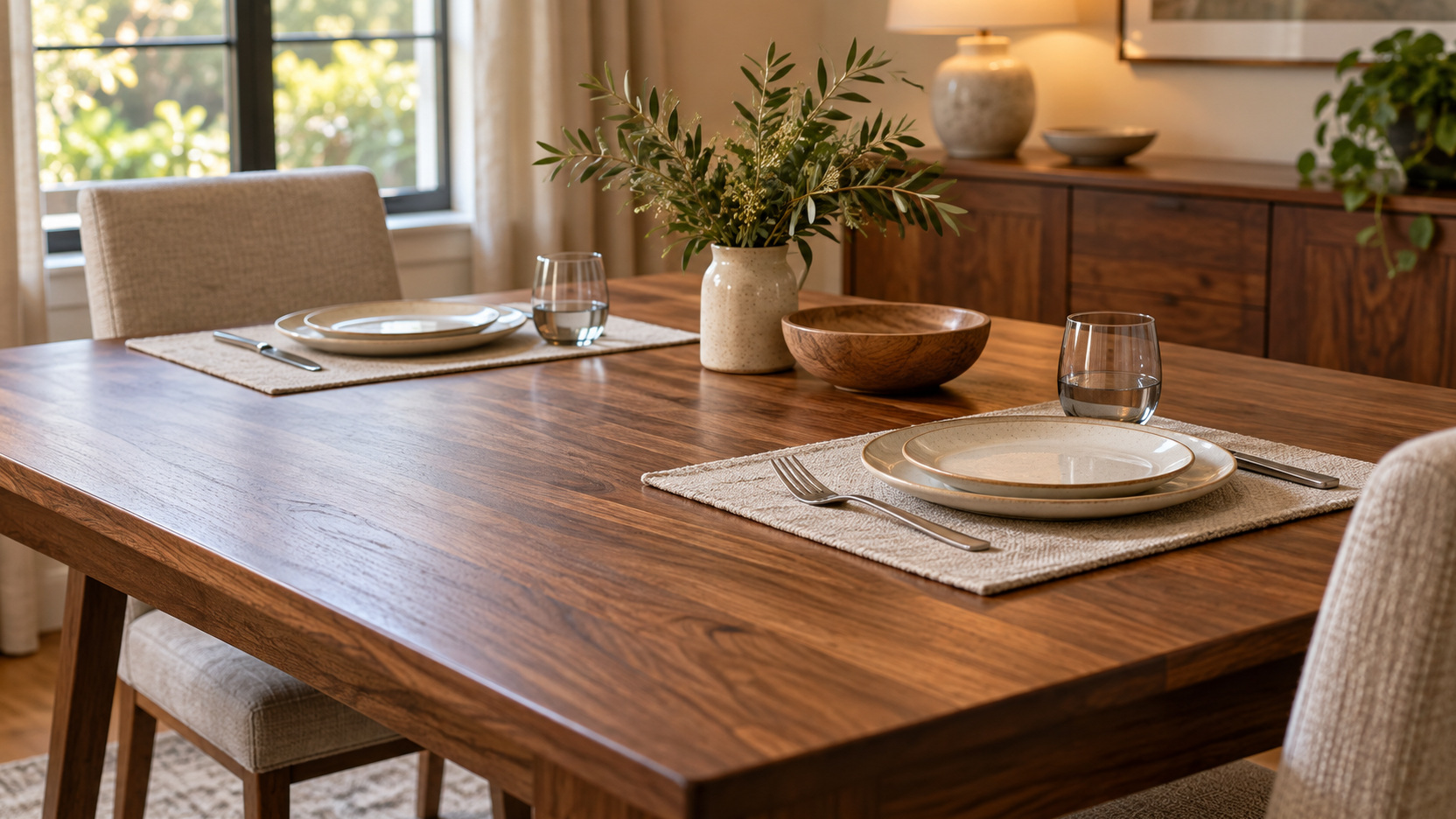
Solid wood offers visual warmth and potentially useful service options, but it should not be purchased with a promise that no working mark will appear. Species and finish affect ownership, and the exact table’s directions should govern cleaning and protection. IKEA’s dining-material guide distinguishes wood types and other tabletop constructions. Use such distinctions as a starting point for questions about the actual product instead of treating every wood table as equivalent.
Ask whether professional refinishing or repair is appropriate for the selected construction and what it might involve. A renewable material can still require work, matching, and disruption. Some owners may value that route more than maximum initial resistance, especially when a table is intended to remain in the home for a long time. Make the tradeoff explicit so an ordinary mark does not feel like evidence that the purchase failed its purpose.
Evaluate Veneer Without Assuming It Is Disposable
Veneer provides a real wood surface over a supporting construction, and quality should be judged through the complete table rather than the label alone. Inspect edges, joints, and finish consistency, and ask which care applies. A well-chosen veneered table can suit everyday dining without having the same restoration capacity as every solid-wood alternative. Those differences deserve explanation before you assume either category is automatically better.
Ask about localized damage at the edge as well as across the face. The response may differ depending on the thickness and construction of the surface layer. Do not plan aggressive sanding without product-specific professional advice. A useful service discussion describes what can be assessed or repaired on this table, who can do it, and what visual outcome is realistic. That is more informative than a vague assurance that all wood furniture is easily restored.
Pattern and finish selection still matter. A dramatic grain can be attractive while making a touch-up difficult to blend, and a very uniform finish can expose small changes in reflection. View the top at a meaningful scale under light similar to the dining room. Think about how it will look with plates and chairs in place instead of comparing only an empty close-up photograph.
Give Laminate a Fair Product-Specific Comparison
Laminate can offer a practical tabletop where the identified surface, supporting construction, and care routine fit the household. Review the product’s documentation rather than transferring claims from kitchen counters or a different furniture collection. Look at edge treatment and the way the table is assembled, since those details affect the complete ownership experience. A convincing printed pattern should be judged as a design benefit, not as proof that the table behaves like the material it resembles.
Ask what happens if the exposed surface is damaged. The repair path may differ from a wood finish’s professional renewal, which makes prevention and realistic expectations important. Compare the actual total price with that service picture. A budget-conscious table can be a good choice when its everyday use and limits are clear, but it should not be sold to yourself through expectations borrowed from another construction.
Put Documented Ceramic or Sintered Tops First for Hard-Face Resistance
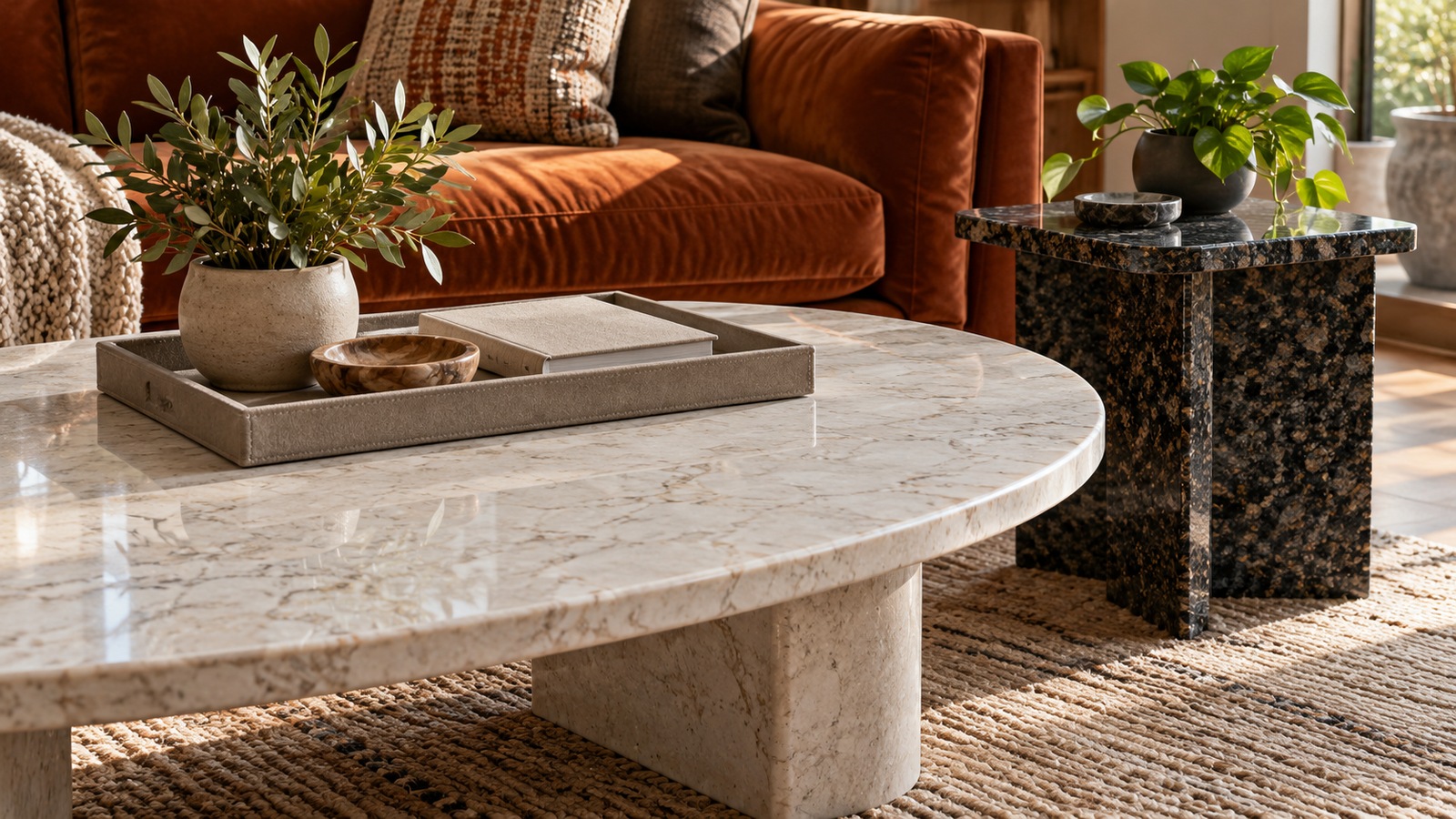
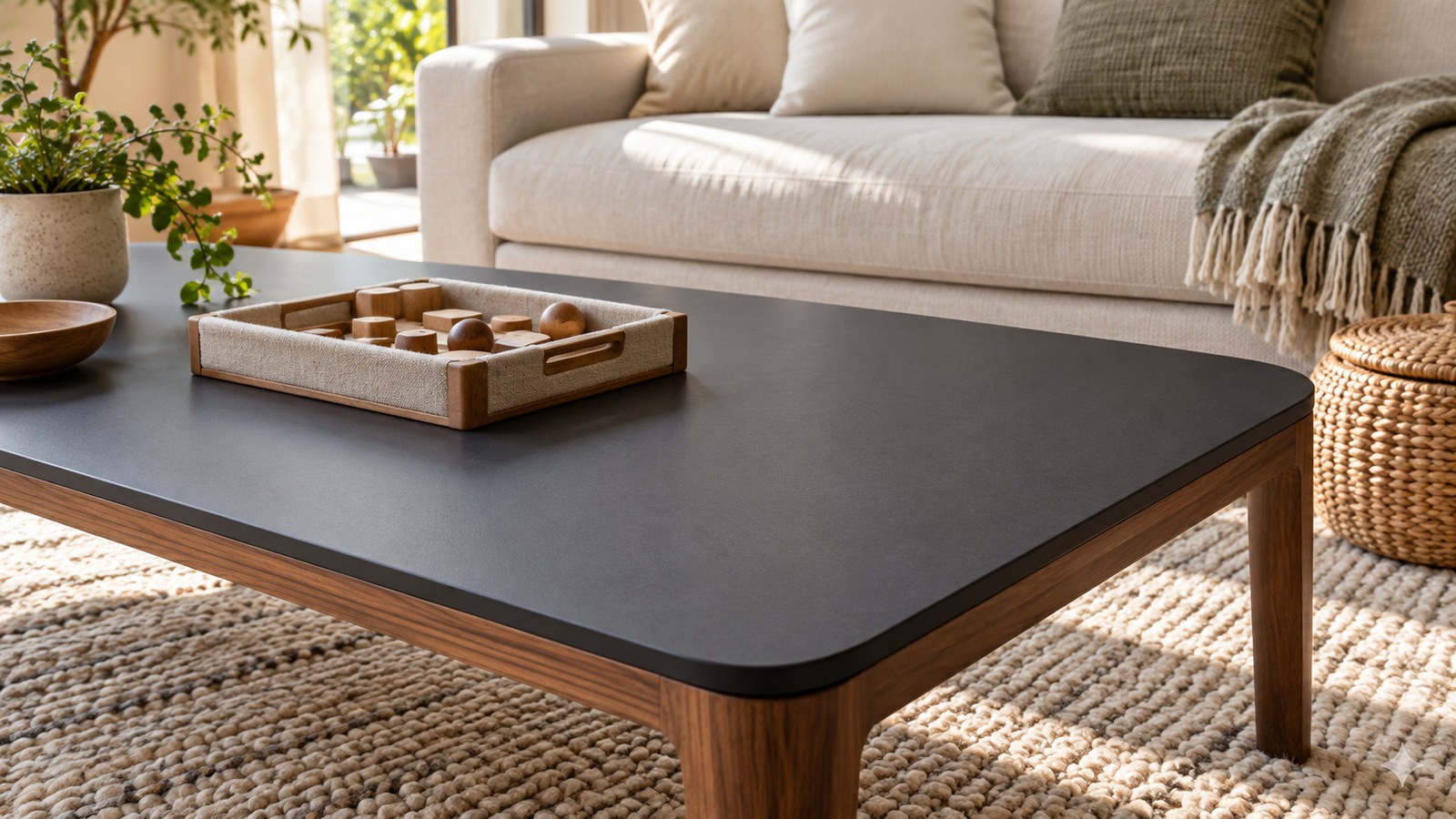
If resisting everyday face scratches is the leading priority, start with a table whose ceramic composite or sintered top has an explicit scratch-resistance description. Room & Board’s tabletop guide describes those characteristics for its identified ceramic and stone-composite options. The same maker’s tile care page says that its tile tabletop is not scratch resistant. That difference is useful: a broad ceramic label cannot transfer the best claim to every tiled table. Match the offered construction to its own guide before treating a hard-looking face as the answer.
For warmth and an available renewal route, a suitable solid-wood table can be a better first choice even if ordinary working marks are accepted. Its actual finish and future repair scope matter more than the idea that all wood can be sanded indefinitely. Laminate can make sense where price and accessible wiping drive the purchase, but ask how damage to the decorative face would be handled rather than assuming that it renews like solid wood. Glass and metal deserve consideration mainly when their visual character and visible use marks suit the room. These are different ownership priorities, not one unsupported scratch-proof ranking.
Compare the hard top’s edges, base connection, and practical delivery as part of that shortlist. A resistant open face does not answer how the whole table handles movement, an extended configuration, or an exposed edge. View the design at full scale under your dining light so an impressive surface sample does not overpower the room. If meals share the table with abrasive craft work, provide a separate work cover regardless of the winner. You can then choose a documented hard face or a renewable warm surface with a clear reason and an appropriate use boundary.
Consider Glass and Metal With Realistic Appearance Expectations
Glass and metal can provide distinctive dining-table looks, but visible working marks and care deserve close attention. Ask for the precise product specifications and instructions rather than assuming that a smooth or industrial-looking surface cannot be marked. Review edge details, approved cleaning, and the suitability of the complete table for your household. A material’s visual character may be a reason to choose it when the associated routine feels manageable.
Think about how fingerprints, reflections, or fine marks will appear under the dining light. These can affect satisfaction even when the table remains functional. Avoid expecting a finish you admire in a staged photograph to retain the same appearance with no attention between meals. Compare actual care and service options, and choose only if you are comfortable with the material’s ordinary lived-in look.
Make Protection Convenient Enough to Use
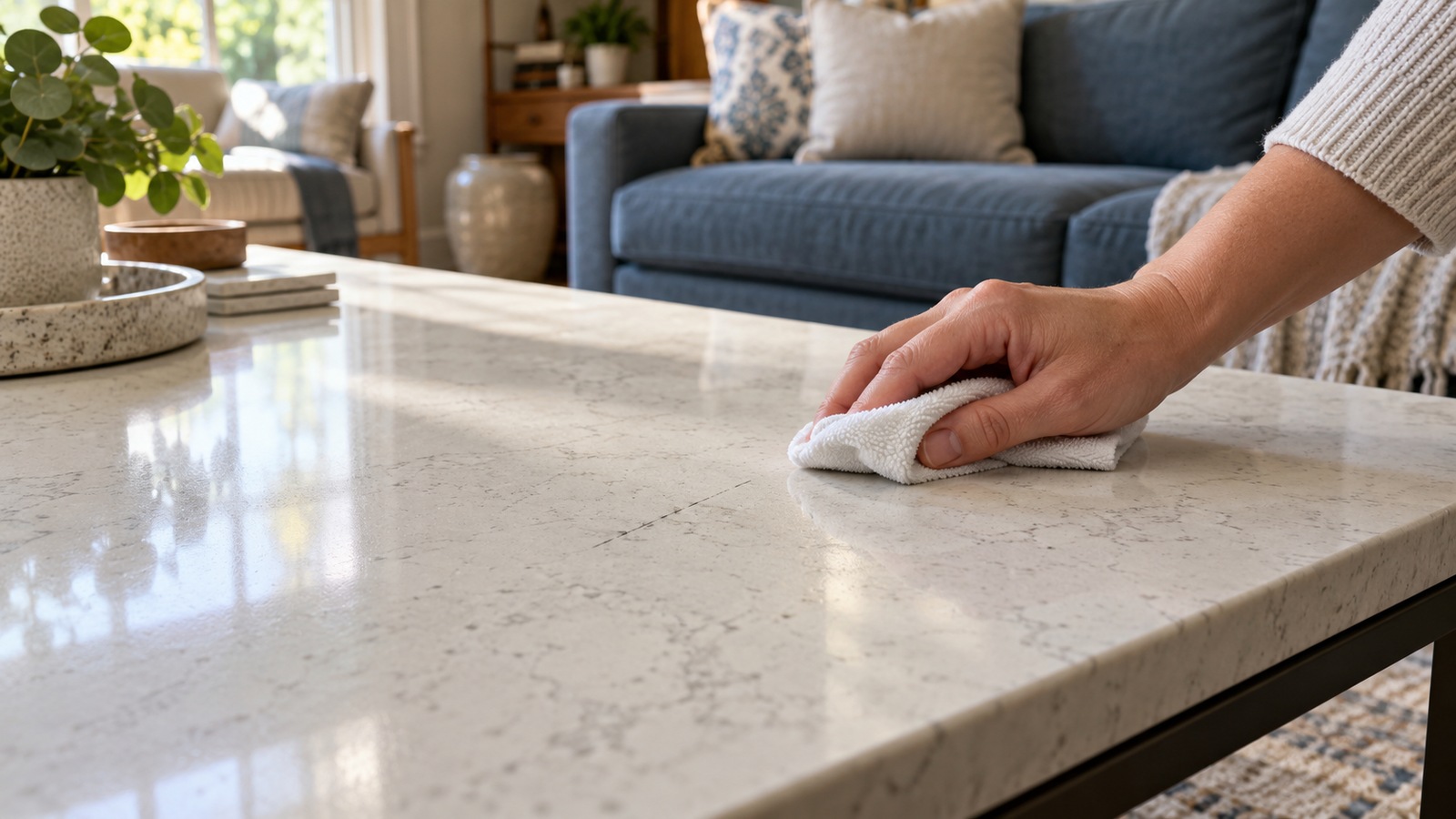
Place settings can include suitable placemats and coasters when the table’s guidance recommends them. Check material compatibility and clean the accessories appropriately, including their contact surfaces. A protective layer should not simply conceal crumbs or moisture against the tabletop. Store it near the dining area so setting the table does not become an elaborate task.
For homework or projects, provide a work layer suitable for the activity and the table. A small writing pad may address one job while a more substantial approved cover serves another. Keep the layer practical to set up, clear, and store. This allows the dining table to perform multiple functions without assuming that its finish was designed for every tool or substance used elsewhere in the home.
Protection also depends on movement habits. Lift or reposition objects as directed rather than repeatedly dragging them across the top. Explain the important routine to household members and occasional helpers in ordinary language. A few convenient habits can support the chosen surface without turning the dining room into a space people are reluctant to use.
Examine the Table Beyond Its Top
A scratch-resistant tabletop does not compensate for an unstable base, poor assembly, or a shape that makes seating awkward. Sit at the actual configuration when possible and check leg placement, apron clearance, and the way an extension system operates. Follow the maker’s assembly and use directions rather than performing improvised stress tests. The furniture should feel suitable for ordinary meals in its intended arrangement. Include access around chairs and the route through the room, because cramped circulation can produce repeated contact at exposed edges. A complete table purchase should make dining comfortable while supporting a manageable surface-care routine.
Choose the Table Whose Ownership Makes Sense
Compare the finalists using the same list of activities, desired appearance, protection habits, and service expectations. Solid wood may appeal through warmth and an appropriate renewal route. Veneer or laminate may provide another practical balance of construction, finish, and price. A documented ceramic or sintered option can suit a priority for certain surface benefits, while glass or metal may fit a specific look and care preference. None needs to win every conceivable scratch test to serve a dining room well.
Read the care and warranty information before ordering and keep it with the exact table identification. Ask what support is available if a mark or construction problem develops. Include delivery, fitting, extension pieces, and any planned accessories in the total cost comparison. This gives you a more accurate view of practical value than choosing the material that sounds strongest while leaving the rest of the purchase unresolved.
Finally, choose a table you can confidently use for the household’s actual activities. Set realistic boundaries around projects that need a separate protective surface and keep the recommended routine convenient. The successful purchase will support meals and shared time while allowing ordinary signs of life to be managed appropriately. That is a more lasting benefit than an unrealistic expectation that every dining material can remain permanently flawless without care.
For example, a family using the table for meals and frequent paper projects may prefer a documented ceramic-composite top, with a work cover for the messier activities and the maker’s stated protection for dining. A household that values a warm hand-feel and accepts repairable signs of use may instead choose a solid-wood model with a confirmed refinishing route. Compare the actual chair positions and apron access before making either decision final. If the wood table seats everyone comfortably while the hard-top design crowds knees, the surface advantage alone should not win. A scratch-conscious choice still has to work as a shared table.