Choose a Tabletop for the Life Happening Around the Sofa
The best scratch-resistant table surface for a busy family room depends on what the table does between tidy photographs. A coffee table may hold a board game, ceramic mugs, a laptop, and a serving tray in the same afternoon; an end table might carry a lamp that rarely moves. For resistance to everyday abrasion, identified engineered quartz, suitable granite, and documented high-performance ceramic or ultracompact surfaces deserve attention. Laminate and finished wood can also be sensible furniture choices when price, weight, repair, and appearance matter more than maximizing surface hardness. Choose the complete table, including its finish, edges, base, and care, rather than assuming a reassuring material name makes every household contact harmless.
Follow an Ordinary Afternoon Across the Table
Start with the objects people place on the surface. A game box sliding toward a child, the rough underside of a decorative bowl, and a laptop moved aside for snacks create different contact from a remote resting beside the sofa. Notice repeated actions rather than building the purchase around one unlikely accident. The busiest patch may be the edge nearest the preferred seat, where objects arrive and leave throughout an evening.
Consider how the table changes roles. If children draw there, a removable activity mat may be more useful than buying a surface that encourages drawing directly on the finish. If the table mainly holds books and drinks, the priority may be unobtrusive coasters and enough clear space to lift objects. A clear use brief helps a furniture seller explain the relevant product instead of offering an unsupported promise of durability.
Separate Scratches From Other Signs of Wear
A scratch is not the same as a dent, stain, chipped corner, or change in gloss. Wood can receive damage to its protective coating even when the underlying timber remains intact. A stone face can resist abrasion while its edge still needs considerate handling. Ask about the problem that concerns you rather than treating every visible mark as proof that the material failed in one way.
Appearance matters too. A line might be less noticeable within a varied pattern than on a uniform dark face, but hiding it does not mean the surface prevented it. View the proposed finish in sideways daylight and under familiar lamps. Those conditions are closer to the view from the sofa than a brightly lit product thumbnail.
Keep a realistic standard for a table that is used daily. Some households want a pristine-looking centerpiece; others enjoy wood that gradually acquires character. Neither preference is wrong, but they lead to different purchases. Decide whether your main goal is resisting the first mark, tolerating visible aging, or having an understandable repair route.
Shortlist Engineered Quartz for a Hard Mineral Surface
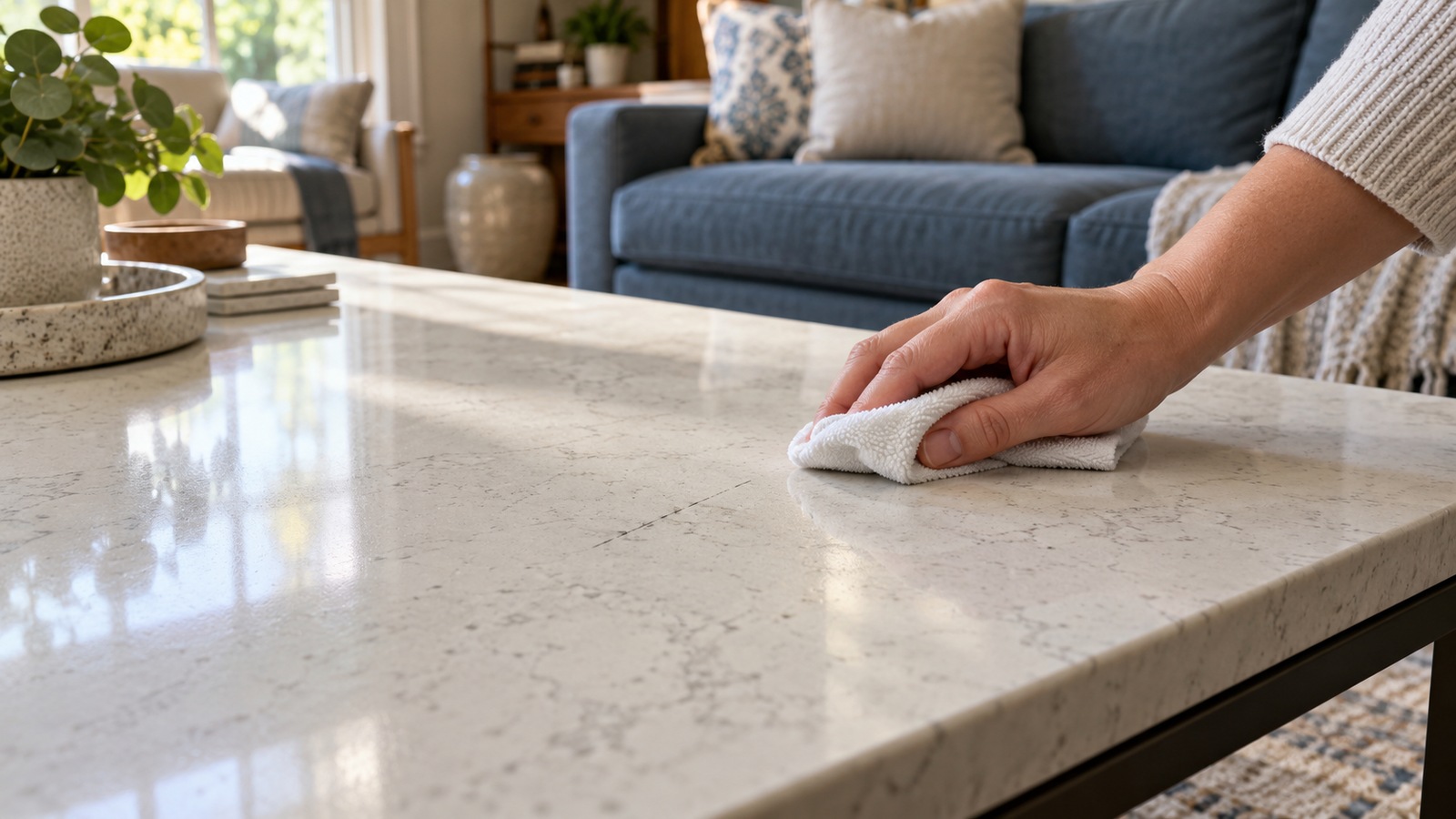
Engineered quartz is worth investigating when you want a stone-like table face with an identified manufactured design. Cambria describes its quartz as scratch resistant while distinguishing that from scratch-proof. That is a product claim, not permission to assign identical performance to every quartz-branded coffee table. Obtain the brand, finish, and furniture maker’s instructions for the actual top, including its supporting base and permitted care.
Consider Granite as a Particular Stone, Not One Uniform Finish
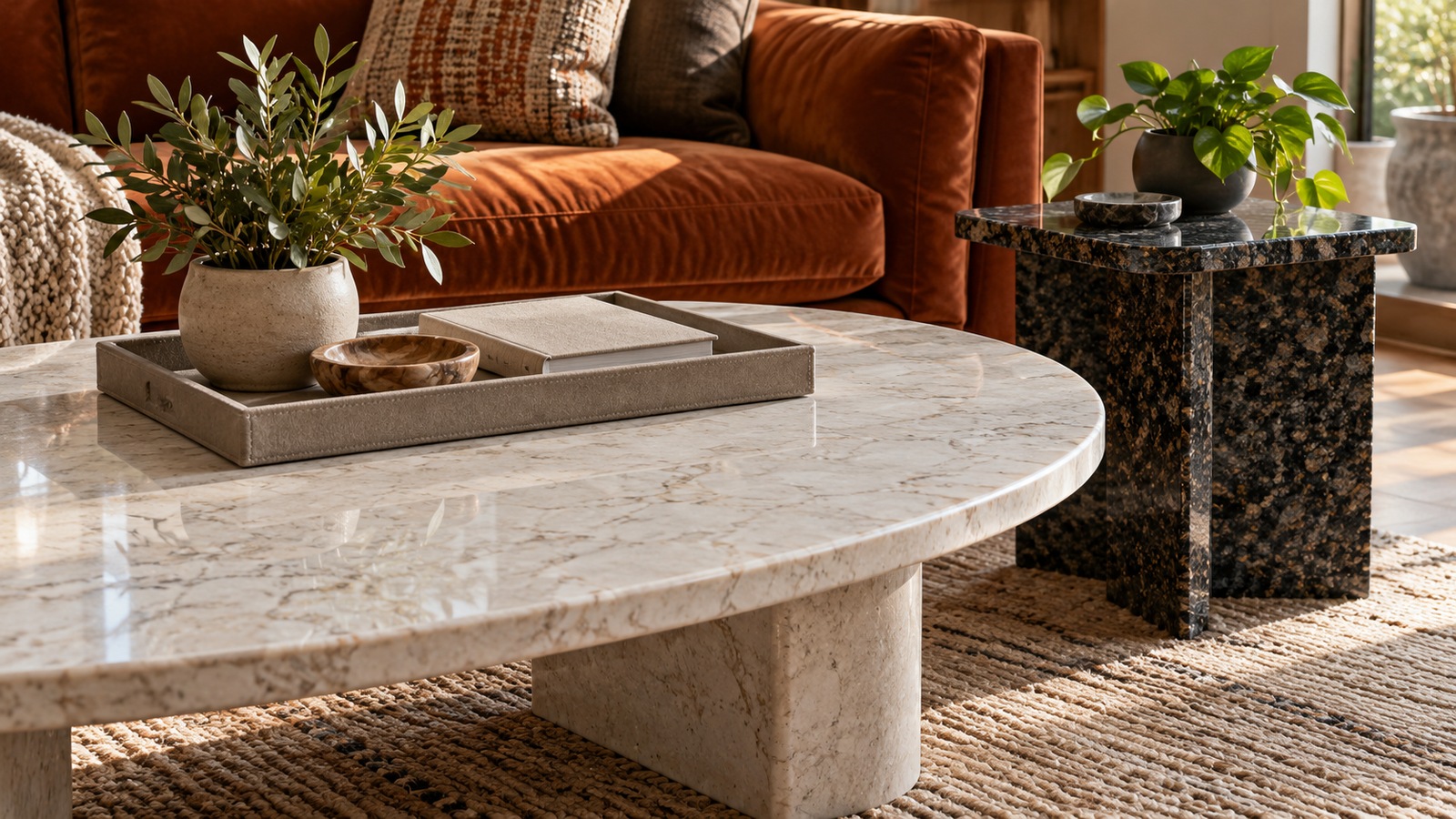
Granite offers natural pattern variation and a strong case for scratch resistance. The Natural Stone Institute discusses granite’s abrasion resistance and its use for tabletops. For furniture, examine the particular stone, its finish, and its edge treatment. A photograph labelled granite cannot tell you whether the table has the look, fabrication, or support you expect.
Granite may appeal when the family room needs a substantial natural-material accent beside quieter upholstery. View the proposed pattern across the whole table, not only a small attractive patch. Ask what care belongs to that stone and whether any sealing treatment is recommended. That conversation concerns staining and maintenance separately from the scratch-resistance question.
Investigate Ceramic and Ultracompact Tops Through Product Evidence
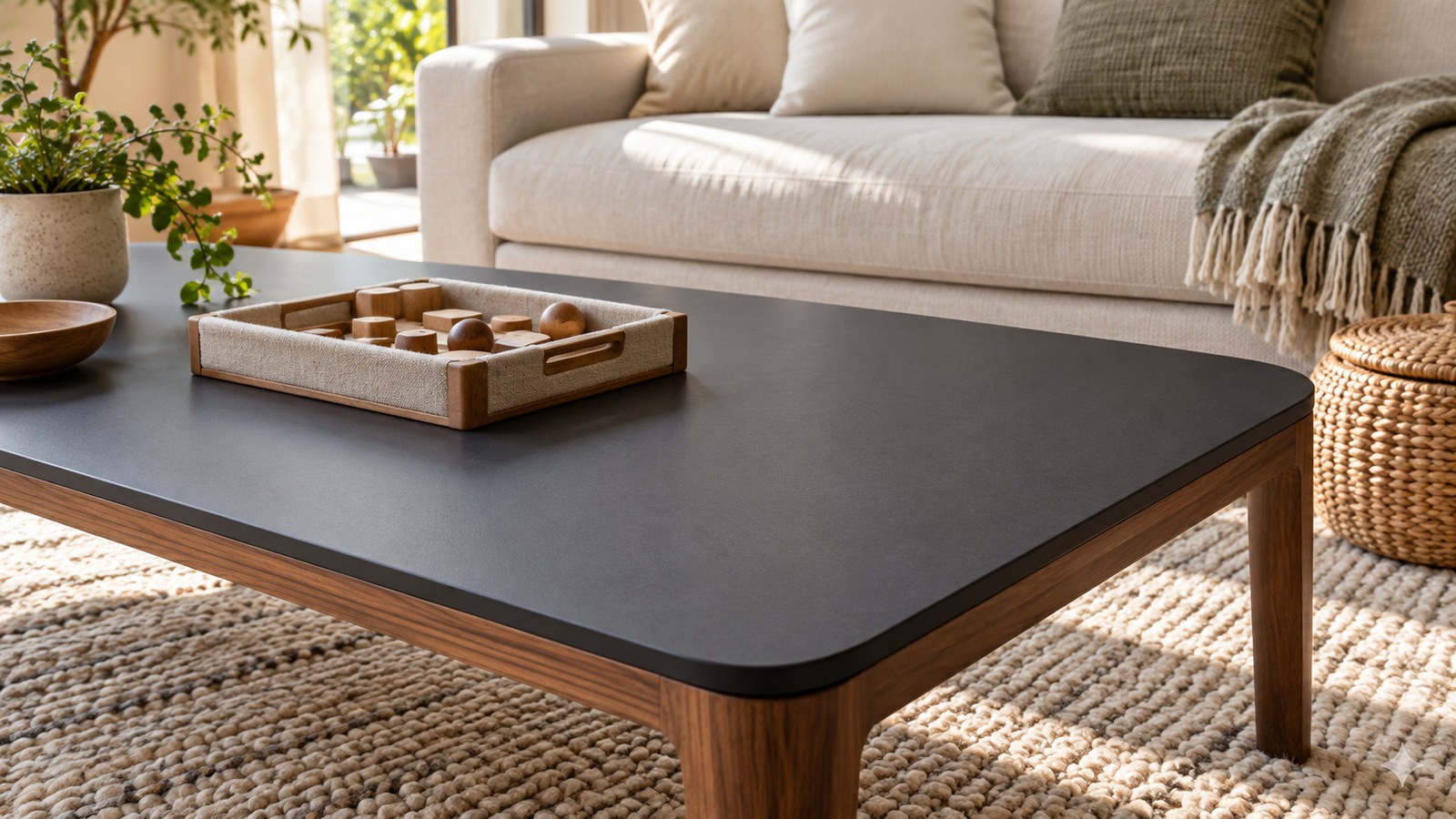
A documented ceramic or ultracompact surface can be a promising shortlist candidate for a frequently used table. These terms cover products and assemblies that should not be treated as interchangeable. Cosentino’s Dekton maintenance guidance illustrates why an identified high-performance surface has its own assessment and cleaning advice. Ask the table supplier which exact material is present and which claims apply to its offered finish.
Review the top’s edge and attachment as carefully as the broad face. A scratch-resistant center does not establish how an exposed corner responds to impact or how the table should be lifted. The furniture maker should explain its assembly and ordinary handling. For a custom top, use a fabricator who can specify the complete supported table rather than merely cutting a pleasing rectangle.
These materials are especially worth comparing when you want a visually quiet surface that receives many moving objects. However, do not pay for a vague high-performance label without useful documentation. A less ambitious material with clear care and a trustworthy complete assembly may be the better furniture purchase. Evidence about the actual product should carry more weight than the most dramatic demonstration in a sales video.
Treat Laminate as a Practical Budget Candidate
Laminate can offer a useful decorative finish without requiring a stone tabletop. Its pattern may resemble timber or stone, but that resemblance does not transfer the imitated material’s properties. Formica’s use-and-care guidance warns that sharp utensils can scratch or slice its laminate. Compare the identified surface, edge construction, and care rather than assuming all laminate tables have one level of resistance.
Choose Wood Through Its Finish and Repair Possibilities
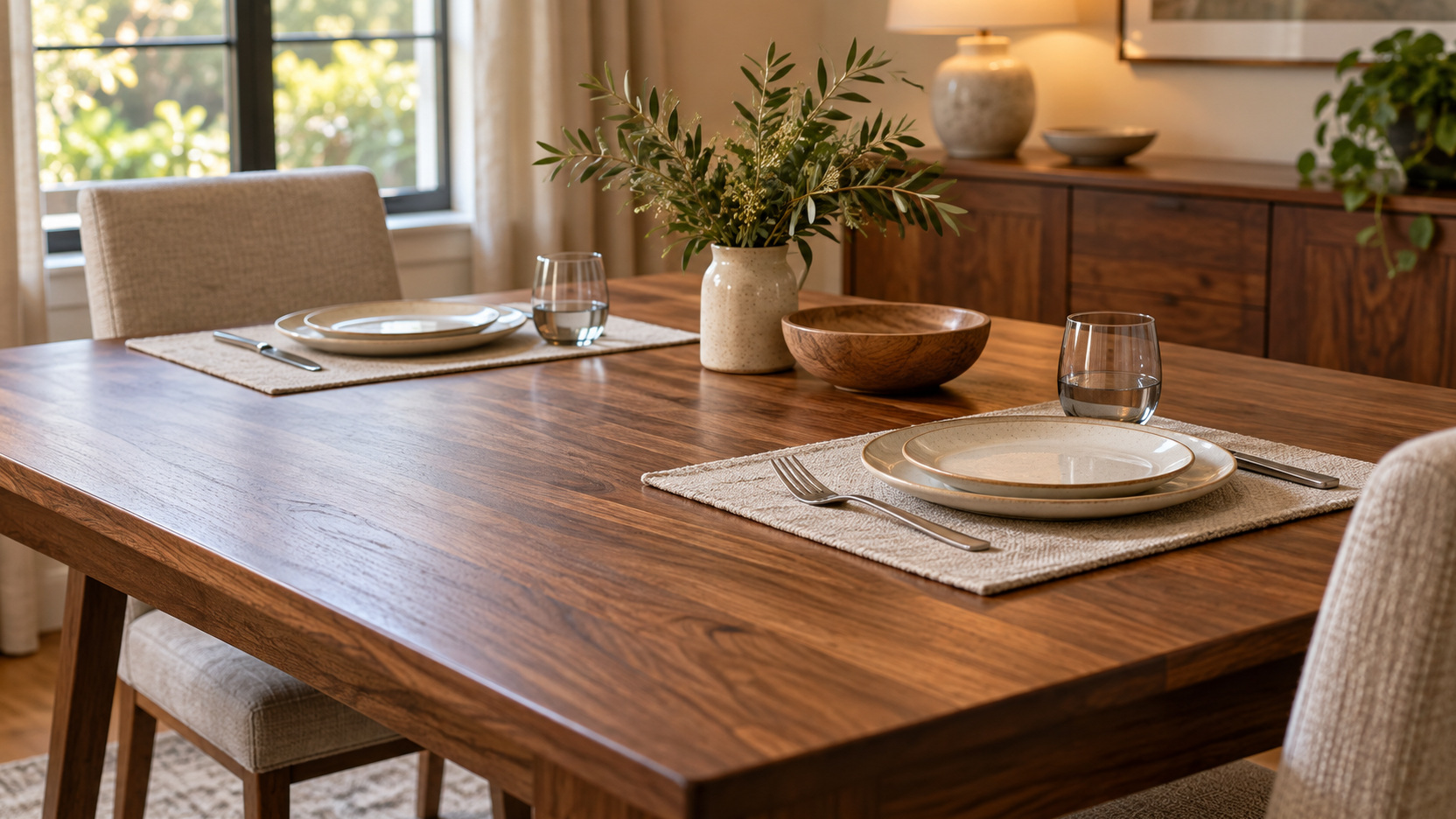
A wood table can be an excellent family-room choice even when absolute scratch resistance is not its strongest selling point. The visible working surface includes its finish, so ask whether it is oiled, lacquered, painted, or treated another way. Room & Board advises caring for its wood furniture according to the finish. A cleaning or touch-up method appropriate for one product should not be transferred automatically to another.
Distinguish solid wood from veneer without assuming either label decides the purchase. A veneer table may have a well-suited protective finish; a solid wood table may offer a particular refinishing route. Ask what the maker permits and what a repair would involve. Do not sand an unfamiliar top simply because a wood-care video made the job look easy.
Compare Glass for the Look You Want to Maintain
Glass deserves a separate conversation when its visual lightness is part of the attraction. It can let a rug remain visible beneath the coffee table, yet that decorative benefit says little about scratch performance. Ask the furniture maker about the identified glass, construction, care, and handling. Treat scratch resistance, impact behavior, and suitability for household activities as separate questions.
Look at the entire assembly from the seats. Smudges, reflections, visible objects below the top, and the base itself become part of the appearance you maintain. If the household dislikes noticing every contact mark, a clear surface may be a frustrating choice even before scratching enters the discussion. Compare it with a more visually varied alternative in the same room.
A transparent top also makes protective accessories conspicuous. Try the coaster, small tray, or activity mat you would actually use rather than imagining a permanently empty surface. If those accessories defeat the light-looking effect you wanted, reconsider the balance. The best purchase does not require abandoning the very reason you preferred its appearance.
Examine the Complete Table at Household Height
Sit beside the candidate or use accurate dimensions to represent it in the room. Check the top’s height, corners, base, and space for people to pass. A highly resistant finish has limited value if the table makes the seating area awkward. Keep table size and household movement in the decision instead of letting a surface comparison dictate the entire furnishing.
Match Three Surface Routes to Three Different Families
For a room where board games and craft materials regularly cover the coffee table, compare documented mineral or ceramic tops with a practical activity mat. The top contributes resistance during ordinary handling, while the mat creates a defined project area. Check the complete table’s support and corners as well. This arrangement is more coherent than buying a hard surface and expecting every activity to need no protection.
For a household that frequently moves the coffee table to create floor space, examine suitable wood or laminate furniture alongside the weight and handling requirements of stone candidates. Ask who can move the complete piece and how its maker says to do it. Resistance should not become a reason to buy a table nobody can manage. A manageable furnishing with accepted wear may serve the room better.
For a calmer room where the coffee table mostly supports books, drinks, and a display, let finish appearance and long-term service influence the shortlist. A selected granite top may offer the natural character you want, while a finished wood table might fit a warmer composition. Use the repeated contacts and your preferred aging appearance to decide between them. These are different priorities, not a ranking that every family should copy.
Put Protection Where People Naturally Reach
Keep coasters beside the seats that actually receive drinks and give a serving tray enough clear space to be lifted. Inspect the undersides of bowls and accessories before setting them down. Dirt beneath a protective item can undermine its purpose, so include it in the routine cleaning. The aim is a few reachable habits rather than a list of instructions nobody remembers during an evening.
When an object needs repositioning, lift it where that is practical instead of scraping it across the tabletop. Use help and the maker’s guidance for heavy pieces. Give craft supplies a defined mat and storage container so they do not spread across the bare finish. Furniture that supports those habits can be easier to maintain than a supposedly tougher table with nowhere to put ordinary accessories.
Ask About Service Before the First Mark Appears
Find out who assesses damage and what information they need. Keep the table model, surface identity, finish, and care instructions together. A photograph of an unfamiliar streak may help the seller decide whether residue, transfer, or damage needs further examination. Do not improvise abrasive polishing before identifying the surface and obtaining appropriate advice.
Discuss repair limits honestly. A restored area may not disappear under every light, and replacing a top may depend on how the assembly was made. Ask whether replacement parts or a suitable local service are available, without assuming they will remain available indefinitely. The answer helps you judge ownership alongside the initial material claim.
The best scratch-resistant choice is the table whose documented surface strengths meet your ordinary contacts and whose other compromises you accept. Shortlist resistant mineral or high-performance surfaces when abrasion is central; keep wood, laminate, and glass in consideration when their complete furniture benefits matter. Then choose the finish, base, care, and protection that belong in your actual family room. A useful table should welcome everyday life while giving you a credible plan for the wear that eventually arrives.
## Compare the Same Evening With Two Shortlisted Tables
Before ordering, put the ordinary game box, mug, remote, and laptop together on your current table. Identify how much bare space remains and which items must move when another person sits down. Carry those observations into the shortlist: a large resistant face may reduce crowded handling, while a smaller table might preserve the walking route more comfortably. Material choice cannot compensate for a top that is perpetually overloaded with accessories. Keep the actual surface dimensions alongside the care documents when judging the alternatives.
Ask the household to explain which compromise they prefer. One person may want a quiet mineral finish that stays mostly clear; another may value a wood table that can be moved for play and accepts visible use. Resolve that disagreement through the table’s recurring jobs rather than a demonstration of strength. The right surface belongs to the furnishing you can live with together, including the moments when its top is full and the room needs to change.