Look for Evidence That the Furniture Can Keep Doing Its Job
Furniture quality becomes easier to judge when you ask how the piece supports its intended use and what happens when a part wears. An attractive surface, substantial weight, or familiar material name can provide clues without proving the whole construction is sound. Look at connections, support, operation, finish, care, and service as one buying decision. You do not need to become a furniture maker to ask useful questions. A practical checklist helps you compare visible evidence and documented details, identify what remains unknown, and choose a piece whose construction and ownership requirements fit the ordinary work it will perform in your home.
Define the Piece's Real Workload
Start with the job the furniture must do. A dining table used daily for meals and homework has a different brief from an occasional console. A sofa used for long evenings needs support and service considerations that a decorative chair may not share. Describe the regular users, activities, and repeated movements so the comparison begins with appropriate use rather than a universal idea of premium construction.
Measure the room, access route, and the usable space around the piece. Good construction cannot compensate for furniture that fits through the door but makes the room inconvenient. Check the actual dimensions and operating clearances for doors, drawers, extensions, or reclining parts. A suitable size can also reduce awkward repeated contact with nearby furnishings, which helps the room remain practical without treating every wear problem as a material failure.
Decide which characteristics are essential and which are preferences. Perhaps a drawer needs to hold everyday supplies, a chair needs comfortable support, or a cabinet needs a practical service route for its hardware. Finish color and decorative detailing still matter, but identifying the functional requirements first keeps them from concealing unanswered construction questions. The checklist should support a piece you want to live with, not simply produce a list of technical words that sound reassuring.
Turn the brief into three normal-use checks before the delivery visit. For a cabinet, open the door and drawer, inspect how the shelf is supported, and confirm the supplied anchoring instructions. For a dining table, check the ordered configuration, usable legroom, and extension operation where applicable. For seating, settle into the actual cushion option and ask how a worn insert would be replaced. Repeat these same checks when the furniture arrives and compare the delivered identification with the order. That connects the purchase evidence to functioning parts rather than letting a different finish, mechanism, or configuration slip into the room unnoticed.
Ask What the Material Description Leaves Out
Descriptions such as wood, engineered wood, metal, or upholstery cover a wide range of constructions. Ask which material is used in which component and what is exposed at the working surface. A solid-wood detail may coexist with other materials elsewhere in the piece. That can be appropriate when the construction is well suited to its purpose, so evaluate the arrangement rather than treating one label as proof of quality throughout. Request a clear product description that identifies the frame, major panels, surface layers, and relevant hardware. Those details become especially useful if care or repair is needed later.
Recognize Specific Connection Evidence in Normal Use
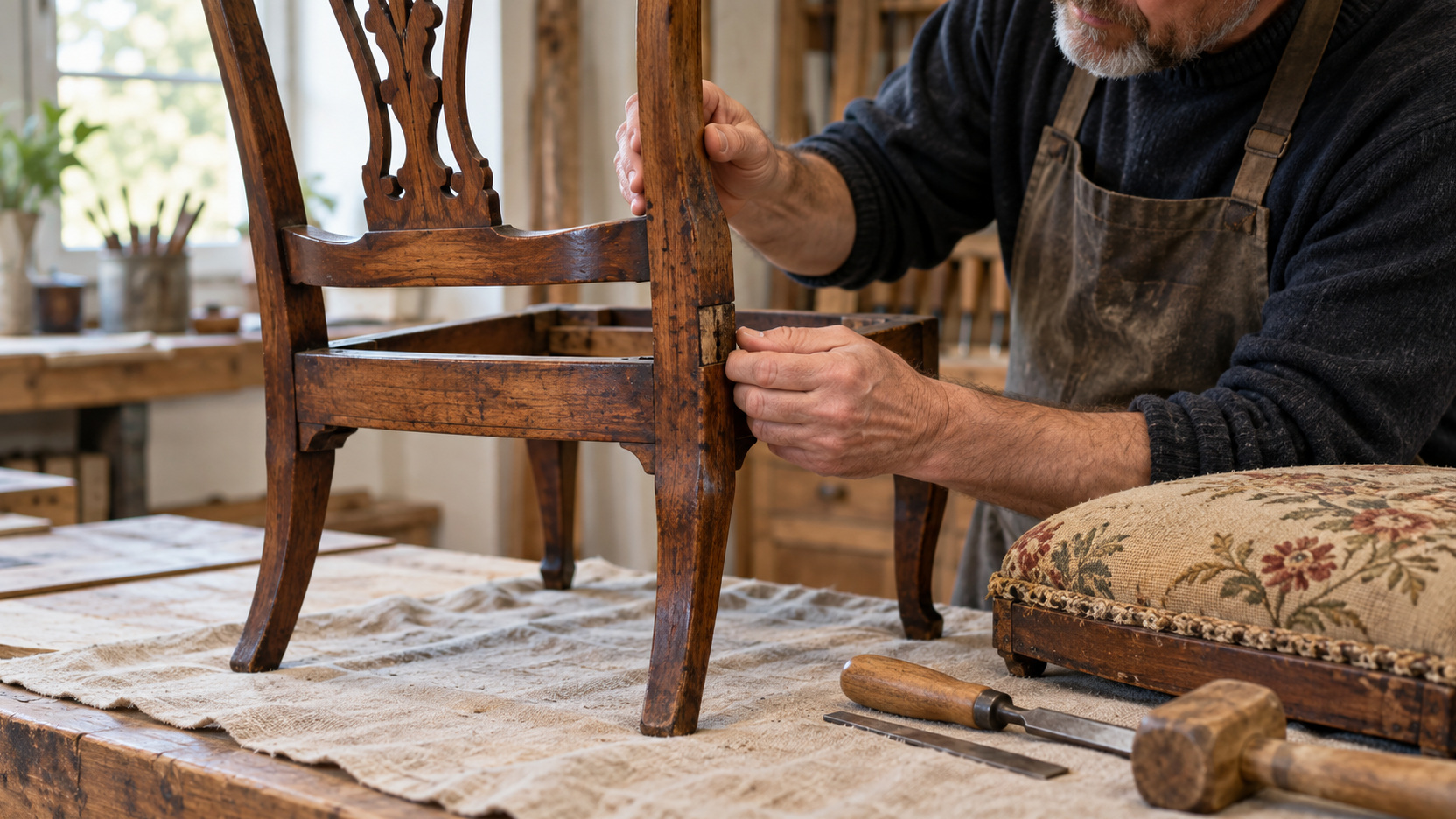
Look for a joint whose adjoining parts fit cleanly and stay aligned in normal operation, rather than treating an impressive joint name as proof. A visible gap opening when a chair is used normally, a leg attachment that shifts during permitted movement, or unexplained hardware protruding into a contact area deserves clarification before purchase. A properly fitted removable connection can be a sensible design when it has identified hardware and clear assembly instructions. Concealed reinforcement may require the maker’s build description. Inspect permitted areas and ask for an explanation; do not twist, climb, or overload furniture to create a test.
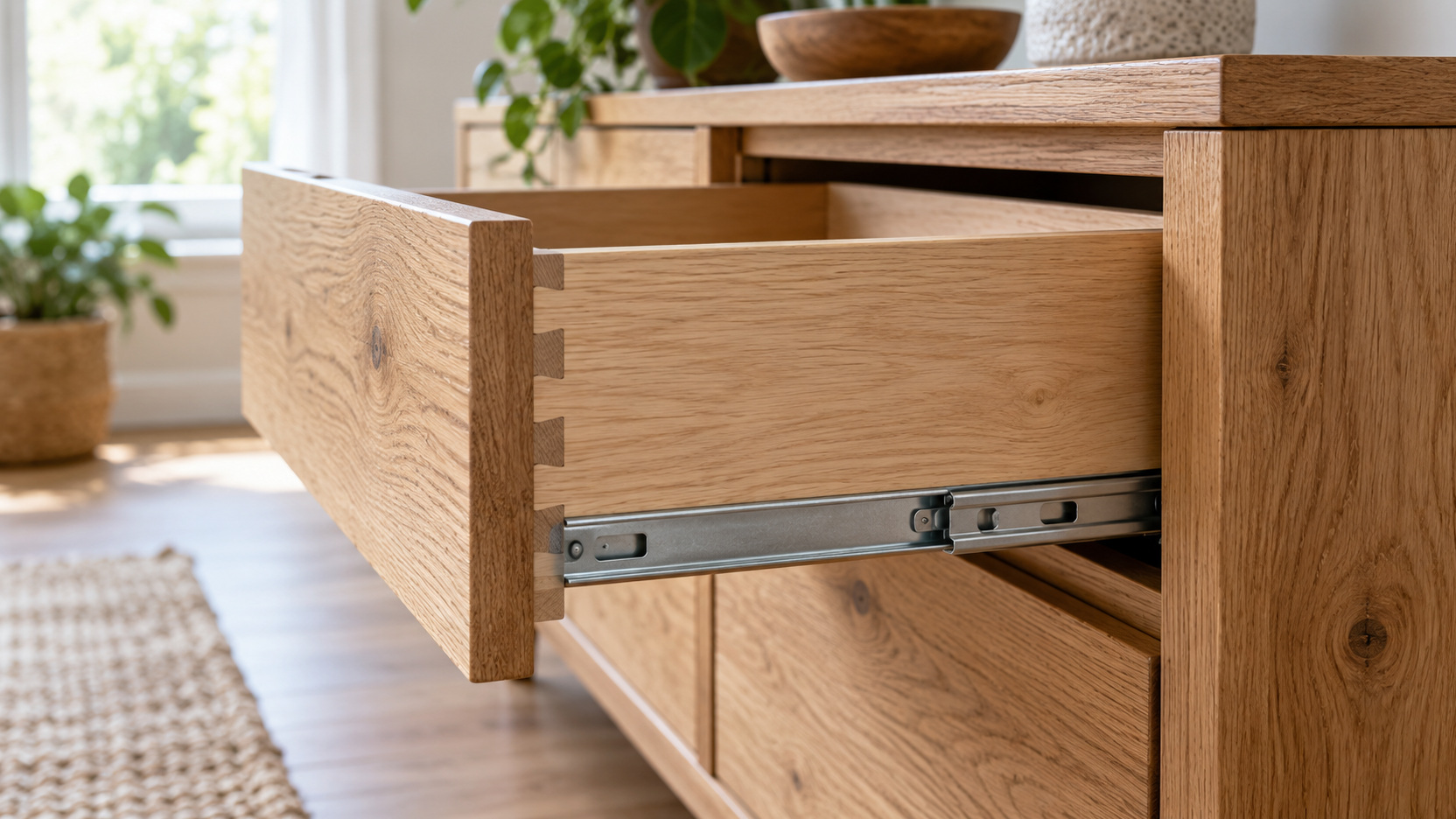
Use drawers and doors to observe execution you can actually see. A drawer should travel through its intended range without scraping a neighboring front, and the alignment should remain coherent when closed. If one example binds, compare another and ask whether adjustment, assembly, or a defect is involved. A purposeful clearance is different from a front that repeatedly strikes the cabinet. These ordinary observations provide more useful evidence than assuming every heavy piece is strong or every flat-pack connection is weak. Keep the unresolved behavior attached to the exact model before deciding whether the seller’s answer is convincing.
Evaluate Support Alongside the Visible Frame
For seating, ask about the frame, support system, cushions, and how those parts work together. An attractive upholstery cover cannot explain the structure beneath it. Request specifications and a service explanation for the exact model, then test normal comfort over more than a brief perch. Quality should be connected to the actual seated experience and intended use, not solely to an impressive-sounding frame material.
Tables and beds need their own support review. Identify the base arrangement, connecting hardware, and any specified center or additional support. Follow product instructions about assembly and use conditions, and ask how the proposed size changes the requirements. A piece that appears stable in an empty showroom should still have a clear construction plan for its intended configuration. Avoid assuming a thicker-looking top or heavy exterior guarantees suitable support beneath it.
For storage, inspect how a loaded shelf is intended to transfer weight to the cabinet. A long unsupported shelf already visibly sagging in a normal display deserves a specific explanation; an identified support arrangement and applicable load guidance are better evidence than a thick-looking edge. Check whether the decorative edge conceals a thinner panel and whether the supports are correctly located for the ordered span. Do not add weight to test its limit. Ordinary door and drawer operation should also fit that construction without repeated rubbing. Include installation in the checklist: the CPSC’s Anchor It guidance explains appropriate anchoring for furniture that can tip, a responsibility that does not disappear because the cabinet looks substantial.
Open Doors and Drawers as They Will Be Used
Operate accessible moving parts through their intended range and ask how they are adjusted or serviced. Check that the room plan leaves enough clearance for the actual opening. A smooth showroom action is useful evidence, but the hardware identification and service route also matter. Ask what happens if a runner, hinge, handle, or mechanism later needs attention. The piece may be a sensible choice when replaceable hardware is clearly specified and available, even if no furniture can promise permanent trouble-free operation. Evaluate ordinary function alongside the ability to restore that function after an identifiable part wears.
Inspect Edges and Finish Consistency
Look at exposed corners, edge treatments, and surfaces under meaningful light. Notice whether the finish appears consistent and whether details match the offered product description. Ask about any visible feature you do not understand before dismissing it as either craftsmanship or a defect. Natural variation can be part of a material’s appearance, while another issue may warrant clarification or a different example.
Read the care directions for the actual finish. A surface you admire may require products or protection that differ from your current routine. Ask about ordinary marks, cleaning, and appropriate assessment when a problem develops. A quality finish should be considered through both its present appearance and the responsibilities needed to maintain it. If those responsibilities feel impractical, the piece may be the wrong fit even when its construction is otherwise well documented.
Learn Which Parts Can Be Replaced
Serviceability is a concrete buying advantage when the relevant components are identifiable and realistically obtainable. Ask whether cushions, covers, legs, handles, hinges, or other parts are available for the specific model. IKEA’s spare-parts service is an example of a defined route for certain replacement items; it does not mean every brand or every component offers the same service. Confirm the actual process and limitations for the furniture you are buying. Save model and part information so a future request does not depend on matching a vague photograph to a discontinued collection.
Read Assembly Instructions Before Delivery
Assembly affects how the completed furniture functions. Review the instructions and identify the tools, space, help, and sequence required. Ask which tasks are provided by the delivery service and which remain your responsibility. A product described as straightforward still needs its specified method followed, particularly when connections or support parts are not visible once assembly is complete.
Consider future movement as well. Learn whether the piece is designed to be disassembled, how it should be handled, and which parts or instructions must be retained. Do not assume all flat-pack, modular, or one-piece furniture behaves the same way during a move. The relevant advantage is a documented process suitable for your plans, not a general category label detached from the actual product.
Keep spare hardware and instructions where they can be found. If adjustment or tightening is required by the maker’s guidance, follow the stated process rather than improvising. Small organized records can protect the value of a well-chosen piece by making later care and service practical. Furniture that is easy to understand after delivery is often easier to keep in use when an ordinary maintenance task arises.
Compare the Warranty With the Service Process
Read the coverage, exclusions, and applicable care or use conditions. A long advertised duration can be reassuring without answering who handles a concern or what documentation is needed. Ask how assessment works locally and whether transport, labor, or other service details are relevant. Keep the written agreement with the product identification so the commitment is clear beyond a sales conversation.
Distinguish a warranty from a prediction of how long the furniture will remain comfortable or attractive. Coverage addresses defined conditions, while ownership also depends on use, maintenance, and the performance of individual parts. Ask about the common service questions for the model without assuming every ordinary sign of wear is a covered defect. A realistic explanation of support can be more useful than an unlimited-sounding promise with an unclear practical route.
Compare Value Through Functioning Parts and a Complete Price
Compare equivalent installed purchases, including delivery, assembly, required accessories, and relevant service. A lower-priced cabinet may be better value when its shelf span, drawer operation, and replaceable hardware answer the workload; a more expensive finish does not correct a binding drawer. Equally, a documented replacement mechanism can justify a higher price when the piece will be used heavily. Keep decorative preferences visible, but give functional evidence its own place in the decision.
For two similar-looking cabinets, imagine checking the same everyday drawer and the shelf reserved for books. One offers identified runners, a clear support arrangement, and an available replacement contact. The other offers a heavier exterior and a broad premium claim but cannot explain those components. Favor the proposal that resolves your actual functions unless further evidence changes the comparison. Weight and price are clues rather than scores for every hidden joint. A normal-use check and a specific specification together are stronger than either alone.
Before ordering, resolve the one uncertainty most likely to change the decision: perhaps a concealed seat support, the actual top finish, or the ordered extension hardware. Ask a focused question and retain the answer with the model identification. If information is unavailable, decide with that limit visible rather than filling it with a reassuring brand impression. The inspection should leave you able to explain which parts support the piece’s real job.
At delivery, repeat the brief checks and complete the specified fitting and anchoring process. Keep the assembly and service documents where they can be found after the packaging is gone. Report a mismatched component or unexpected normal-operation problem through the provider’s service route. The checklist is complete when the actual furniture works in its intended configuration and its continuing responsibilities are understood. That is the practical meaning of quality for a household purchase.