Choose Laminate for Dry Wear or Vinyl for the Right Wet-Use Brief
For heavy traffic that is mainly dry foot movement, start by comparing laminate with a documented abrasion classification; its hard protected face makes surface wear a clear buying criterion. For a route where approved moisture handling and underfoot give matter more, start with an appropriate luxury vinyl system and scrutinize indentation and installation requirements. Those are useful starting choices, not universal winners: grit can mark either floor, furniture contact differs from footsteps, and water protection belongs to the exact product and completed assembly. The decision becomes clearer when you compare one identified laminate and one identified vinyl against the room’s leading problem, rather than letting the same heavy-duty advertising answer every household demand.
Understand What Each Construction Is Doing
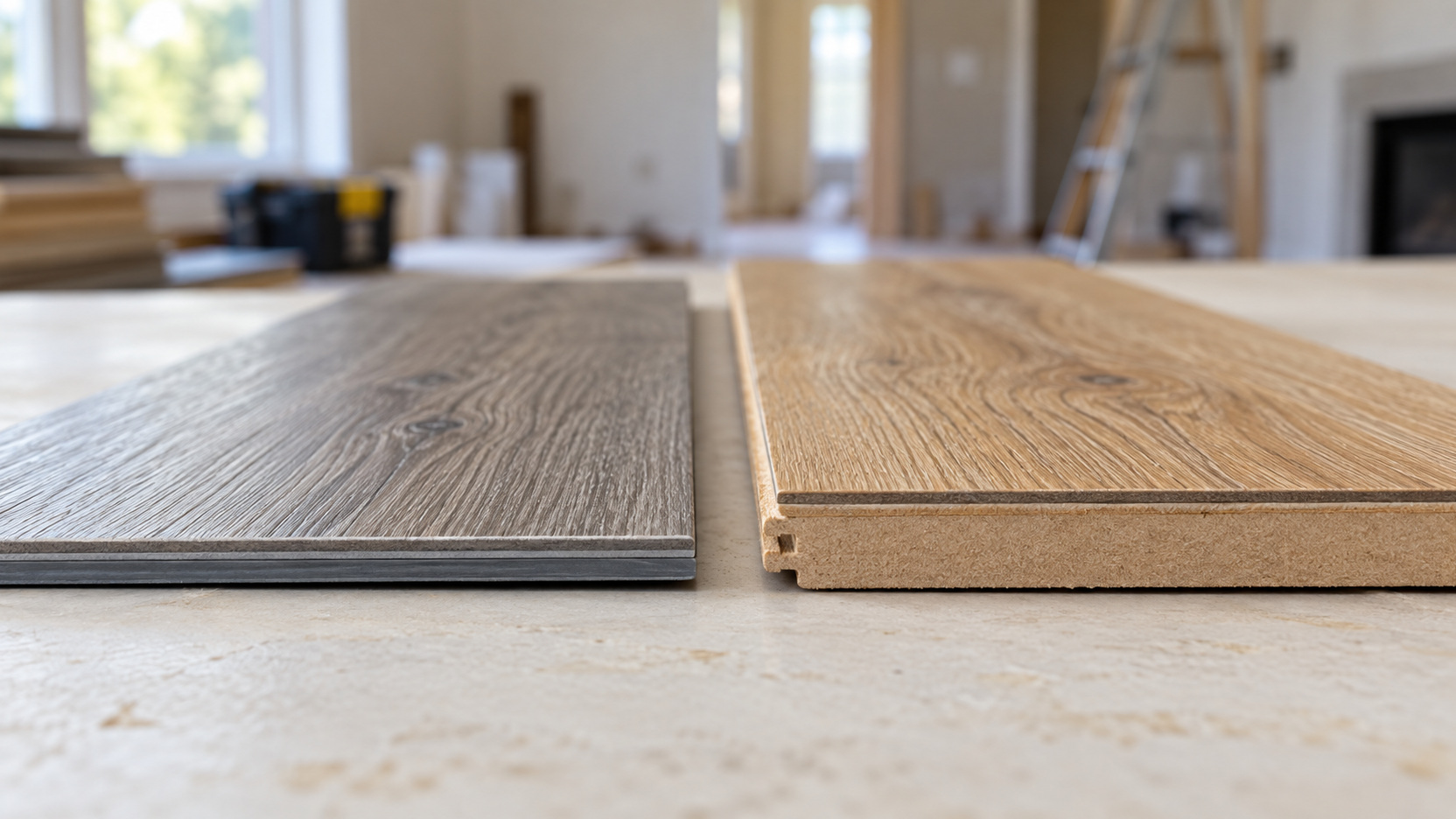
Laminate typically combines a wood-fiber core with decorative and protective layers. Pergo describes an HDF core and a protective surface for its laminate construction. Think of the core, face, and joint as different parts of the decision: the face addresses defined surface performance, while the installed joints and perimeter affect the moisture arrangement. A convincing wear classification does not settle all three. Luxury vinyl includes different resilient constructions, including rigid and glue-down systems, so identify which one is actually quoted rather than imagining one uniform flexible plank.
Overall thickness is useful for fitting and transitions but cannot act as the score for this comparison. A hypothetical eight-millimeter laminate and a six-millimeter rigid vinyl are not ranked by subtracting their thicknesses; compare the laminate’s documented wear classification with the vinyl’s documented use and surface information, then examine each joint, backing, and approved substrate. Keep the invoice tied to those exact products. If the supplier substitutes a different collection to obtain the color you want, recheck the performance and installation answers instead of treating a similar wood design as the same build.
Define Heavy Traffic as More Than Footsteps
Describe what happens along the route where the floor will be installed. Foot traffic may arrive with outdoor grit, move around frequently used dining chairs, or connect a pet entrance with the rest of the home. These events create different demands that a single heavy-traffic label cannot explain. Mark the route and identify its repeated contacts so each supplier answers the same practical brief.
Consider where household members pause or turn. A narrow area beside a doorway can experience concentrated use even if the room is large. Furniture and storage can channel people into an awkward strip, making the arrangement relevant to both floor choices. Check whether a small layout change would improve access before assuming a more expensive product is the only useful response.
Include cleaning frequency in the brief. A household that readily removes grit has a different routine from one that expects a long interval between cleanups. Either product still needs compatible care, so review the written instructions before purchase. A material whose approved process conflicts with the routine you will keep may be less practical even when its performance information looks attractive.
Read Wear Numbers Without Treating Them as One Scale
For laminate, an AC abrasion classification provides a defined surface-wear reference. Pergo’s documentation associates AC4 with normal-commercial class 32 and AC5 with heavy-commercial class 33 use; those descriptions are meaningful starting evidence for a busy domestic route when the exact model and location are suitable. Vinyl documents may instead specify a wear-layer thickness, use class, and warranty conditions. An AC5 label and a vinyl surface-layer measurement are not two numbers on one common ruler. Require each supplier to connect its information to the same intended room and explain which performance the figure actually describes.
Consider a hypothetical dry hallway shortlist: one laminate has a documented AC5 classification, while a competing vinyl has an identified commercial-use classification and a thicker surface layer than another vinyl in its own range. Both have evidence worth evaluating, but neither document proves a head-to-head scratch victory. If repeated dry surface wear is the main concern, the laminate’s abrasion information may make it the simpler first candidate. If comfort or the room’s moisture brief drives the choice, the vinyl may remain stronger overall. Keep furniture indentation, localized scratches, and repair in separate lines of the comparison so the wear figure does not conceal a remaining weakness.
Treat Moisture Features as Product-Specific
Water-related claims deserve careful reading for both categories. Some laminate products have documented water-protection features, so it is inaccurate to dismiss every laminate as unsuitable on the basis of an older broad impression. For example, Pergo Elements advertises water-related protection for that collection. Read the current conditions and installation requirements for the actual product rather than extending the collection’s advertising to unrelated floors.
Luxury vinyl’s reputation around moisture should receive the same discipline. Review the exact product, location permission, fitting details, and conditions at the completed assembly. A statement about a plank’s material does not automatically describe every event below the floor or around an edge. Ask how the proposed installation handles the intended room and which circumstances the documentation excludes.
The Pergo FAQ specifically directs buyers to product instructions for wet-area installation because methods can differ. This illustrates why room suitability should be resolved before the comparison reaches color and price. Keep the written answers with the project documents. A floor that looks ideal but does not have appropriate permission for its location should leave the shortlist rather than remain there under an appealing material label.
Balance Vinyl Comfort Against Concentrated Contact
Vinyl’s underfoot give can be welcome, but concentrated furniture contact deserves explicit attention. Quick-Step’s vinyl warranty calls for protective furniture materials and appropriate caster protection to avoid residual indentation, identifying vinyl as a softer flooring material. This is a concrete tradeoff rather than a reason to dismiss vinyl: suitable protection can be part of an ordinary furnished room. Compare the actual dining-chair feet, sofa legs, or rolling office chair with each maker’s instructions. Laminate still needs grit control and appropriate furniture protection; a hard face is not permission to drag furniture. Lift heavy objects using the floor maker’s guidance, and resolve any recurring movement that conflicts with it before ordering.
Compare Comfort in the Completed Assembly
How a floor feels and sounds depends on more than the face material held in a sample. Construction, backing, permitted underlayment, substrate, and installation can influence the finished experience. Ask to see a meaningful installed example when available, and request an explanation of the assembly included in the quote. Do not add an unapproved layer merely to chase a softer feel or quieter step.
Consider where the household stands, sits on the floor, or spends long periods moving between tasks. Comfort may deserve more weight in a family room than in a rarely occupied passage, even when both need suitable traffic performance. A rug can add a different surface experience, but it also adds care and compatibility requirements. Include that layer in the comparison rather than imagining the floor independently of how the room will be furnished.
Review the Substrate Before Assuming Easy Installation
Both candidates need installation conditions that match their instructions. Have the installer inspect the existing substrate and explain any preparation required for each product. Flatness, moisture-related conditions, and other requirements should be addressed through the relevant professional process. A fitting system promoted as convenient does not remove the need for a suitable base.
Ask how the proposed floor will meet doorways, cabinets, fixed furnishings, and adjoining rooms. These details may affect the assembly and the practical experience of daily use. A transition that is omitted from the quote can become an awkward late decision, while a required clearance should be planned before furnishings are installed. Review the layout with the installer instead of treating fitting as a generic task interchangeable across products.
Compare scope consistently. If one proposal includes substantial preparation and another assumes the existing surface is ready, the lower total may not represent the less expensive suitable project. Request written assumptions and a clear explanation of any work that could change after inspection. This makes the material comparison more honest and reduces the chance of choosing based on a price that leaves important installation needs unresolved.
Understand What a Localized Repair Would Involve
Neither luxury vinyl nor laminate should be chosen on the assumption that every mark can be sanded away like a renewable wood surface. Ask what professional assessment, repair, or replacement options apply to the exact product and installation. A spare plank can be useful without making access or matching effortless. The relevant service route depends on the damage and how the floor was fitted, so request a realistic explanation before purchase. Save recommended matching material and product identification, and keep the service contact with the care records. That plan gives repairability a practical meaning rather than treating it as a vague advantage attached to a material name.
Choose Appearance With Traffic in Mind
Look at substantial samples where the new floor will be used. The two materials can offer similar wood or stone visuals, but printed design, embossing, sheen, and edge detail vary between products. View them in daylight and evening lighting from the angles at which you normally see the route. This helps you assess visible dust and surface variation without assuming a showroom display predicts the finished home.
Keep appearance distinct from prevention. A varied matte design may make some ordinary marks less conspicuous, but it does not prove the floor has resisted damage. Strong texture can be attractive while requiring an appropriate routine to remove fine debris. Choose the appearance you are comfortable maintaining, and avoid paying for a visual effect that creates a care process you already know you will dislike.
Use the Warranty as a Defined Agreement
Read the warranty with the product guide and installation proposal. Identify the covered use, important exclusions, care conditions, and the process for requesting service. Broad phrases on a display may summarize only part of that agreement. If a claim seems to answer a concern from your brief, confirm that the actual conditions support that interpretation.
The service process matters as well as the advertised duration. Ask who handles a concern locally and what documentation should be retained. Keep the receipt, product identification, fitting records, and care instructions together. This makes a later conversation more useful than trying to remember the collection name or a salesperson’s informal description.
If your household brief includes a particularly important concern, ask where that concern appears in the supplied terms. A verbal statement can be reassuring without establishing the same commitment as the written agreement. Clarify any difference while both proposals are still under consideration. The goal is to understand what you are buying and which routine remains your responsibility, rather than assuming a warranty makes all ordinary protection and care unnecessary.
Make the Choice Through the Leading Failure Risk
Choose the documented laminate when the route is principally dry, repeated surface wear is the leading concern, and the installation, sound, and moisture conditions all fit. Choose the suitable luxury vinyl proposal when its approved moisture arrangement and underfoot experience solve the more important room problem, accepting the specified furniture protection. If both products answer those needs equally, compare localized replacement, substrate preparation, transitions, and the complete installed price. Those details can decide the purchase without inventing a universal superiority for either category.
A dry upstairs corridor and a ground-floor route beside a frequently used water bowl should therefore begin with different questions. The corridor puts wear documentation and sound into focus; the water-bowl route puts the actual spill permissions and completed edge details first. Neither illustration excuses leaving spills or grit unattended. Keep the final care and installation documents with the product identification so the reasoning survives a later replacement or service request. You should be able to name the chosen benefit and its remaining responsibility in one ordinary sentence: a documented dry-wear choice, or an approved moisture-and-comfort choice with a defined protection routine.