Compare the Coffee Tables, Not Just the Minerals
Quartz and granite can both be sensible surfaces for a frequently used family-room coffee table. Granite has a strong record of abrasion resistance, and identified engineered quartz products are also described as scratch resistant, but those statements do not establish a universal winner between every finished table. The useful comparison concerns the particular quartz design or granite top, its polish or texture, the objects your household moves across it, and the service available if a mark appears. Start with two actual furniture proposals rather than two material labels. You can then choose a credible scratch-resistant surface without confusing mineral hardness with the behavior of the complete tabletop or overlooking the base, edges, and room layout.
Begin With the Contacts Around Your Sofa
Picture a normal evening: someone moves a game box to make room for mugs, a child retrieves a book beneath a tray, and a laptop is put aside when visitors arrive. These ordinary contacts should shape the comparison. Tell the seller which objects move repeatedly and which remain mostly stationary. A table used for games and projects presents a different brief from an end table holding one lamp.
Include the way people clear the surface. Sliding a heavy decorative bowl is different from lifting it, and particles beneath an accessory can affect the contact. Decide which habits the household can reasonably maintain. You are choosing furniture for actual use, rather than relying on everyone to leave a pristine slab untouched.
Understand What the Two Names Describe
In this comparison, quartz means an engineered quartz surface used as the finished table face, not an individual quartz crystal. Granite means the selected natural stone offered for the furniture. Ask the seller to identify the material precisely, especially when a product description uses broad phrases such as stone effect or quartz look. A decorative resemblance is not a composition statement.
Granite has natural variation, so inspect the actual top or an appropriate representation of the stone being supplied. Engineered quartz designs also need their own brand, finish, and product information. Neither material should be judged only from a small sample that happens to show an attractive patch. The purchase is the finished table that will occupy the seating area.
If the top is custom-made, establish who is responsible for its fabrication and its attachment to the base. A fabricator’s surface care advice and a furniture maker’s support requirements address different parts of the assembly. Ask both where those responsibilities meet. That clarity prevents a resistant face from becoming an unsupported tabletop project.
Keep Mineral Hardness in Its Proper Role
The US Geological Survey’s mineral-hardness information lists quartz at seven and feldspar at six to six-and-a-half on the Mohs scale. The scale helps describe relative scratching between minerals. It is not a seven-out-of-ten score for a quartz coffee table, and it does not rate a furniture finish’s response to every household object. A numerical mineral comparison cannot by itself settle which of two finished tops resists scratches better.
Read the Granite Evidence Without Extending It
The Natural Stone Institute describes granite’s abrasion resistance and use for tabletops. That supports keeping granite on the shortlist when scratches are a main concern. It does not supply a head-to-head test of the particular granite table and engineered quartz table in your shop. Ask what information describes the offered stone, finish, and fabrication.
Natural variation is part of the attraction, but it also makes the actual surface important. Look at the tabletop under light that reveals its sheen as well as its pattern. Ask about visible treatments and the maker’s care instructions. Avoid assuming that two tables sharing the word granite must have identical appearance, maintenance, or restoration expectations.
Read the Quartz Claim as a Product Claim
Cambria distinguishes its quartz’s scratch resistance from scratch-proof performance. That is a useful limit to keep in mind, and it belongs to the identified manufacturer’s material. Another quartz furniture product needs its own evidence. Obtain the product identity rather than treating the percentage of quartz in a sales description as a complete performance test.
Ask whether the supplier’s claim applies to the finish being offered. A glossy face, a textured design, and a visually quiet matte surface should be compared as actual products rather than substituted because their general color is similar. Read the applicable care guidance before deciding that a particular cleaner or protective accessory is suitable. Resistance does not make finish care irrelevant.
For a custom quartz top, clarify which uses the material supplier and furniture maker approve. Surface documentation may be written for another installation type. It can help explain the material, but it does not automatically specify a coffee table’s support, edge detail, or warranty. The complete furniture proposal should make those details explicit.
Ask What Would Actually Establish a Scratch Winner
Comparable evidence would identify the exact surfaces, their finishes, the contact or abrasive method, and the conditions under which they were assessed. A seller’s demonstration with one object is narrower than a general claim of superiority. Ask what was compared before accepting a verdict. If no comparable finished-face evidence is available, the honest answer is that both remain viable candidates rather than that one category has proved universally harder to mark.
Separate Visible Marks From Scratches in the Surface
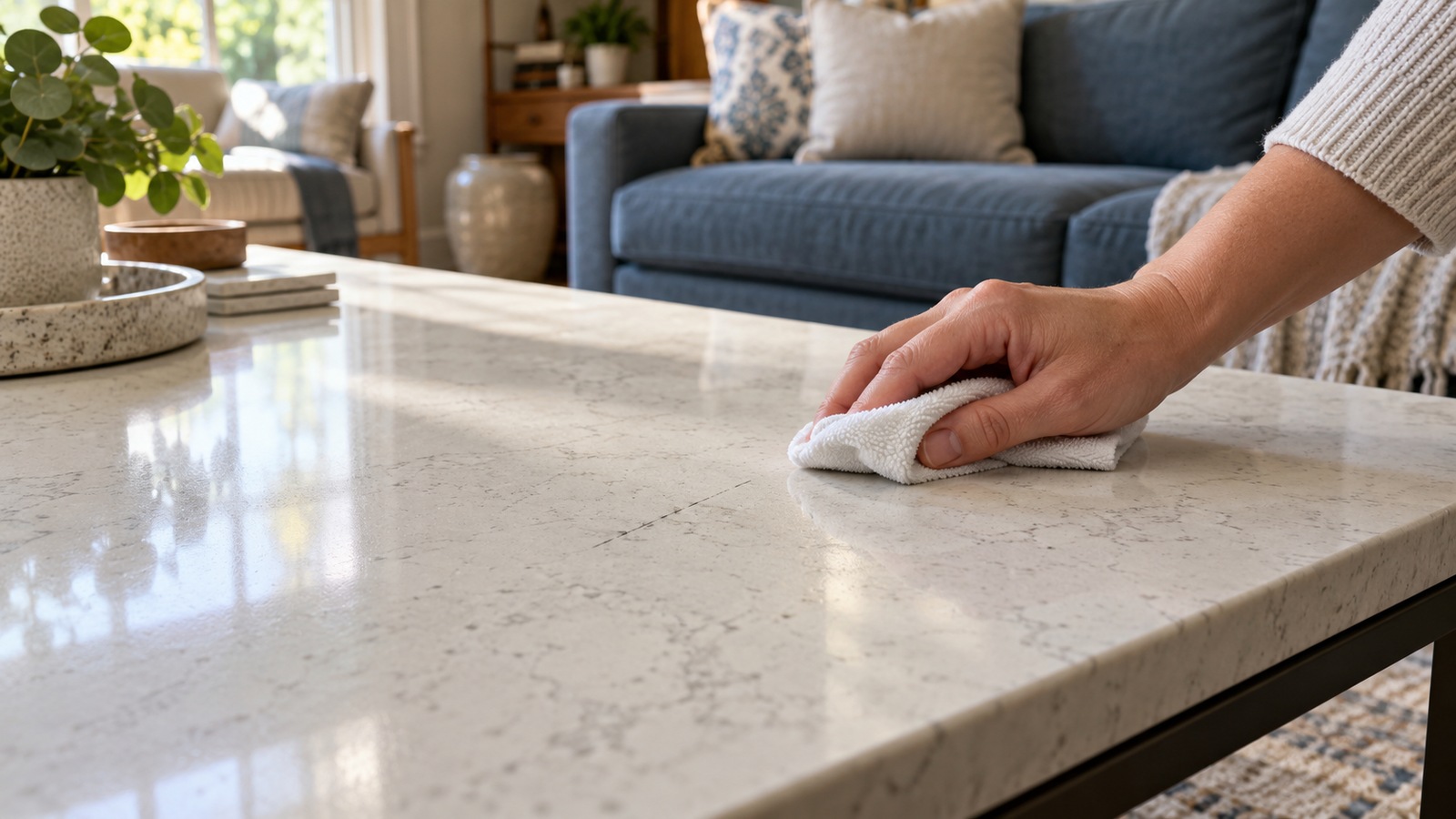
A pale streak on a dark top may be residue or transfer, while a changed reflection may involve the finish. Neither should be classified from a photograph alone. Follow mild approved care first, then obtain the appropriate seller or surface specialist’s assessment if the mark persists. Avoid trying a stronger abrasive simply to see whether it makes the line disappear.
This distinction matters when comparing ownership reports. One owner may call every visible line a scratch, while another may describe only a groove they can feel. Their accounts can be useful prompts for discussion, but they are not automatically equivalent test results. Ask what happened, how the surface was identified, and what the service provider concluded before using an anecdote to eliminate either material.
Compare Appearance From the Seats That Matter
Sit at the approximate table height and view each candidate from across the room. Pattern, reflectivity, and contrast influence how a small mark might be noticed, even though they do not prevent it. A varied granite face may suit a room that welcomes natural movement; a quieter engineered design may support a more restrained composition. Evaluate the whole area beside the sofa, rug, and other large finishes.
Bring the comparison into familiar lighting where a suitable sample arrangement is possible. A top that looks calm beneath showroom lights may catch a bright window reflection at home. Review it with the evening lamps as well. The best-looking finish is the one you enjoy in its ordinary setting, rather than the one that wins a close-up photograph.
State your tolerance for working life. If even a small visible change would disappoint you, discuss that expectation with the supplier before ordering. If you accept modest signs of use, a finish’s character and service route may matter more than an unproven difference in initial resistance. This preference can help resolve a close shortlist without inventing a scientific winner.
Keep Edges, Weight, and the Base in the Decision
Inspect the coffee table’s corners, overhang, base, and attachment. Flat-face scratch resistance does not answer questions about an edge knocked during play or a table that needs moving for floor space. Follow the furniture maker’s handling and support guidance. A complete table that fits the household is more useful than a favored material on an inconvenient or uncertain assembly.
Compare Two Realistic Coffee-Table Choices
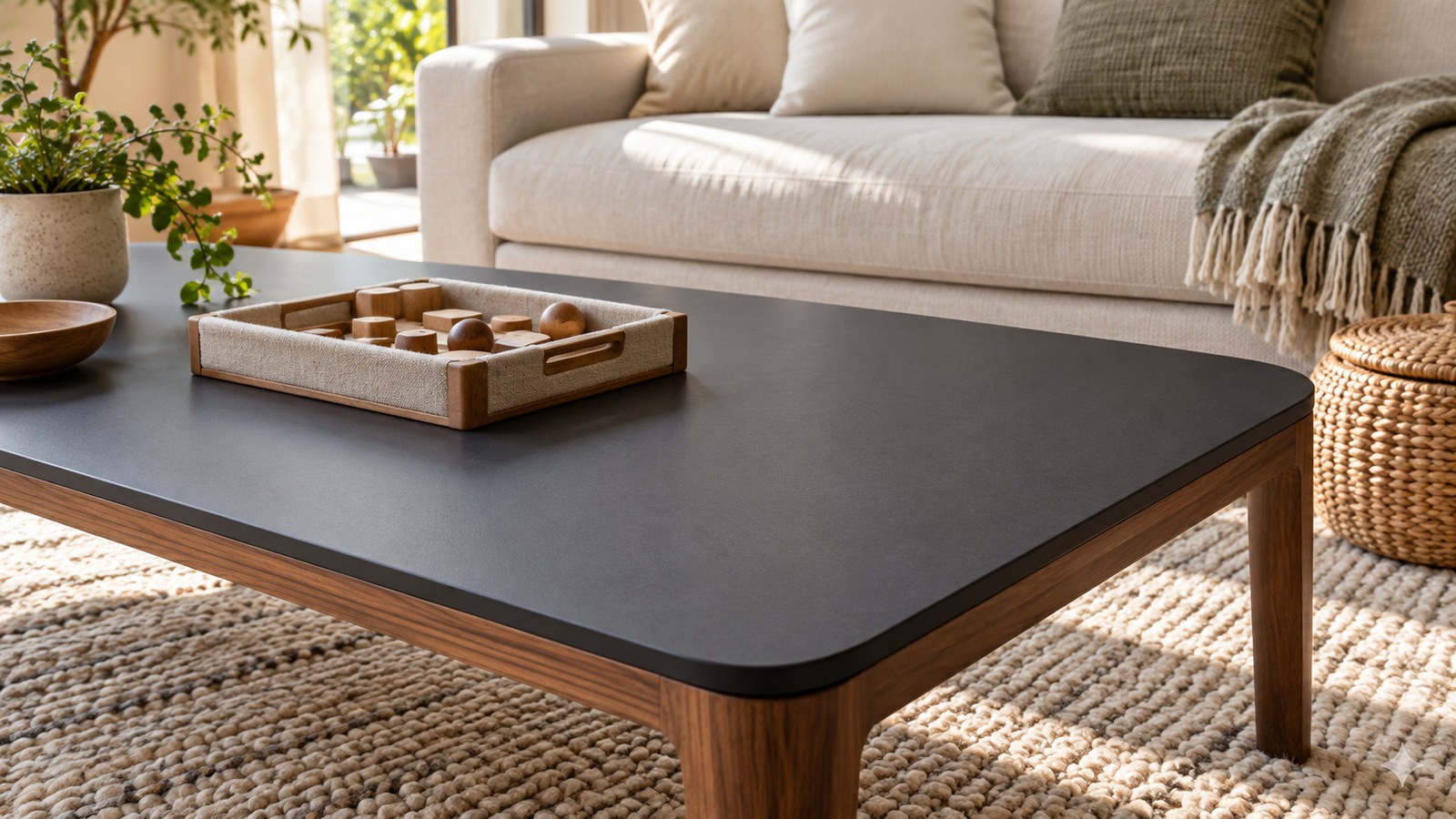
Imagine a family room with cream seating, a patterned rug, and a coffee table used for games most evenings. One proposal is a pale engineered quartz top with a clear product identity and written care; the other is a strongly varied granite top with the supplier’s stone-specific instructions. Both may satisfy the basic resistance brief. The quieter quartz design may let the rug lead, while the granite could become another substantial visual feature.
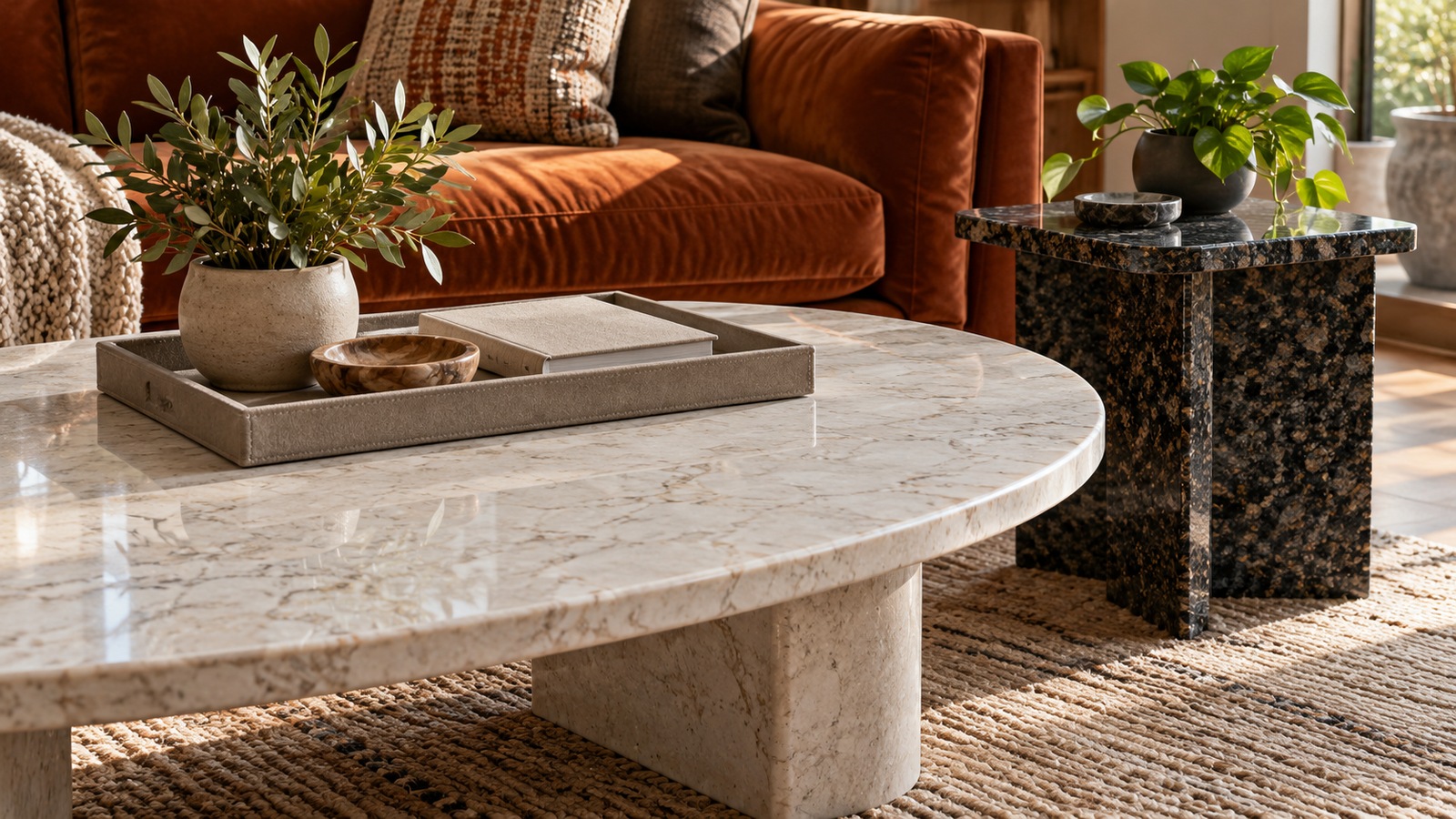
Now consider a room with restrained furnishings where the table itself should provide character. A selected granite top might be the preferred design if its complete assembly, care, and service are suitable. An engineered quartz alternative could still win if its particular appearance and documented ownership conditions are a better match. In both rooms, the final choice follows evidence and a stated preference rather than an unsupported claim that one material always resists household scratches better.
Make Protection Part of the Coffee-Table Routine
Use reachable coasters and a suitable activity surface where the table’s instructions call for protection. The Natural Stone Institute’s care advice recommends coasters and warns that abrasive cleaning products can scratch certain stones. Follow the specific granite guidance alongside those general principles. Quartz should receive its own manufacturer’s permitted care, not a routine borrowed solely because both surfaces look stone-like.
Lift trays and bowls when practical, and clean their contact faces as well as the visible tabletop. A mat left over particles is not the same as a clean protective layer. Give game pieces, craft supplies, and portable electronics a nearby storage place so clearing the table does not require scraping everything into a pile. A few habits that fit the room are more dependable than an elaborate instruction sheet.
Do not turn scratch resistance into a heat or stain guarantee. A hot mug, serving dish, or spilled drink presents a separate care question. Read those requirements for each offered table, and keep the appropriate protection near the seats. The better choice is the one whose whole routine the household can manage, not merely the one with the strongest abrasion language.
Establish a Useful Service Route Before Ordering
Ask who examines a future mark and whether assessment concerns the stone, its finish, or the furniture assembly. Keep the model, material identity, finish, and supplier contact together. A custom table also needs its fabrication and attachment information retained. Those details help a service provider understand what has actually been supplied.
Discuss repair limits without asking for a promise that every mark will vanish. The approach may depend on the affected finish, location, and particular damage. Ask whether work can be assessed locally and whether replacing the top is a realistic option for that assembly. Price and visual preference become easier to weigh when the service expectations are clear.
Choose the Proposal You Can Explain Honestly
If your only deciding criterion is proven superiority in scratching, request comparable finished-surface evidence and be prepared for the available information not to settle the ranking. Granite’s abrasion resistance and an identified quartz product’s scratch-resistant claim can both justify a shortlist. Neither is a universal exemption from careful handling. A seller who makes that limit clear is more useful than one who turns a mineral number into a promise about all future use.
Choose quartz when its particular manufactured design, written care, and complete furniture proposal fit your priorities. Choose granite when the actual natural top, appearance, and stone-specific support and service offer the stronger match. Then confirm the edge, base, footprint, and protection needed in your family room. You have made a defensible decision when you can name the benefit and the accepted compromise, even if the answer is not a simple category-wide scratch winner.
Write one sentence for each finalist before placing the order. For example, the quartz table might offer a quiet face and identified care, while the granite table offers a preferred natural pattern and a known stone-service contact. Then name what remains uncertain: perhaps neither supplier has comparable abrasion evidence, or one assembly is harder to move. That short comparison makes the decision transparent to the other people sharing the room and keeps an attractive sample from erasing a practical compromise.