
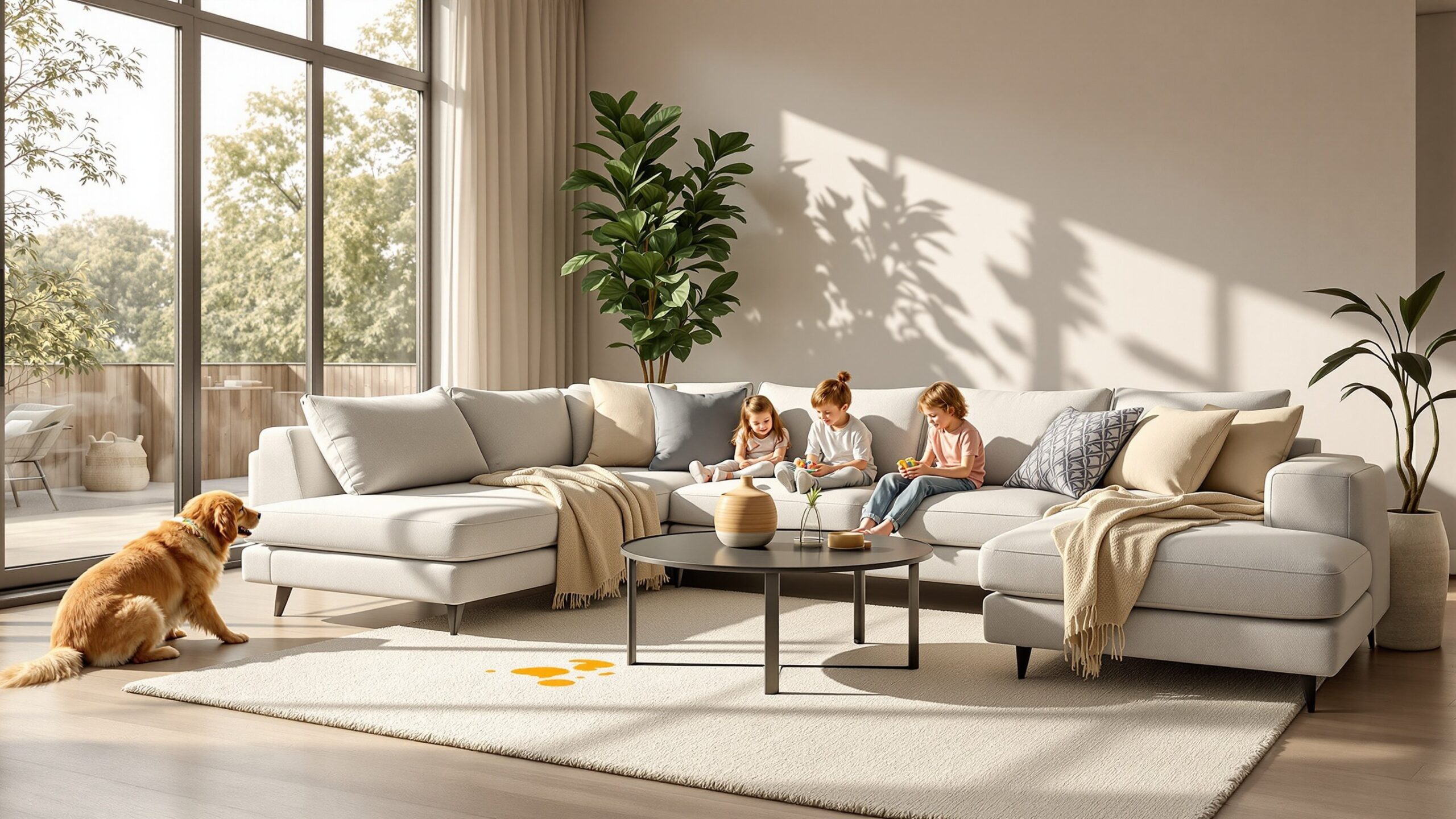
Life in the family room is wonderfully unpredictable. Movie nights turn into popcorn storms, kids sprawl across the couch with snacks, pets claim their favorite corner, and everyday living leaves its mark. That’s where Easy-Clean Materials come in—smart, stylish surfaces designed to keep up with real family life without sacrificing comfort or design. In this section of Family Room Streets, we explore the fabrics, finishes, and materials that make cleanup effortless while still looking beautiful in a busy home. From stain-resistant performance upholstery and washable slipcovers to durable wood finishes, wipeable wall treatments, and resilient rugs, today’s materials are engineered to handle spills, crumbs, fingerprints, and everyday wear with ease. But easy-clean doesn’t mean boring. Modern materials combine durability with elevated style, offering luxurious textures, rich colors, and cozy comfort that still stand up to real-world messes. Here you’ll find inspiration, expert tips, and practical guides that help you choose surfaces that stay fresh, functional, and family-friendly. Because the best family rooms aren’t just beautiful—they’re designed for living.
A: Performance fabric, protected leather, and quality microfiber are usually the easiest for daily life.
A: If you deal with frequent spills, pets, or kids, yes—being able to launder the cover simplifies everything.
A: Blot fast, clean from outside-in, and lightly dampen the whole spot area so it dries evenly.
A: Leather/faux leather wipes clean quickly; tight-weave performance fabric can also be excellent for vacuuming.
A: Usually no—stick to mild cleaners unless the manufacturer specifically says bleach is safe.
A: Use an enzyme cleaner for organic odors, then dry thoroughly with airflow; don’t trap moisture inside the foam.
A: Low-pile or flatweave styles are typically easiest to vacuum and spot clean.
A: High-traffic spaces do best with 2–3x/week quick passes to keep grit from grinding into fibers.
A: Sealed surfaces (polyurethane, laminate, stone-look composites) handle wipe-downs better than raw wood.
A: It can help on some textiles, but test first and follow the fabric’s care code—some performance fabrics don’t need it.