
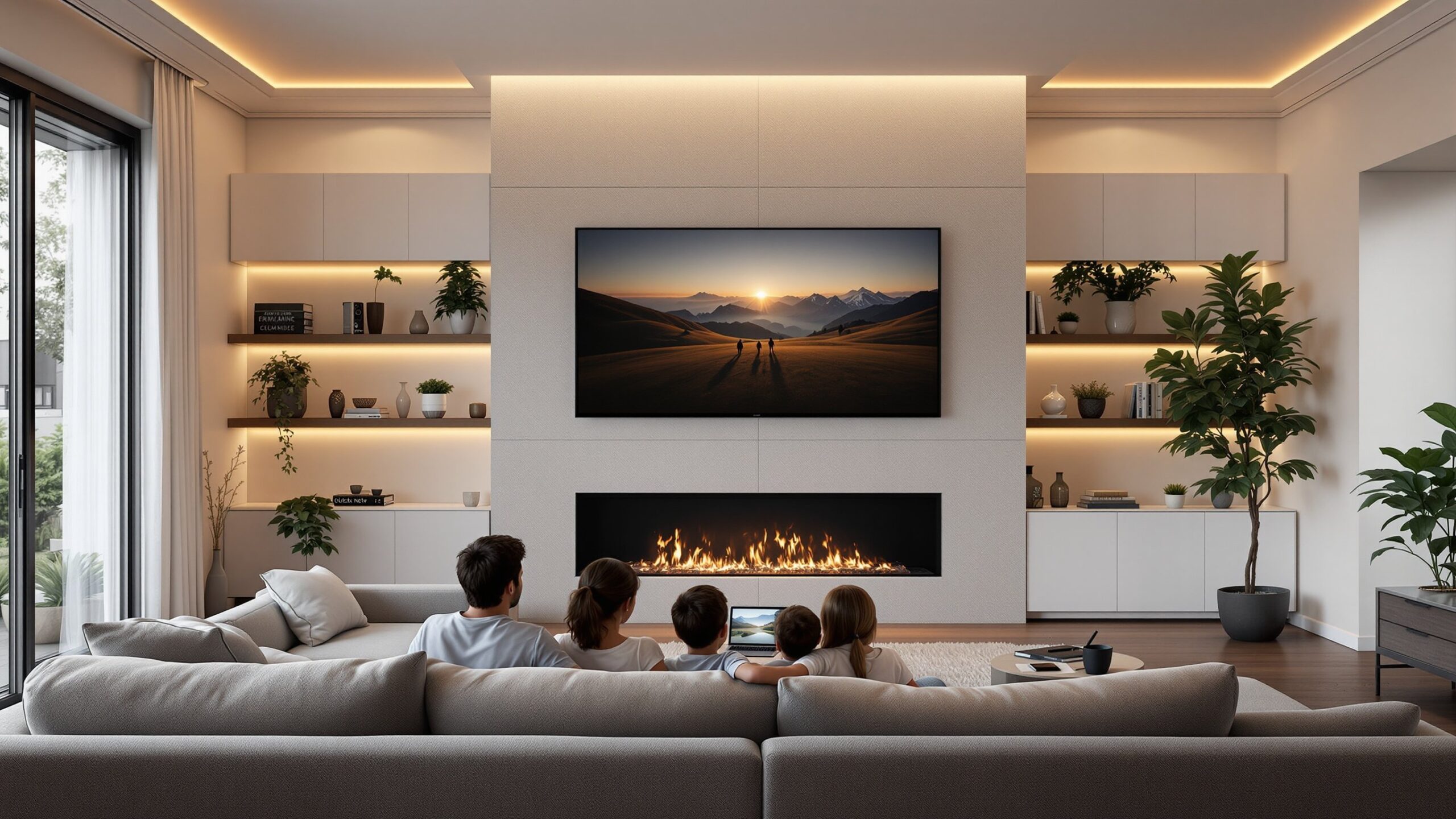
Modern family rooms are no longer designed around a single screen. Today’s homes are evolving into dynamic, multi-screen living spaces where entertainment, productivity, gaming, and connection all happen at once. Whether it’s a large TV for movie night, a secondary screen for sports stats, a tablet for kids’ shows, or a laptop for quick work sessions, multiple displays can coexist beautifully when the space is designed with intention. On this page, you’ll explore creative ideas, expert strategies, and practical setups that help homeowners design family rooms where several screens work together instead of competing for attention. From smart layouts and viewing angles to lighting, seating arrangements, and sound balance, multi-screen living spaces are all about creating harmony between technology and comfort. Family Room Streets brings together inspiring guides and real-world solutions that show how to build a room that adapts to modern life. Whether your family loves gaming, streaming, sports, or hybrid work, a well-designed multi-screen environment transforms your living room into a flexible hub where everyone can enjoy their favorite experiences at the same time—without sacrificing style, comfort, or togetherness.
A: It depends on the room size, but each screen should have a clear purpose so the space does not feel cluttered.
A: No, the main screen should lead while secondary screens can be smaller and more task-specific.
A: Poor placement, especially when screens compete for attention or create awkward sightlines.
A: Often yes, because they save floor space and make the room feel more intentional and streamlined.
A: Use shades, control window light, and place screens where reflections are less direct.
A: Not always, but thoughtful audio zoning can make the room much more enjoyable and less chaotic.
A: Yes, especially when screens are integrated with built-ins, décor, and clean cable management.
A: Yes, it can support gaming, stats, browsing, or separate content without interrupting the main display.
A: Flexible seating like sectionals, swivel chairs, and movable accent chairs usually works best.
A: Balanced lighting, clear zones, good sound control, and a layout that supports real family use.