
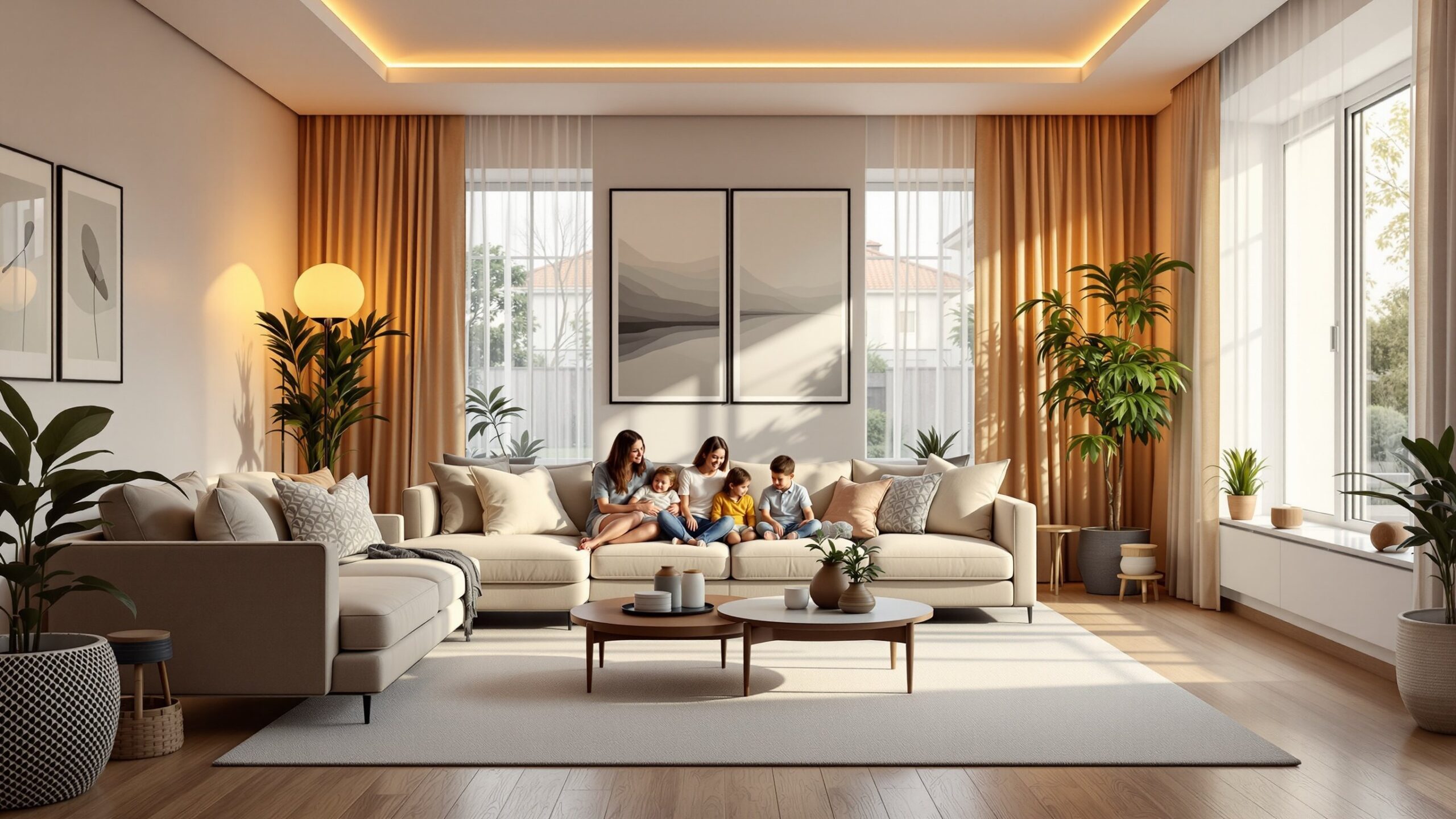
Lighting & Color Principles are the quiet power players behind every inviting, functional family room. They shape mood, guide movement, and turn everyday moments into something warm, balanced, and intentional. On Family Room Streets, this sub-category explores how light and color work together to create spaces that feel alive—energizing in the morning, cozy in the evening, and effortlessly comfortable all day long. From natural daylight strategies and layered lighting plans to color palettes that enhance space, warmth, and flow, these articles break down the design choices that truly transform a room. You’ll discover how soft ambient lighting sets the tone, how accent lighting adds depth and personality, and how color temperature can subtly influence emotion and focus. We also dive into how paint shades, finishes, and materials interact with light—changing throughout the day and across seasons. Whether you’re refreshing a family room, planning a full redesign, or simply curious about why certain spaces feel “just right,” Lighting & Color Principles offers practical insights, creative inspiration, and designer-level thinking made approachable for real homes and real living.
A: Aim for at least 3 sources: one ambient + one task + one accent, then add by zones.
A: Put key lights on dimmers and add one accent light for depth (art, shelf, or corner).
A: Bulb color temperature and shadows shift how undertones read—test under your evening lighting.
A: Avoid glare from overheads; use lamps/sconces and add soft backlighting behind the TV.
A: Yes—matching color temperature across the room prevents a patchy, mismatched glow.
A: Light neutrals with consistent undertones, plus a bright ceiling and layered lighting.
A: Definitely—keep one “dominant temperature” and use the other as an accent for balance.
A: Matte hides flaws and reduces glare; eggshell is a durable middle ground; satin reflects more.
A: Add contrast (dark frames/accents), texture (rugs/curtains), and at least one accent light.
A: Swap pillows/throws, add art with a defined palette, and adjust lighting warmth/dimming.