
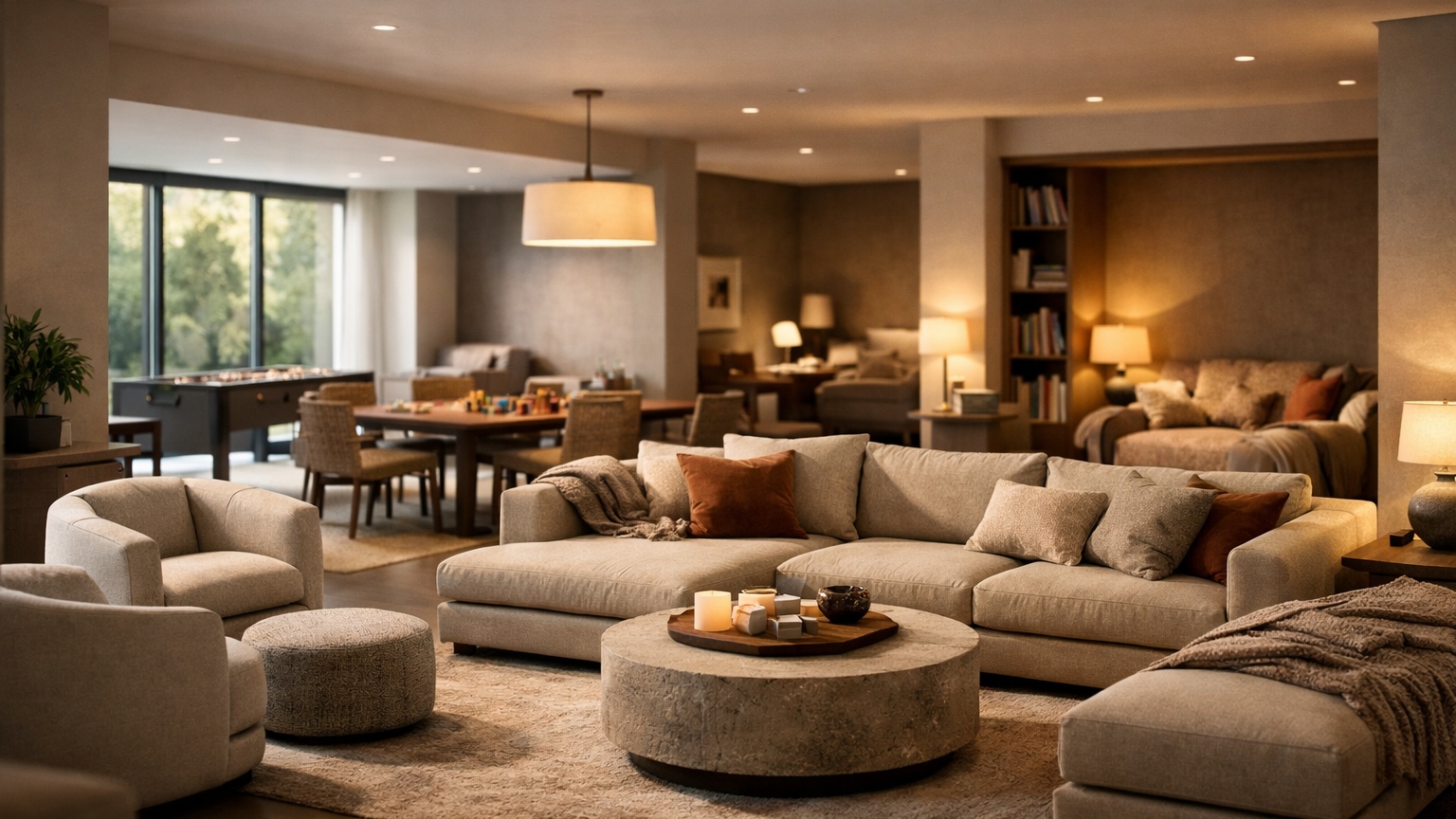
Multigenerational living areas are where comfort meets connection, creating spaces that welcome every age, stage, and lifestyle under one roof. These thoughtfully designed rooms go beyond traditional family spaces, blending flexibility, functionality, and warmth to support everything from lively gatherings to quiet moments of retreat. Whether it’s grandparents relaxing with a book, parents hosting friends, or kids spreading out for play and creativity, these environments are built to adapt seamlessly to everyone’s needs. In this collection, you’ll discover inspiring ideas that balance style with practicality—layered seating arrangements, smart zoning techniques, and adaptable layouts that make sharing space feel effortless. From cozy corners designed for conversation to open layouts that encourage togetherness, each article explores how to create harmony without sacrificing individuality. Multigenerational living is more than a trend—it’s a lifestyle rooted in connection, care, and shared experiences. Explore designs that bring people closer, enhance daily living, and transform your family room into a space where everyone truly belongs.
A: It is designed to comfortably support children, adults, and often older family members in the same shared space.
A: A mix of supportive chairs, flexible sofas, and movable pieces usually gives the best balance of comfort and function.
A: Use a consistent color palette and materials, then vary the furniture shapes and functions within that visual framework.
A: Not entirely; a better layout supports both screen time and conversation so the space serves more than one purpose.
A: Add storage furniture, baskets, closed cabinets, and easy drop zones for everyday items used by multiple people.
A: Warm neutrals, soft earth tones, and balanced accent colors often feel welcoming across a wide range of ages and tastes.
A: Yes, if you create clear zones so the room still feels organized and comfortable rather than visually chaotic.
A: Durable hard flooring with a large area rug is often a smart combination for comfort, cleanability, and noise control.
A: Include supportive seating, clear pathways, good lighting, and furniture that is easy to get in and out of.
A: Designing the room for only one activity or one age group instead of creating a space that truly works for everyone.