
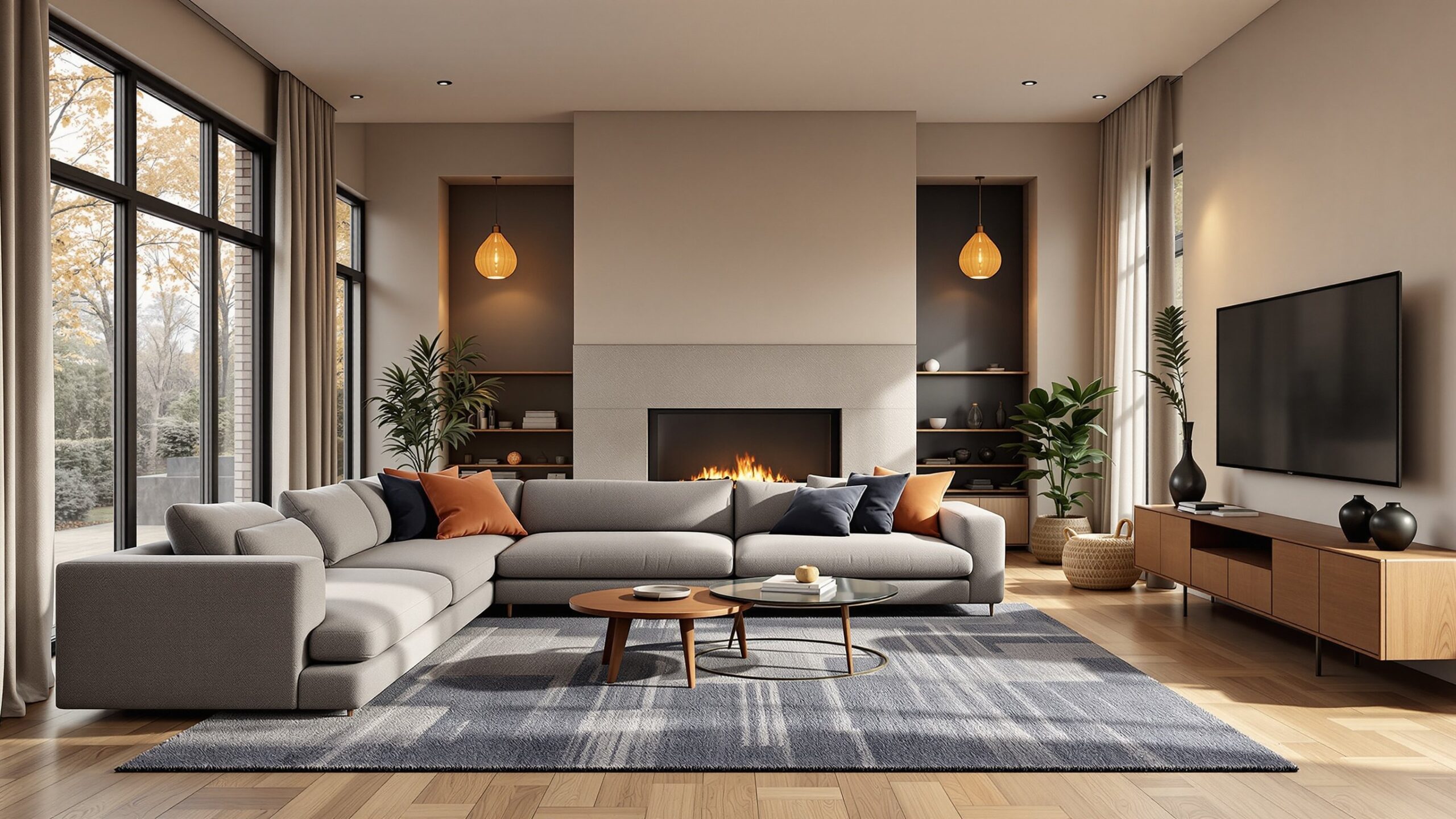
Seating Layout Strategies are the secret blueprint behind every inviting, functional, and beautifully balanced family room. On Family Room Streets, this is where comfort meets intention. A well-planned seating arrangement does more than fill a space—it shapes conversations, frames focal points, supports daily routines, and quietly defines how your home feels the moment someone walks in. Whether you’re designing around a fireplace, centering a statement coffee table, maximizing a small footprint, or creating multiple conversation zones in an open-concept layout, the right seating strategy transforms chaos into cohesion. Sofas, sectionals, accent chairs, ottomans, and modular pieces all play a role in crafting flow, flexibility, and visual harmony. The distance between seats, the angle of a chair, and the balance between symmetry and softness can completely change the energy of a room. In this collection, you’ll explore layouts that elevate comfort, enhance traffic flow, and make every square foot count. From cozy conversation clusters to entertainment-ready configurations, discover how thoughtful seating design turns an ordinary family room into the true heart of the home.
A: Choose a sectional for lounge-heavy households; choose a sofa + chairs for flexibility and easier rearranging.
A: Not necessarily—floating pieces often improve traffic flow and make conversation areas feel more defined.
A: Break it into zones: a conversation area at one end and a reading/game zone at the other, using a rug to anchor each.
A: Angle chairs for conversation, add a secondary focal point (art, shelves), and keep side seating turned inward.
A: Use a storage ottoman, a bench, or two lightweight accent chairs instead of another bulky sofa.
A: Keep pathways clear, choose soft edges where possible, and add hidden storage to reduce floor clutter.
A: Center it to serve the main seating, then use small side tables to support any seats that feel “out of reach.”
A: Protect the main traffic lanes first, then place seating so pathways skirt the conversation area instead of cutting through it.
A: Pull seating closer together, add a rug under the front legs, and use warm lighting at seating height.
A: Tape the footprint on the floor or use boxes to mock sizes—then walk the routes and “sit” in the zones.