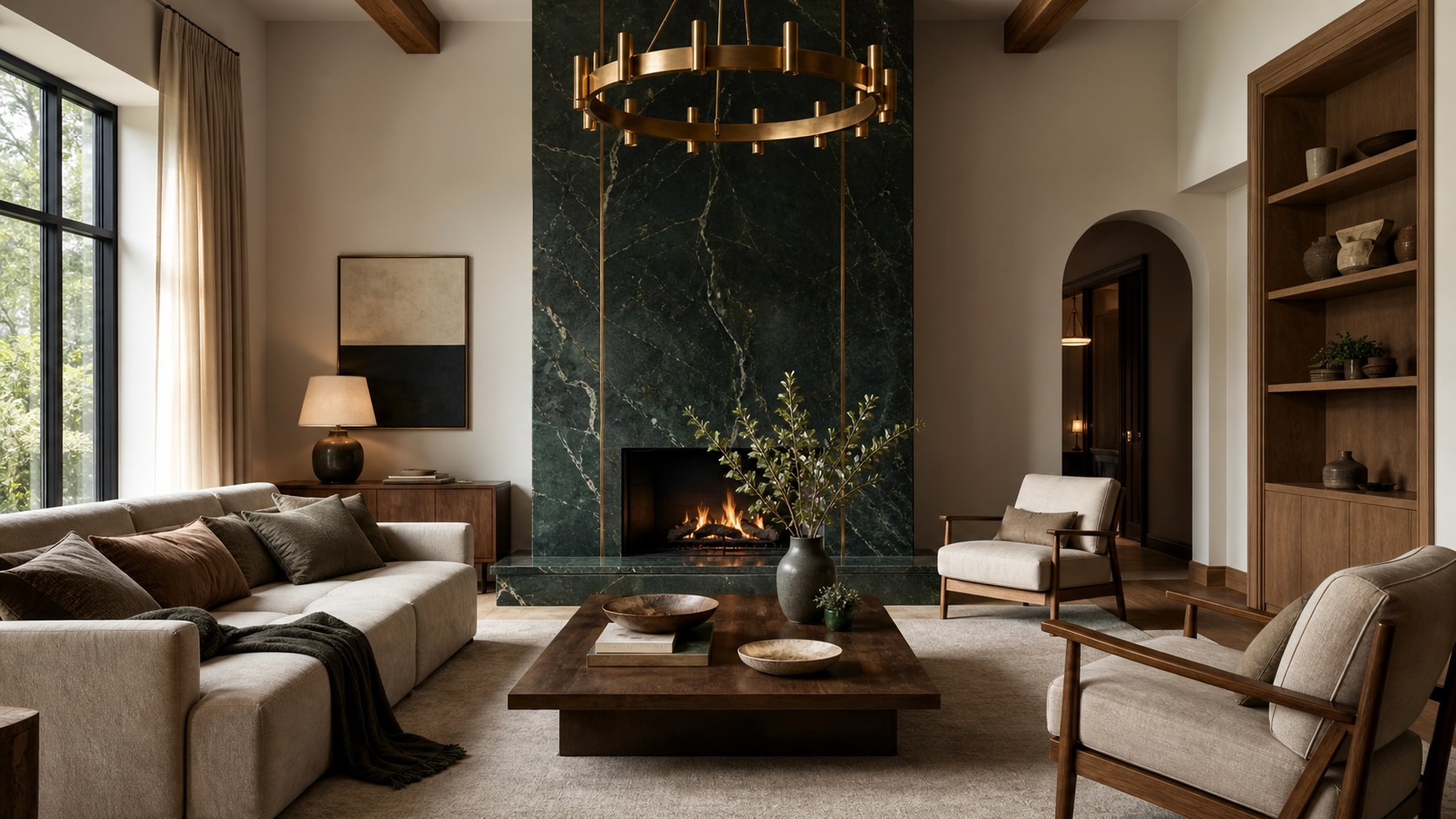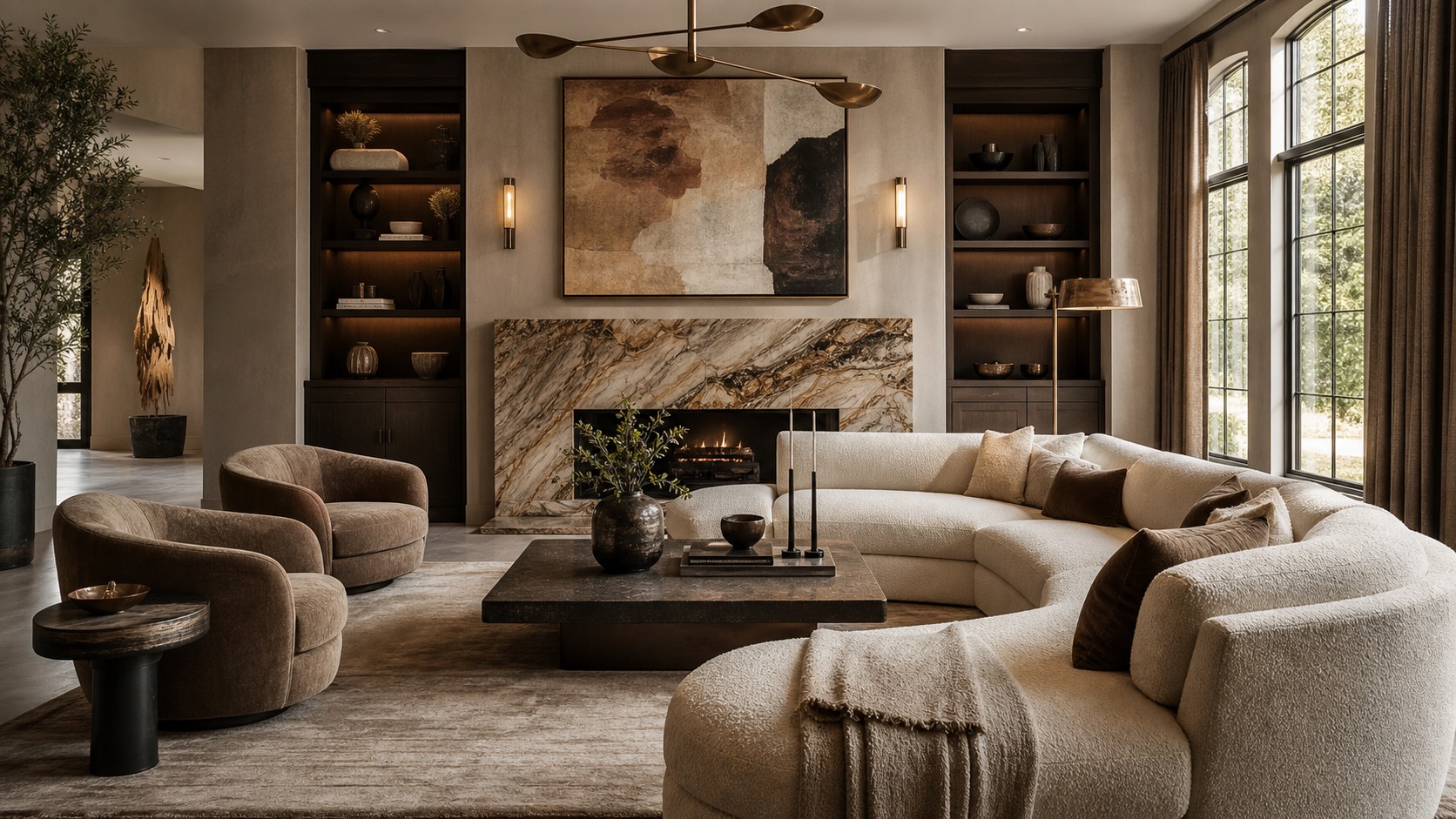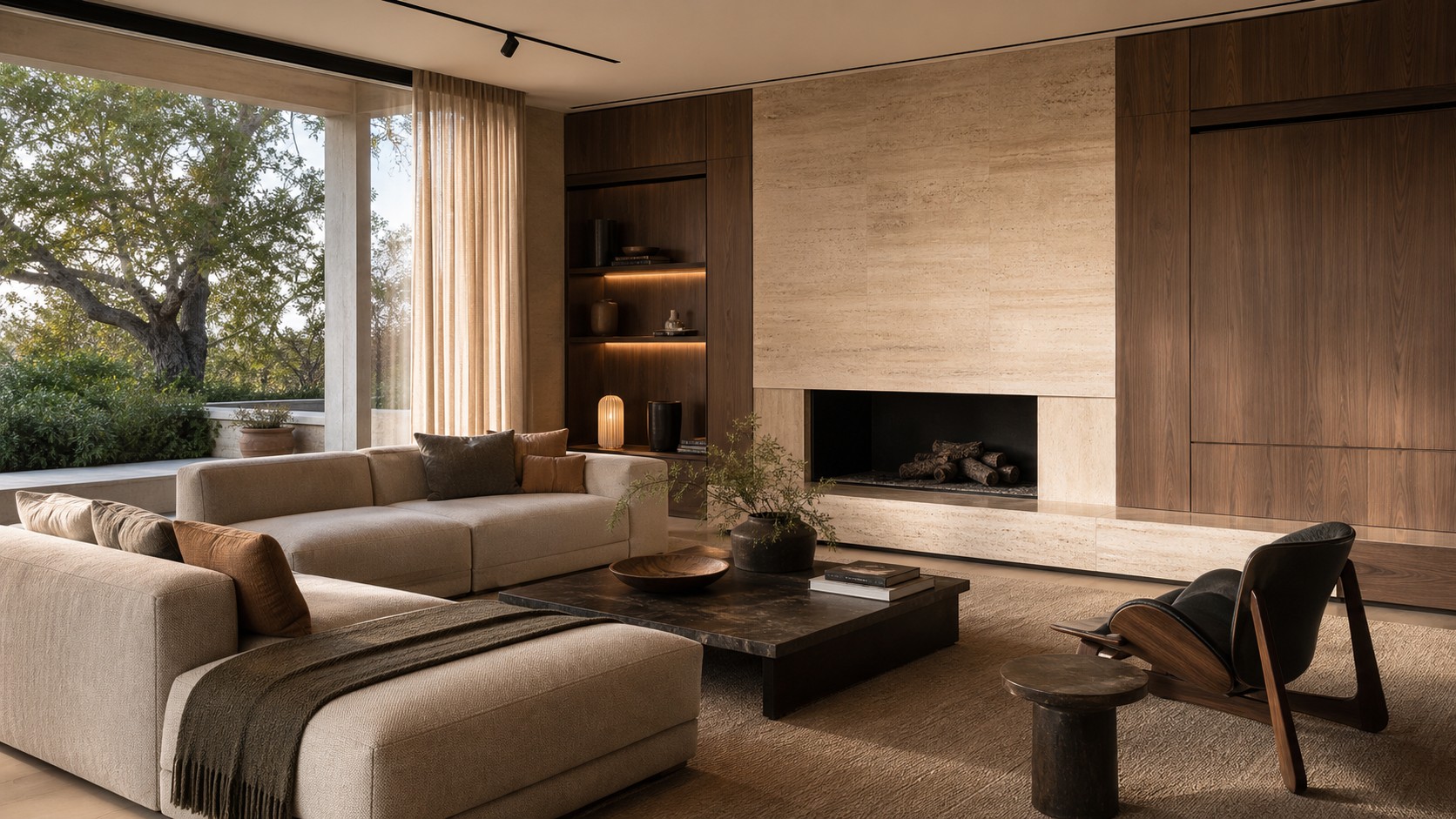
High-end modern living is less about displaying technology than making complexity disappear. Screens, sound, charging, storage, lighting, climate, and flexible seating should work intuitively while the room presents a calm composition of wood, stone, textile, and light. The best investments are felt every day: a sofa supporting different postures, acoustics improving conversation, cabinetry absorbing clutter, and controls everyone understands. This guide approaches luxury as lasting performance paired with refined materials and precise details.
A: Use quality upholstery, layered lighting, large rugs, curated accessories, and a restrained color palette.
A: Warm neutrals, soft whites, taupe, charcoal, espresso, olive, clay, and muted metallics work beautifully.
A: Yes. Choose performance fabrics, rounded tables, washable rugs, hidden storage, and durable finishes.
A: A deep, low-profile sectional or tailored sofa with clean lines gives a modern designer feel.
A: Not always. A framed TV, custom media wall, or dark backdrop can make it blend in elegantly.
A: Ideally, at least the front legs of major seating pieces should sit on the rug.
A: Dimmable overhead lighting, sconces, table lamps, floor lamps, and shelf lighting create a layered glow.
A: Add soft throws, plush seating, relaxed pillows, warm wood, and comfortable everyday surfaces.
A: Yes, built-ins add storage, symmetry, architectural value, and a custom luxury appearance.
A: A statement rug, upgraded lighting, or a custom fireplace/media wall can transform the entire room.
Plan Connected Infrastructure
Begin with the way the room is used on an ordinary evening, not with an idealized empty floor plan. Modern rooms rely on power, data, audio, lighting, shades, and climate systems that are difficult to correct after finishing. Map screens, speakers, routers, charging, floor outlets, controls, and service routes before cabinetry or walls are finalized. The goal is a clear composition that remains comfortable, durable, and easy to understand.
Central equipment can reduce visible hardware, but ventilation, labels, documentation, replacement access, and future capacity remain essential. Look closely at spacing, repeated lines, material transitions, and the way daylight changes the view from each entrance. These quieter relationships are what make a room feel intentional instead of assembled one object at a time. They also help separate a lasting design decision from a quick decorative fix.
Test the idea at full scale before committing. Walk the main route, sit in every regular seat, open nearby doors and drawers, and view the room at night as well as during the day. Do not conceal components so thoroughly that heat, signal, maintenance, or replacement becomes a problem. Make small adjustments until function and visual balance reinforce each other. A few inches, a lower profile, or one removed accessory can produce more improvement than another purchase.
Choose Disciplined Flexible Seating
This choice establishes a hierarchy that every later purchase and placement should support. Family life shifts between conversation, streaming, play, reading, and entertaining, but modularity should not create a shapeless cushion field. Select modules with a clear grid, reliable connectors, supportive construction, and available replacement parts, plus movable chairs for changing views. The goal is a clear composition that remains comfortable, durable, and easy to understand.
Low profiles preserve open-plan sightlines, while varied seat depths support upright conversation and lounging. Leave room to separate pieces later. Look closely at spacing, repeated lines, material transitions, and the way daylight changes the view from each entrance. These quieter relationships are what make a room feel intentional instead of assembled one object at a time. They also help separate a lasting design decision from a quick decorative fix.
Test the idea at full scale before committing. Walk the main route, sit in every regular seat, open nearby doors and drawers, and view the room at night as well as during the day. Do not buy the largest configuration that fits on paper at the expense of circulation and adaptability. Make small adjustments until function and visual balance reinforce each other. A few inches, a lower profile, or one removed accessory can produce more improvement than another purchase.
Integrate Media Quietly
The strongest approach treats this part of the room as practical architecture rather than leftover decoration. A large screen can serve the household while receding when inactive. Its wall should remain well proportioned rather than becoming a shrine to electronics. Mount for seated comfort, control daylight, calibrate sound, and place components in ventilated cabinetry with accessible cable paths. The goal is a clear composition that remains comfortable, durable, and easy to understand.
Align media-wall lines with architecture and combine shallow storage or acoustic treatment without forcing decorative symmetry around the display. Look closely at spacing, repeated lines, material transitions, and the way daylight changes the view from each entrance. These quieter relationships are what make a room feel intentional instead of assembled one object at a time. They also help separate a lasting design decision from a quick decorative fix.
Test the idea at full scale before committing. Walk the main route, sit in every regular seat, open nearby doors and drawers, and view the room at night as well as during the day. Do not mount the screen too high merely to accommodate cabinetry or a conventional composition. Make small adjustments until function and visual balance reinforce each other. A few inches, a lower profile, or one removed accessory can produce more improvement than another purchase.
Use Honest Materials in Clean Forms
Here, proportion matters as much as color, price, or style. Wood, honed stone, wool, leather, linen, and plaster prevent modern rooms from feeling sterile while simple geometry highlights natural variation. Limit the palette, repeat it purposefully, and execute edges, joints, and reveals precisely because minimal forms expose poor fabrication. The goal is a clear composition that remains comfortable, durable, and easy to understand.
Consider sourcing, emissions, durability, repairability, and appropriate use alongside appearance; honest aging adds long-term character. Look closely at spacing, repeated lines, material transitions, and the way daylight changes the view from each entrance. These quieter relationships are what make a room feel intentional instead of assembled one object at a time. They also help separate a lasting design decision from a quick decorative fix.
Test the idea at full scale before committing. Walk the main route, sit in every regular seat, open nearby doors and drawers, and view the room at night as well as during the day. Avoid fragile decorative layers where frequent touch and edge wear will reveal the illusion. Make small adjustments until function and visual balance reinforce each other. A few inches, a lower profile, or one removed accessory can produce more improvement than another purchase.
Engineer Acoustic Comfort
Begin with the way the room is used on an ordinary evening, not with an idealized empty floor plan. Glass, open plans, and hard surfaces can create echo that undermines conversation and media quality. Acoustic calm is a quiet luxury. Combine a generous rug, lined drapery, upholstery, books, and discreet absorptive or slatted treatments at strategic reflection points. The goal is a clear composition that remains comfortable, durable, and easy to understand.
Address mechanical noise and vibrating equipment as well as reverberation; complex rooms may merit professional modeling before finishes are installed. Look closely at spacing, repeated lines, material transitions, and the way daylight changes the view from each entrance. These quieter relationships are what make a room feel intentional instead of assembled one object at a time. They also help separate a lasting design decision from a quick decorative fix.
Test the idea at full scale before committing. Walk the main route, sit in every regular seat, open nearby doors and drawers, and view the room at night as well as during the day. Do not add random softness without diagnosing where sound reflects and which frequencies are troublesome. Make small adjustments until function and visual balance reinforce each other. A few inches, a lower profile, or one removed accessory can produce more improvement than another purchase.
Build Storage Around Behavior
This choice establishes a hierarchy that every later purchase and placement should support. Useful cabinetry reflects the real objects handled in the room rather than offering generic shelves that display clutter. Inventory games, devices, blankets, work supplies, exercise gear, records, drinks, and pet items, then assign adjustable storage near use. The goal is a clear composition that remains comfortable, durable, and easy to understand.
Flush fronts create calm, while limited open niches provide warmth. Test pulls, touch latches, hardware, interiors, and cleaning access. Look closely at spacing, repeated lines, material transitions, and the way daylight changes the view from each entrance. These quieter relationships are what make a room feel intentional instead of assembled one object at a time. They also help separate a lasting design decision from a quick decorative fix.
Test the idea at full scale before committing. Walk the main route, sit in every regular seat, open nearby doors and drawers, and view the room at night as well as during the day. Do not make every compartment hyper-specific; generous adjustable sections adapt better to new routines and devices. Make small adjustments until function and visual balance reinforce each other. A few inches, a lower profile, or one removed accessory can produce more improvement than another purchase.
Support Wellness Through Light and Nature
The strongest approach treats this part of the room as practical architecture rather than leftover decoration. Daylight, outdoor views, plants, tactile materials, and controllable evening light improve comfort beyond appearance. Preserve window area, control glare with layered shades, and create intuitive bright, task, conversation, and low-evening lighting scenes. The goal is a clear composition that remains comfortable, durable, and easy to understand.
Repeat outdoor material tones or orient seating toward landscape. Choose plants for actual light and care habits rather than styling alone. Look closely at spacing, repeated lines, material transitions, and the way daylight changes the view from each entrance. These quieter relationships are what make a room feel intentional instead of assembled one object at a time. They also help separate a lasting design decision from a quick decorative fix.
Test the idea at full scale before committing. Walk the main route, sit in every regular seat, open nearby doors and drawers, and view the room at night as well as during the day. Avoid automation that requires an app for every adjustment; physical controls and overrides should remain obvious. Make small adjustments until function and visual balance reinforce each other. A few inches, a lower profile, or one removed accessory can produce more improvement than another purchase.
Spend for Longevity and Change
Here, proportion matters as much as color, price, or style. High-end value comes from products that can be repaired, refinished, reupholstered, updated, or repurposed. Prioritize excellent frames, replaceable components, solid surfaces, durable hardware, and classic proportions; retain diagrams, samples, and formulas. The goal is a clear composition that remains comfortable, durable, and easy to understand.
Place trend-forward color and shape in replaceable layers while infrastructure and major cabinetry remain adaptable and restrained. Look closely at spacing, repeated lines, material transitions, and the way daylight changes the view from each entrance. These quieter relationships are what make a room feel intentional instead of assembled one object at a time. They also help separate a lasting design decision from a quick decorative fix.
Test the idea at full scale before committing. Walk the main route, sit in every regular seat, open nearby doors and drawers, and view the room at night as well as during the day. Do not mistake novelty for innovation; the most modern choice may be the one that stays useful for decades. Make small adjustments until function and visual balance reinforce each other. A few inches, a lower profile, or one removed accessory can produce more improvement than another purchase.
Make Modern Luxury Quietly Capable
A refined contemporary family room should reveal less effort than it contains. Technology responds without dominating, storage sits near the behavior it supports, sound feels controlled, materials invite touch, and seating changes without disorder. Build that invisible competence first, then add art and personal objects. A successful family room does not depend on one trick or expensive purchase. It comes from connected decisions about scale, movement, comfort, light, maintenance, and personality, followed by the confidence to edit anything that does not support the whole.