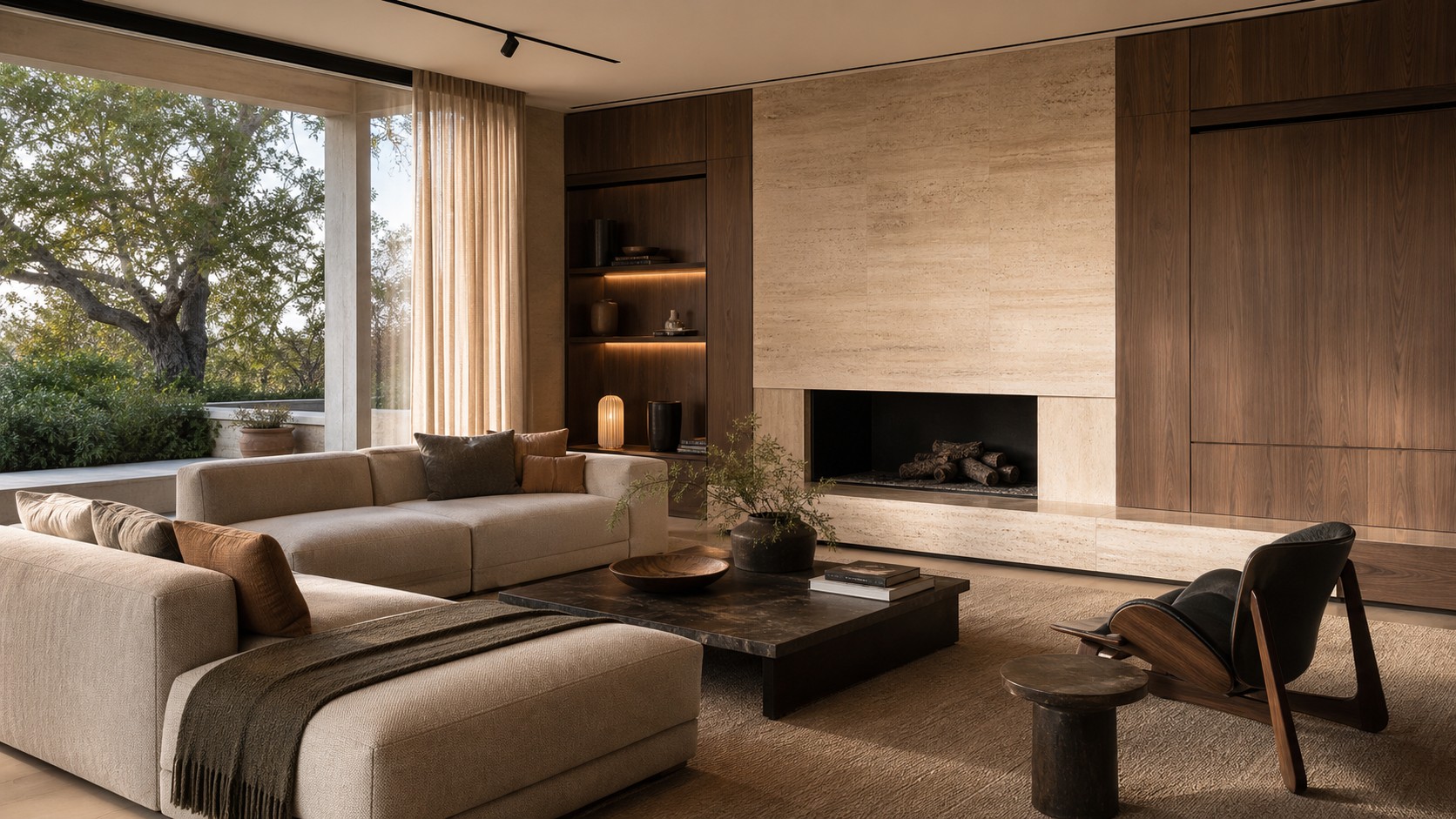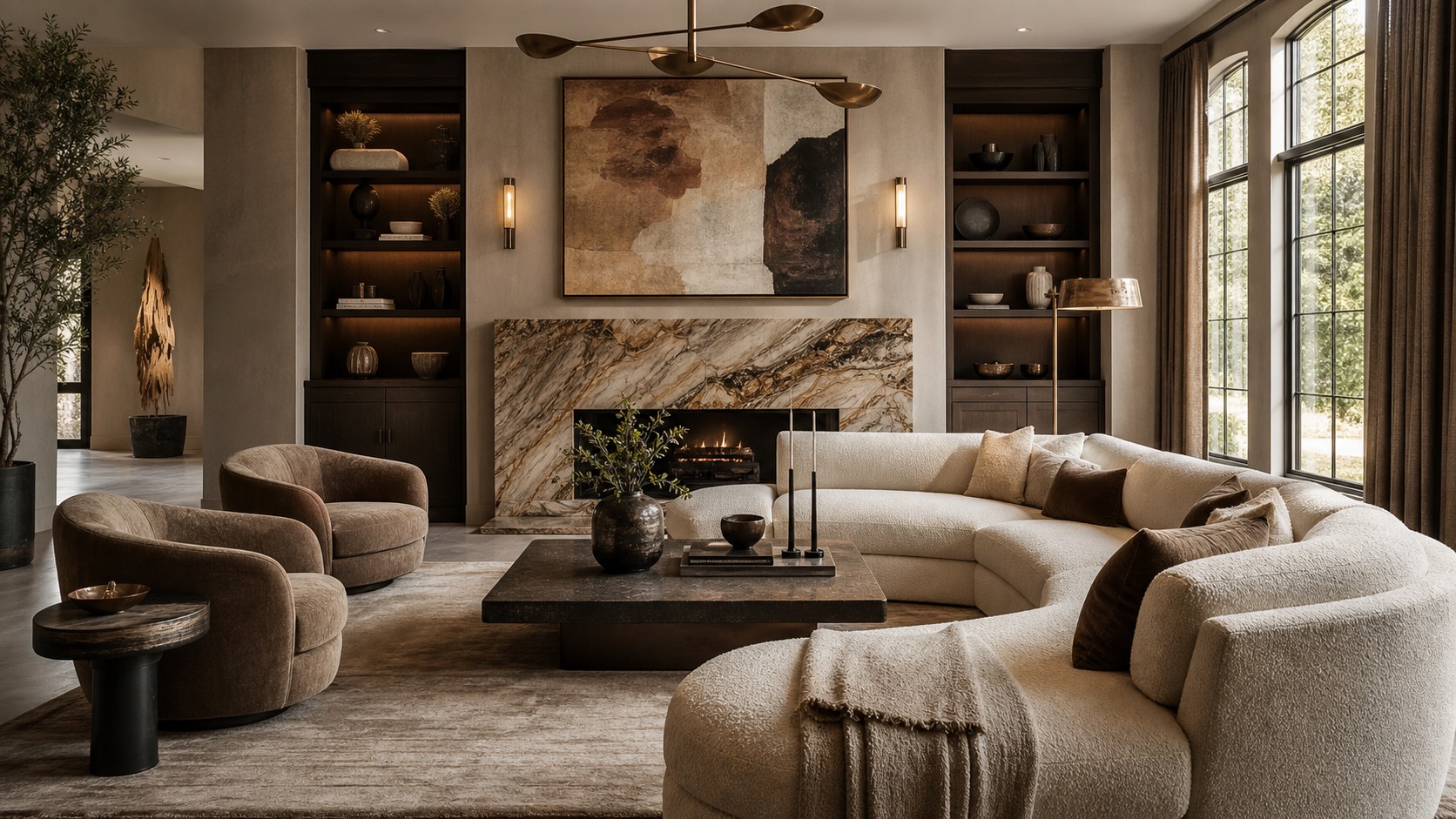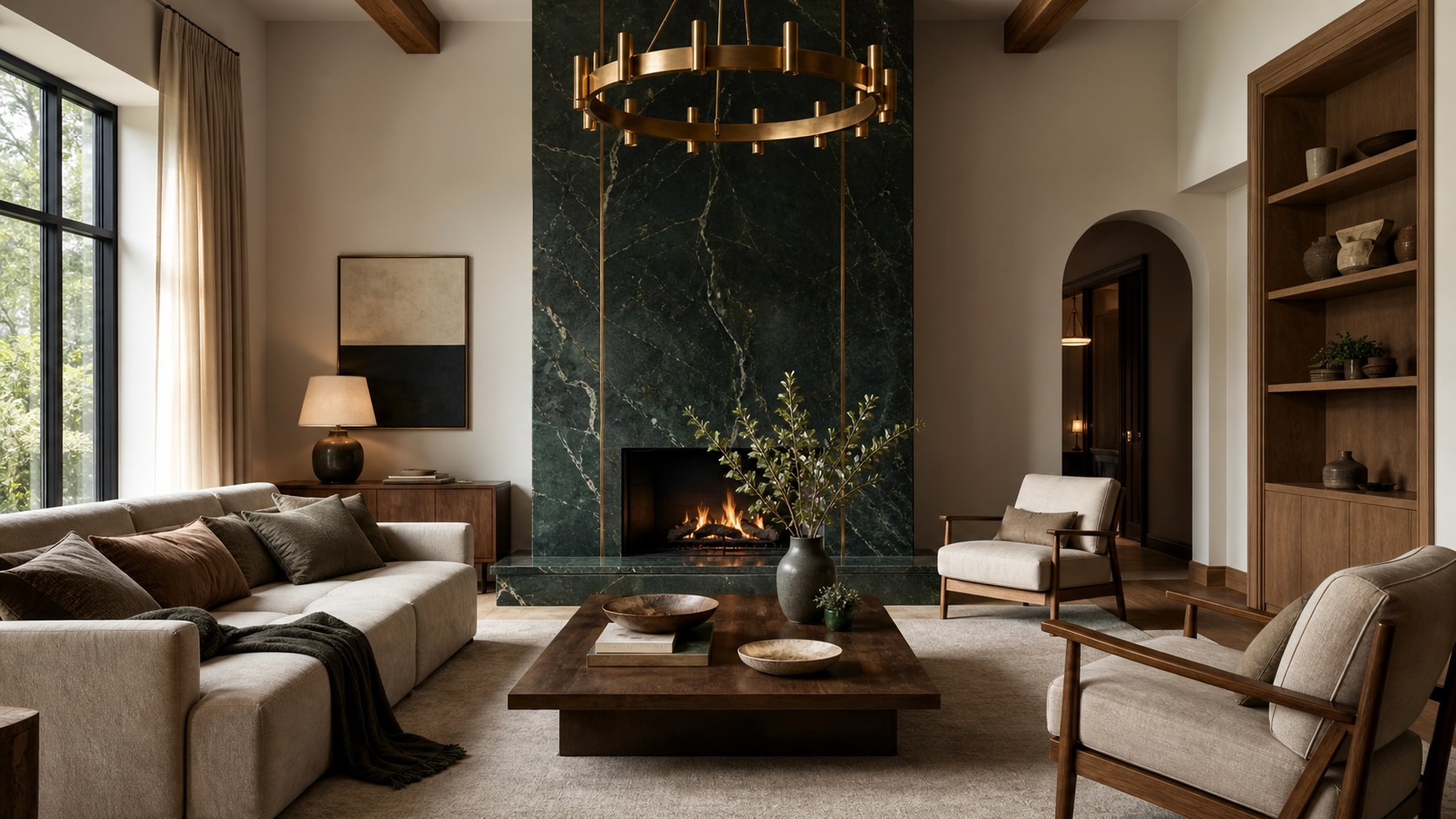
A statement family room should be memorable for a reason that can be described in one sentence. Perhaps a stone fireplace rises like architecture, a ceiling creates unexpected rhythm, or a saturated envelope makes evenings feel cinematic. Trouble begins when every surface demands to be the headline. Elevated spaces pair one commanding gesture with quieter supporting decisions, allowing boldness and comfort to reinforce each other. The directions below create impact through different means and balance it with scale, light, furniture, and daily function.
A: Use larger-scale decor, layered lighting, quality textiles, and one strong focal point.
A: Yes—choose plush seating, soft rugs, durable fabrics, and practical storage.
A: Oversized art, dramatic curtains, or a bold area rug can transform the room quickly.
A: It can be, but built-ins, art, or a fireplace can help the room feel less tech-centered.
A: Deep greens, navy, charcoal, warm neutrals, rust, cream, and black accents all work beautifully.
A: Limit bold elements to one or two major moments and repeat colors throughout the space.
A: Yes—use one bold feature and keep furniture streamlined to avoid crowding.
A: A mix of sconces, lamps, dimmers, and one sculptural fixture creates a designer look.
A: Try removable wallpaper, large art, rugs, lamps, curtains, and freestanding storage.
A: Invest in the sofa, rug, or lighting because those pieces shape the entire room.
Name the Statement First
Begin with the way the room is used on an ordinary evening, not with an idealized empty floor plan. A distinctive room begins with a design thesis. One clear sentence prevents unrelated dramatic purchases from accumulating. Define the room by its monolithic hearth, saturated library envelope, sculptural light, or another central idea and judge every choice against it. The goal is a clear composition that remains comfortable, durable, and easy to understand.
The gesture should connect to architecture or household identity and strengthen views from adjacent rooms rather than following a passing novelty. Look closely at spacing, repeated lines, material transitions, and the way daylight changes the view from each entrance. These quieter relationships are what make a room feel intentional instead of assembled one object at a time. They also help separate a lasting design decision from a quick decorative fix.
Test the idea at full scale before committing. Walk the main route, sit in every regular seat, open nearby doors and drawers, and view the room at night as well as during the day. If the concept requires a list of five focal points, edit before spending. Make small adjustments until function and visual balance reinforce each other. A few inches, a lower profile, or one removed accessory can produce more improvement than another purchase.
Make the Fireplace Architectural
This choice establishes a hierarchy that every later purchase and placement should support. A fireplace can control the room through mass, texture, and proportion, using full height for vertical force or a broad hearth for horizontality. Choose one characterful material such as book-matched stone, handmade brick, plaster, or safely detailed fluted wood and resolve every transition. The goal is a clear composition that remains comfortable, durable, and easy to understand.
Plan the entire wall, including screen, speakers, ventilation, firewood, cabinetry, and concealed wiring, as one composition. Look closely at spacing, repeated lines, material transitions, and the way daylight changes the view from each entrance. These quieter relationships are what make a room feel intentional instead of assembled one object at a time. They also help separate a lasting design decision from a quick decorative fix.
Test the idea at full scale before committing. Walk the main route, sit in every regular seat, open nearby doors and drawers, and view the room at night as well as during the day. Do not add a mantel, screen, sconces, art, niches, and shelves simply because each is possible. Make small adjustments until function and visual balance reinforce each other. A few inches, a lower profile, or one removed accessory can produce more improvement than another purchase.
Wrap the Room in Saturated Color
The strongest approach treats this part of the room as practical architecture rather than leftover decoration. Deep color can feel intimate and confident when carried beyond a tentative accent wall into an architectural envelope. Use related values of olive, aubergine, tobacco, ink, or mineral blue on walls, trim, cabinetry, and possibly ceiling, varying sheen for definition. The goal is a clear composition that remains comfortable, durable, and easy to understand.
Balance saturation with quiet upholstery, warm wood, soft metal, generous light, and large samples tested beside fixed floors and stone. Look closely at spacing, repeated lines, material transitions, and the way daylight changes the view from each entrance. These quieter relationships are what make a room feel intentional instead of assembled one object at a time. They also help separate a lasting design decision from a quick decorative fix.
Test the idea at full scale before committing. Walk the main route, sit in every regular seat, open nearby doors and drawers, and view the room at night as well as during the day. Avoid scattering unrelated bright accents that interrupt the richness of the main color. Make small adjustments until function and visual balance reinforce each other. A few inches, a lower profile, or one removed accessory can produce more improvement than another purchase.
Promote the Ceiling
Here, proportion matters as much as color, price, or style. The ceiling is often the largest untreated plane and can make a statement without consuming floor area. Relate beams, coffers, paneling, wallpaper, or a special finish to furniture groups, windows, and architectural bays, then integrate lighting and vents. The goal is a clear composition that remains comfortable, durable, and easy to understand.
Low rooms may benefit from continuous color or subtle luster, while tall rooms can accept deeper structure that adds intimacy. Look closely at spacing, repeated lines, material transitions, and the way daylight changes the view from each entrance. These quieter relationships are what make a room feel intentional instead of assembled one object at a time. They also help separate a lasting design decision from a quick decorative fix.
Test the idea at full scale before committing. Walk the main route, sit in every regular seat, open nearby doors and drawers, and view the room at night as well as during the day. Do not let junction boxes, speakers, or vents cut randomly through the finished pattern. Make small adjustments until function and visual balance reinforce each other. A few inches, a lower profile, or one removed accessory can produce more improvement than another purchase.
Choose Functional Sculpture
Begin with the way the room is used on an ordinary evening, not with an idealized empty floor plan. A remarkable sofa, carved table, chair, or light can define the room while earning its footprint through daily usefulness. Place it where open space reveals the silhouette, use quiet companions, and repeat one material or curve elsewhere for connection. The goal is a clear composition that remains comfortable, durable, and easy to understand.
Sit in unusual upholstery, verify table stability, and view reflective fixtures under real light; statement design still has to perform. Look closely at spacing, repeated lines, material transitions, and the way daylight changes the view from each entrance. These quieter relationships are what make a room feel intentional instead of assembled one object at a time. They also help separate a lasting design decision from a quick decorative fix.
Test the idea at full scale before committing. Walk the main route, sit in every regular seat, open nearby doors and drawers, and view the room at night as well as during the day. Do not crowd several iconic pieces together until the room resembles a catalog of signatures. Make small adjustments until function and visual balance reinforce each other. A few inches, a lower profile, or one removed accessory can produce more improvement than another purchase.
Let Oversized Art Lead
This choice establishes a hierarchy that every later purchase and placement should support. Large art can supply movement, color, and emotional tone without permanent construction and can make the room deeply personal. Choose for lasting connection, provide suitable distance and controlled light, then draw only a limited supporting palette from its temperature. The goal is a clear composition that remains comfortable, durable, and easy to understand.
Framing and installation affect shadow and depth; heavy, dimensional, or light-sensitive work deserves specialist advice. Look closely at spacing, repeated lines, material transitions, and the way daylight changes the view from each entrance. These quieter relationships are what make a room feel intentional instead of assembled one object at a time. They also help separate a lasting design decision from a quick decorative fix.
Test the idea at full scale before committing. Walk the main route, sit in every regular seat, open nearby doors and drawers, and view the room at night as well as during the day. Avoid repeating every artwork color in pillows until the piece becomes a decorating swatch. Make small adjustments until function and visual balance reinforce each other. A few inches, a lower profile, or one removed accessory can produce more improvement than another purchase.
Balance Drama With Quiet Scale
The strongest approach treats this part of the room as practical architecture rather than leftover decoration. A commanding feature needs relief, but quiet upholstery and rugs still require enough scale to balance architecture. Choose simple silhouettes, excellent textures, restrained contrast, and one or two subtle echoes of the main material or geometry. The goal is a clear composition that remains comfortable, durable, and easy to understand.
A broad rug and substantial sofa can counter a tall fireplace without introducing another motif, provided open space preserves legibility. Look closely at spacing, repeated lines, material transitions, and the way daylight changes the view from each entrance. These quieter relationships are what make a room feel intentional instead of assembled one object at a time. They also help separate a lasting design decision from a quick decorative fix.
Test the idea at full scale before committing. Walk the main route, sit in every regular seat, open nearby doors and drawers, and view the room at night as well as during the day. Do not make support pieces so neutral or undersized that the statement appears disconnected from the room. Make small adjustments until function and visual balance reinforce each other. A few inches, a lower profile, or one removed accessory can produce more improvement than another purchase.
Carry Impact From Day to Night
Here, proportion matters as much as color, price, or style. Bold materials change as daylight fades. Texture and depth disappear unless evening lighting is planned to reveal them. Use grazing light on dimensional surfaces, a dimmable decorative source for atmosphere, and task lamps at seats, with a hierarchy of brightness. The goal is a clear composition that remains comfortable, durable, and easy to understand.
Sheers can soften daytime contrast while lined drapery creates an evening backdrop; simple controls make every scene usable. Look closely at spacing, repeated lines, material transitions, and the way daylight changes the view from each entrance. These quieter relationships are what make a room feel intentional instead of assembled one object at a time. They also help separate a lasting design decision from a quick decorative fix.
Test the idea at full scale before committing. Walk the main route, sit in every regular seat, open nearby doors and drawers, and view the room at night as well as during the day. Avoid lighting every feature equally, which flattens depth and leaves the eye nowhere to settle. Make small adjustments until function and visual balance reinforce each other. A few inches, a lower profile, or one removed accessory can produce more improvement than another purchase.
Make the Bold Choice Feel Inevitable
The best statement feels like the natural conclusion of the architecture, light, and people who live there. Once the central gesture is strong, resist adding competitors. Support it with comfort, craftsmanship, and restraint so its identity survives changing accessories and seasons. A successful family room does not depend on one trick or expensive purchase. It comes from connected decisions about scale, movement, comfort, light, maintenance, and personality, followed by the confidence to edit anything that does not support the whole.