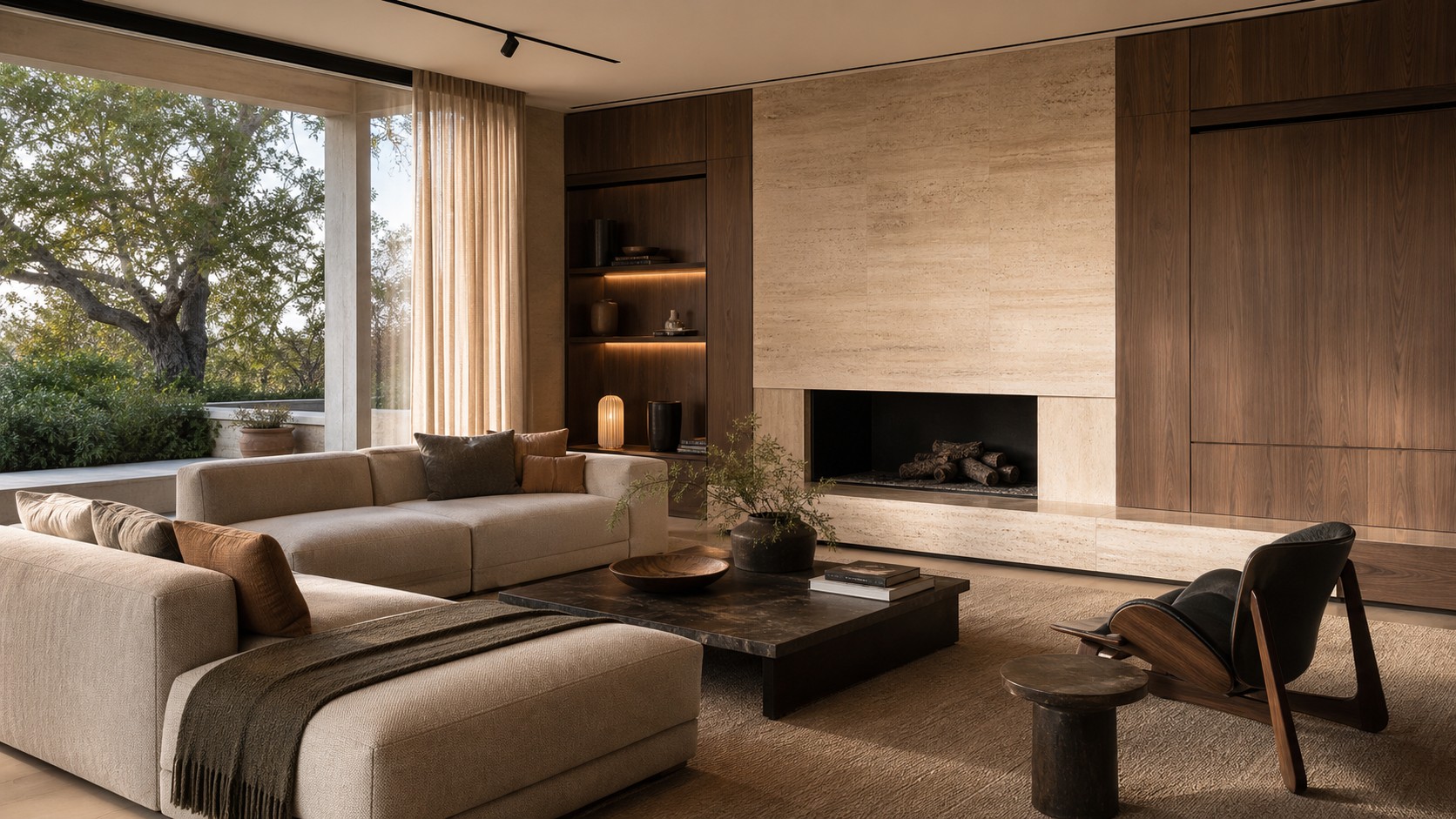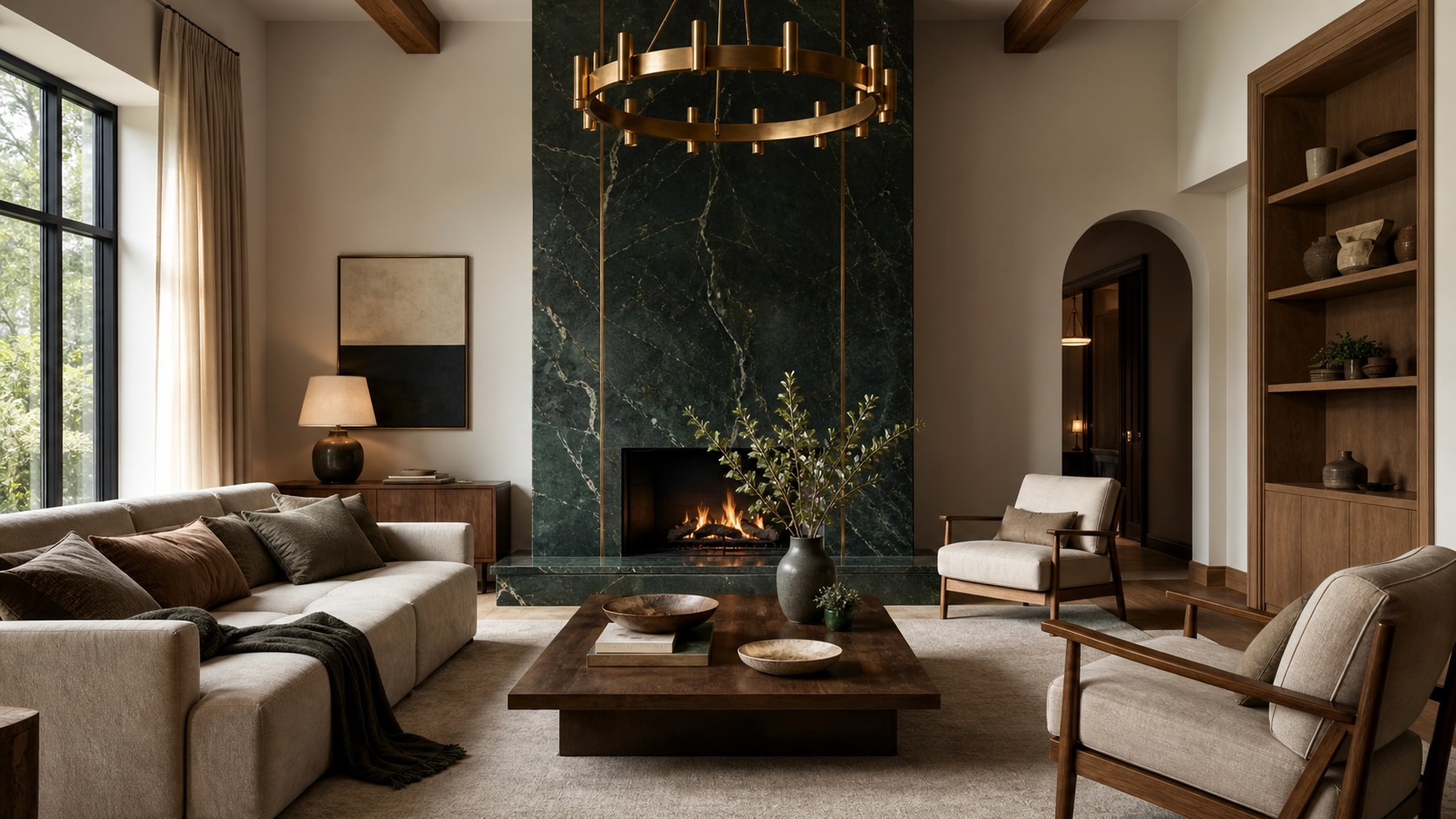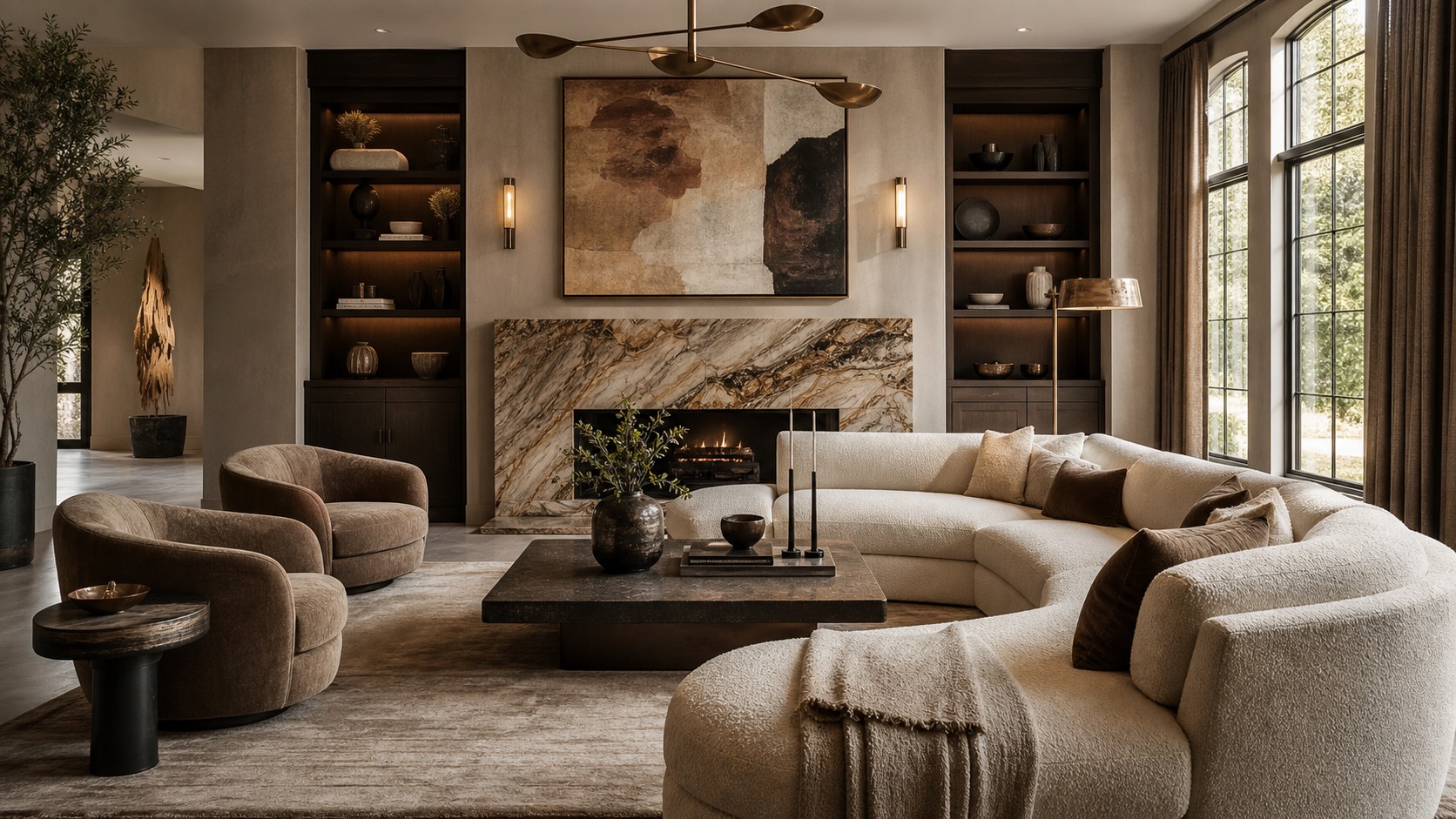
The family rooms that look effortless in design magazines are usually the result of rigorous editing. Their luxury appears in proportion, craftsmanship, and atmosphere rather than a pileup of expensive objects. Architecture frames the composition, upholstery creates tailored silhouettes, lighting gives every material depth, and personal pieces prevent a showroom feeling. A beautiful photograph matters, but the room must also survive long conversations, books, bare feet, snacks, and changing routines. These ideas translate editorial polish into decisions that feel exceptional in person.
A: Focus on lighting, large curtains, a proper rug size, styled surfaces, and fewer but better-looking accessories.
A: Warm neutrals, soft white, greige, camel, charcoal, olive, navy, espresso, and layered earth tones work beautifully.
A: Yes. Use performance fabrics, rounded tables, washable rugs, storage ottomans, and durable finishes.
A: A deep sectional, curved sofa, or tailored slipcovered sofa can all work depending on the room’s style.
A: Large enough for at least the front legs of the main seating pieces to rest on it.
A: Frame it with built-ins, use a dark wall behind it, or balance it with art, shelves, and lighting.
A: Combine overhead lighting, table lamps, floor lamps, sconces, and dimmers for a layered glow.
A: No. A curated mix of finishes and textures looks more luxurious than a fully matched set.
A: Strong focal points, balanced scale, styled surfaces, layered textures, clean storage, and thoughtful lighting.
A: Tiny rugs, cluttered shelves, harsh lighting, too many small accessories, and furniture pushed awkwardly against every wall.
Establish an Architectural Backdrop
Begin with the way the room is used on an ordinary evening, not with an idealized empty floor plan. Luxury begins with the lines organizing the room. Millwork, substantial trim, plaster, or a well-proportioned fireplace gives furniture authority. Identify the strongest plane and simplify it with full-height paneling, quiet stone, shallow built-ins, or a continuous textured finish. The goal is a clear composition that remains comfortable, durable, and easy to understand.
Relate details to the home: refined casing can sharpen tradition, while reveals and flush cabinetry suit modern architecture. Precision matters more than ornament. Look closely at spacing, repeated lines, material transitions, and the way daylight changes the view from each entrance. These quieter relationships are what make a room feel intentional instead of assembled one object at a time. They also help separate a lasting design decision from a quick decorative fix.
Test the idea at full scale before committing. Walk the main route, sit in every regular seat, open nearby doors and drawers, and view the room at night as well as during the day. Do not combine every prestige finish; competing grids, stone, metal, and elaborate ceilings weaken calm authority. Make small adjustments until function and visual balance reinforce each other. A few inches, a lower profile, or one removed accessory can produce more improvement than another purchase.
Compose an Editorial Seating Frame
This choice establishes a hierarchy that every later purchase and placement should support. Strong rooms create a legible foreground, middle ground, and focal background from the primary entrance while remaining natural from other views. Anchor the composition with a clear sofa silhouette, complementary chairs, and a table that mediates their shapes, leaving open floor around forms. The goal is a clear composition that remains comfortable, durable, and easy to understand.
Slight asymmetry adds life to formal balance. Related chairs, a bench, or a daybed can provide depth without an entire matching suite. Look closely at spacing, repeated lines, material transitions, and the way daylight changes the view from each entrance. These quieter relationships are what make a room feel intentional instead of assembled one object at a time. They also help separate a lasting design decision from a quick decorative fix.
Test the idea at full scale before committing. Walk the main route, sit in every regular seat, open nearby doors and drawers, and view the room at night as well as during the day. Do not turn every chair toward the camera view at the expense of conversation and movement. Make small adjustments until function and visual balance reinforce each other. A few inches, a lower profile, or one removed accessory can produce more improvement than another purchase.
Invest in Tailored Upholstery
The strongest approach treats this part of the room as practical architecture rather than leftover decoration. Upholstery carries immense visual area and physical contact. Quality appears in proportion, seams, resilient cushions, and fabric suited to the form. Specify seat depth, fill, arm height, and household performance, mixing a smooth textile with a nubby or softly lustrous companion. The goal is a clear composition that remains comfortable, durable, and easy to understand.
Down-wrapped supportive cores can feel inviting without looking overstuffed. Study large swatches under every lighting condition. Look closely at spacing, repeated lines, material transitions, and the way daylight changes the view from each entrance. These quieter relationships are what make a room feel intentional instead of assembled one object at a time. They also help separate a lasting design decision from a quick decorative fix.
Test the idea at full scale before committing. Walk the main route, sit in every regular seat, open nearby doors and drawers, and view the room at night as well as during the day. An expensive textile cannot rescue weak construction, wrong scale, or an uncomfortable seat. Make small adjustments until function and visual balance reinforce each other. A few inches, a lower profile, or one removed accessory can produce more improvement than another purchase.
Layer Noble Materials With Restraint
Here, proportion matters as much as color, price, or style. Stone, solid wood, wool, linen, leather, bronze, and plaster gain character with time and supply depth beyond printed imitation. Choose two dominant natural materials and let secondary finishes support them, varying sheen to create tactile contrast within a controlled palette. The goal is a clear composition that remains comfortable, durable, and easy to understand.
Review honed stone, open-grain wood, dry linen, velvet, and aged metal together because undertones and reflectivity change one another. Look closely at spacing, repeated lines, material transitions, and the way daylight changes the view from each entrance. These quieter relationships are what make a room feel intentional instead of assembled one object at a time. They also help separate a lasting design decision from a quick decorative fix.
Test the idea at full scale before committing. Walk the main route, sit in every regular seat, open nearby doors and drawers, and view the room at night as well as during the day. Do not use delicate prestige materials where family life turns every glass or shoe into a source of anxiety. Make small adjustments until function and visual balance reinforce each other. A few inches, a lower profile, or one removed accessory can produce more improvement than another purchase.
Design Lighting as a Scene
Begin with the way the room is used on an ordinary evening, not with an idealized empty floor plan. Luxury rooms have luminous depth because light arrives from several heights and directions, with decorative forms supported by quiet sources. Combine dimmable ambient light, substantial lamps, art lighting, and a wash across textured surfaces on separate controls. The goal is a clear composition that remains comfortable, durable, and easy to understand.
A collectible fixture can act as sculpture. Scale it to the furniture group and coordinate metals by undertone instead of buying a matched set. Look closely at spacing, repeated lines, material transitions, and the way daylight changes the view from each entrance. These quieter relationships are what make a room feel intentional instead of assembled one object at a time. They also help separate a lasting design decision from a quick decorative fix.
Test the idea at full scale before committing. Walk the main route, sit in every regular seat, open nearby doors and drawers, and view the room at night as well as during the day. Avoid a rigid ceiling grid of intense downlights that flattens faces and washes out fabrics. Make small adjustments until function and visual balance reinforce each other. A few inches, a lower profile, or one removed accessory can produce more improvement than another purchase.
Give Art Visual Authority
This choice establishes a hierarchy that every later purchase and placement should support. Original art, photography, textiles, and dimensional work provide a point of view and can make standard architecture feel specific. Choose a work with enough presence for the principal wall, align it with furniture, light it carefully, and leave visual room around it. The goal is a clear composition that remains comfortable, durable, and easy to understand.
Collected groupings can also feel luxurious when spacing and frames are disciplined and personal pieces provide history. Look closely at spacing, repeated lines, material transitions, and the way daylight changes the view from each entrance. These quieter relationships are what make a room feel intentional instead of assembled one object at a time. They also help separate a lasting design decision from a quick decorative fix.
Test the idea at full scale before committing. Walk the main route, sit in every regular seat, open nearby doors and drawers, and view the room at night as well as during the day. Never buy art only because it matches a cushion; lasting engagement matters more than exact coordination. Make small adjustments until function and visual balance reinforce each other. A few inches, a lower profile, or one removed accessory can produce more improvement than another purchase.
Style Surfaces in Strong Gestures
The strongest approach treats this part of the room as practical architecture rather than leftover decoration. Editorial styling groups objects by silhouette, scale, and material while preserving room for a book, drink, or daily action. Create a few compositions with books, sculpture, a lamp, and a purposeful collection, varying height while repeating material or color. The goal is a clear composition that remains comfortable, durable, and easy to understand.
Hand-thrown ceramics, carved wood, found stone, and well-bound books reward close viewing; trays can organize smaller necessities. Look closely at spacing, repeated lines, material transitions, and the way daylight changes the view from each entrance. These quieter relationships are what make a room feel intentional instead of assembled one object at a time. They also help separate a lasting design decision from a quick decorative fix.
Test the idea at full scale before committing. Walk the main route, sit in every regular seat, open nearby doors and drawers, and view the room at night as well as during the day. Remove generic accessories that merely occupy space and crowd useful surfaces. Make small adjustments until function and visual balance reinforce each other. A few inches, a lower profile, or one removed accessory can produce more improvement than another purchase.
Specify Livable Performance
Here, proportion matters as much as color, price, or style. High-end rooms should age gracefully. Invisible performance choices let pale upholstery and refined finishes coexist with children, pets, and food. Use stain-resistant textiles, durable rug fibers, sealed stone, robust hardware, and discreet storage near the point of use. The goal is a clear composition that remains comfortable, durable, and easy to understand.
Distinguish patina from damage: full-grain leather, solid wood, and unlacquered metal may improve through touch, while fragile veneers may not. Look closely at spacing, repeated lines, material transitions, and the way daylight changes the view from each entrance. These quieter relationships are what make a room feel intentional instead of assembled one object at a time. They also help separate a lasting design decision from a quick decorative fix.
Test the idea at full scale before committing. Walk the main route, sit in every regular seat, open nearby doors and drawers, and view the room at night as well as during the day. Do not create a room the household avoids; maintenance and materials should support relaxed use. Make small adjustments until function and visual balance reinforce each other. A few inches, a lower profile, or one removed accessory can produce more improvement than another purchase.
Edit Until Quality Becomes the Story
Remove the accessory competing with art, correct the underscaled lamp, adjust the chair closing the view, and give exceptional materials space. The final room should feel calm, specific, and comfortable enough that its polish never reveals the labor behind it. A successful family room does not depend on one trick or expensive purchase. It comes from connected decisions about scale, movement, comfort, light, maintenance, and personality, followed by the confidence to edit anything that does not support the whole.