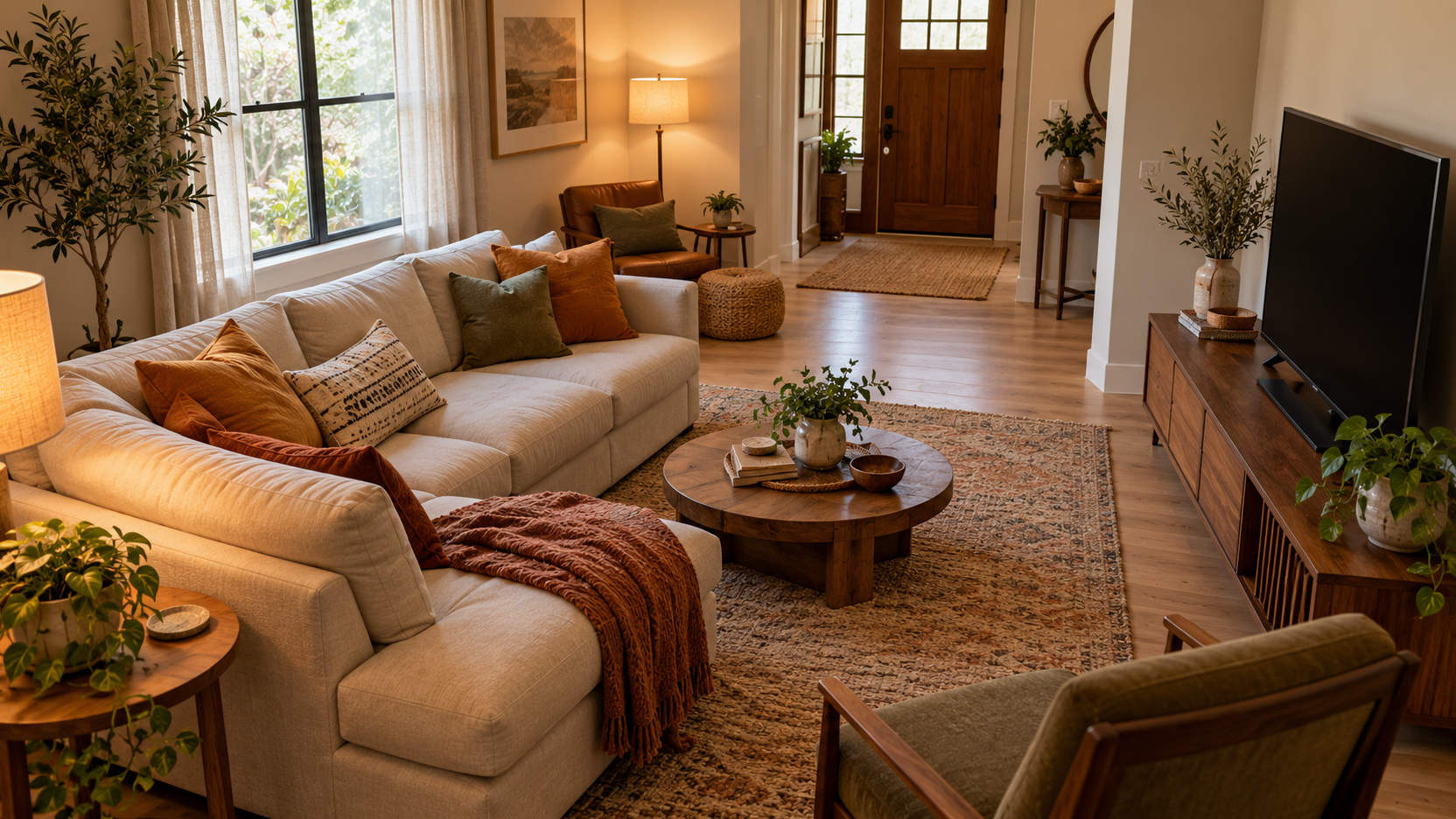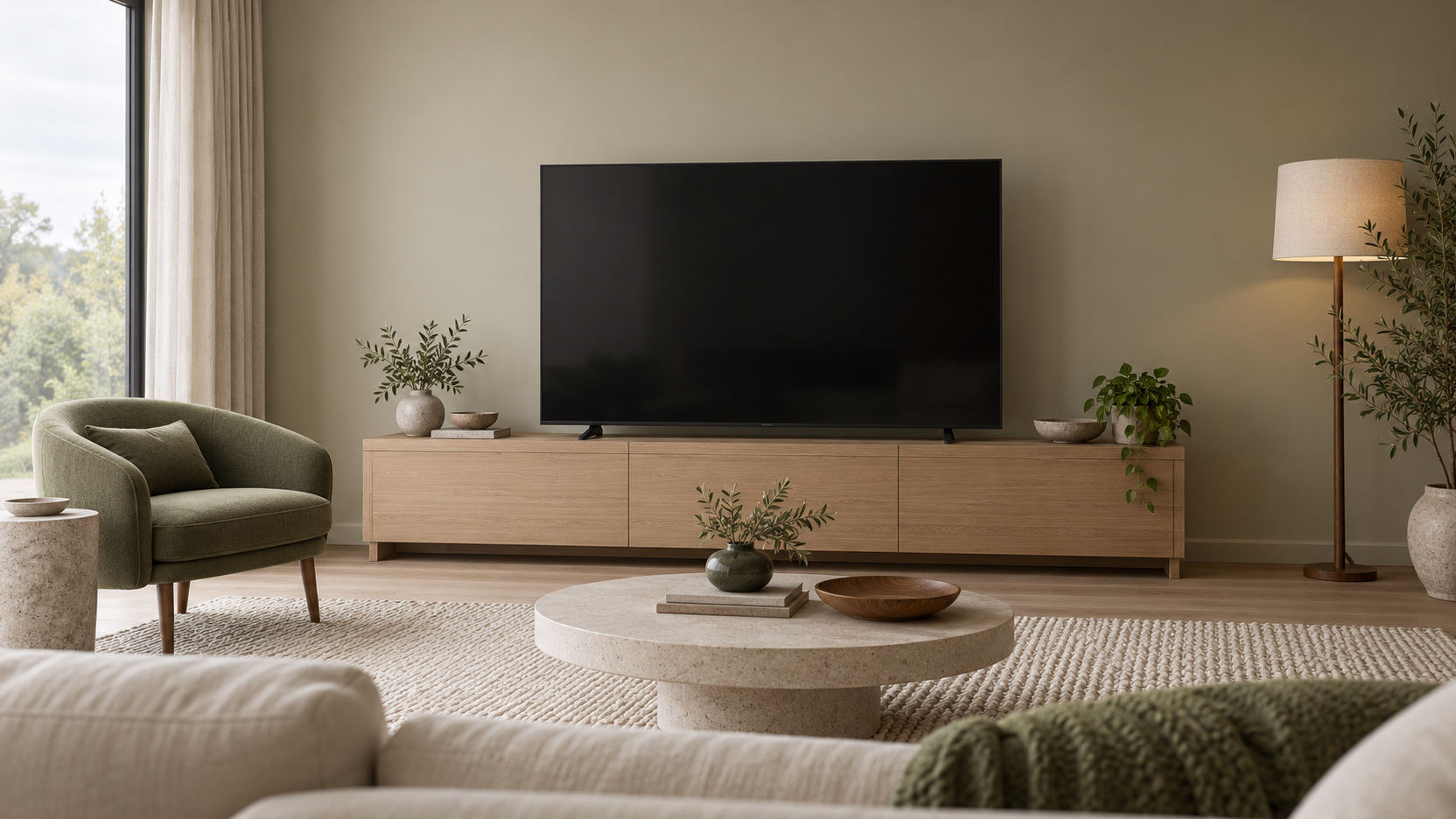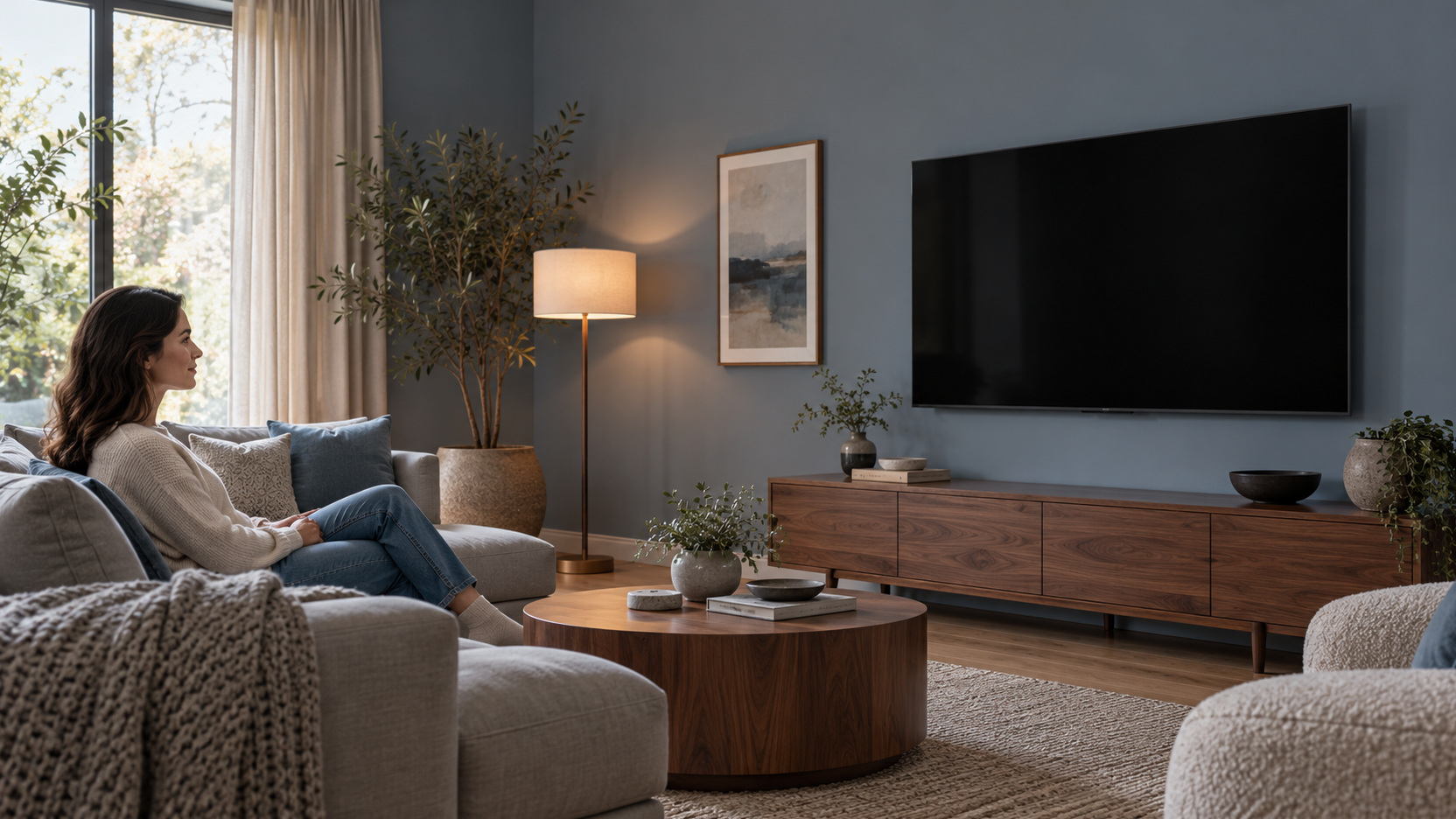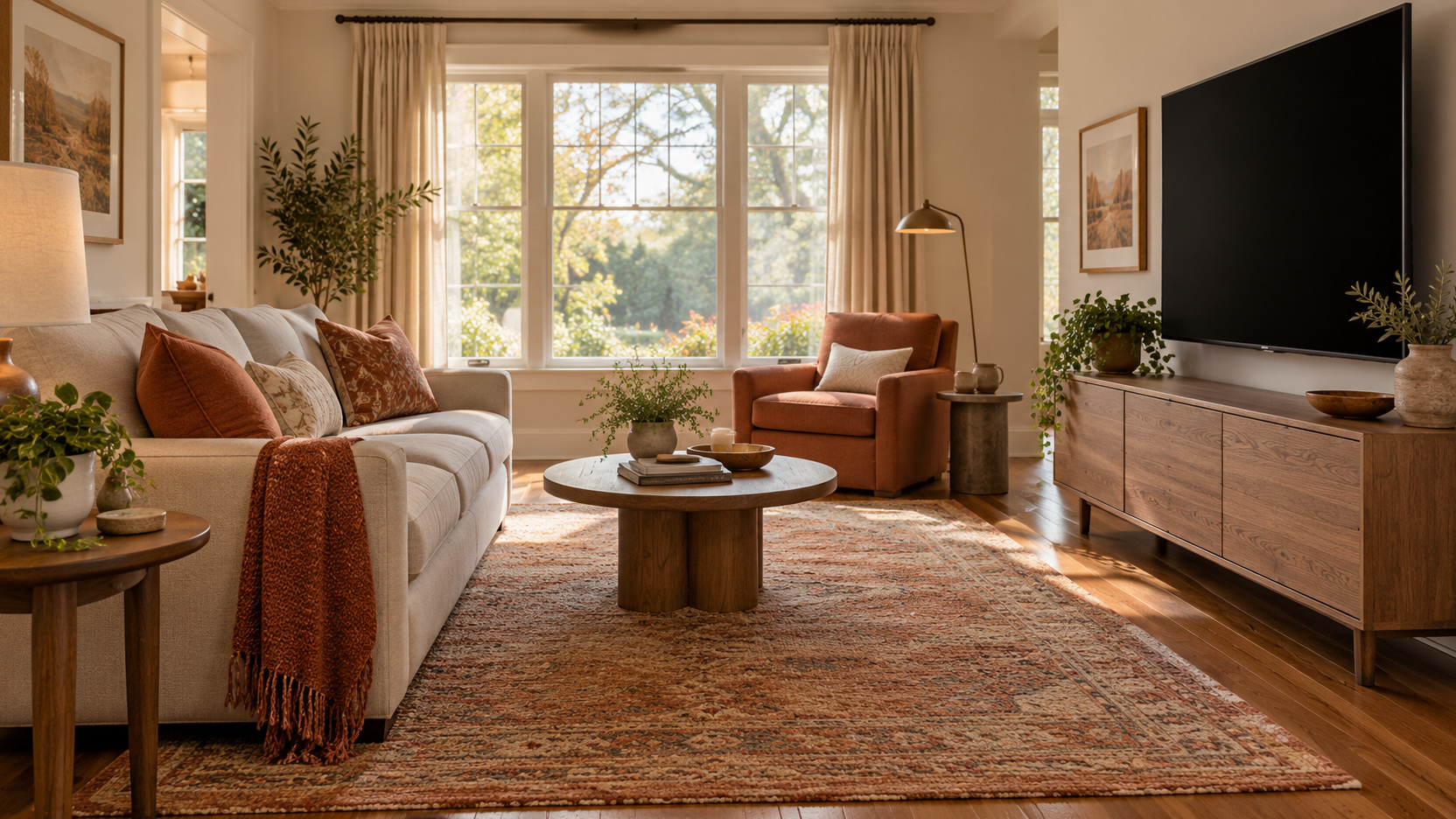
Measure the Distance From Your Eyes to the Picture
The useful television viewing distance is the one that works from the seat you actually use. Start with the space between your eyes in a normal viewing position and the screen surface, then consider picture size, source quality, readability, and how immersive you want the experience to feel. Manufacturer guidance can supply a reference, but its numbers may describe a minimum based on resolution rather than one universally comfortable living-room distance. A practical trial connects that guidance to the room and the people watching. Measure consistently, compare a few realistic positions, and use familiar content before deciding that the sofa or television needs to move.
Record the Real Viewing Position
Measure from the approximate eye position of a seated viewer to the screen plane, not from the back wall or the sofa’s outer edge. Use a normal pose with the cushions arranged as intended. A seat depth or reclining habit can make the eye position different from where the furniture footprint begins. That distinction is especially useful when comparing a new arrangement with the one already in the room.
Keep the measurement method consistent across seats. Record the main position, a nearer chair, and any other frequently used location separately. The room may have a range of viewing distances rather than one single figure. Those measurements help explain why a screen feels large from one position and modest from another without assuming that either observer has evaluated the equipment incorrectly.
Understand What a Published Distance Is Measuring
Read the purpose and units behind a recommended distance before using it. A formula may use screen height, diagonal size, or a particular viewing angle, and those quantities are not interchangeable. It may also describe a minimum reference rather than the only recommended placement. Mixing the unit from one guide with the formula from another can produce a misleading result while still looking like a precise calculation.
Sony’s viewing-distance guidance uses 1.5 times vertical screen size for a 4K minimum reference and three times vertical screen size for HD models. It also asks viewers to adjust for preferences, content, and living-space layout. Treat that information as a defined reference. It is not a claim that every household should place its sofa at the closest position the resolution-based calculation permits.
Other manufacturers may provide a different kind of starting point. Samsung’s mounting guidance includes an example based on diagonal size divided by 0.55. Because the underlying approaches differ, the results can differ without one being an exact answer for every room. Understand what is being compared, then test the arrangement through your own viewing tasks.
Distinguish Screen Height From Diagonal Size
The advertised size is generally the picture’s diagonal, while screen height runs from its bottom to its top. For a 16:9 picture, height is approximately 0.49 times the diagonal. A 65-inch picture is therefore about 32 inches high. Sony’s 4K minimum reference of 1.5 times height gives roughly 48 inches, or four feet; that is a resolution-based minimum reference, not a universal sofa recommendation.
For the same 65-inch diagonal, the Samsung calculation cited above gives 65 divided by 0.55, or about 118 inches. Dividing by 12 converts that to approximately 9.8 feet. This much larger result comes from a different recommendation, so the two numbers should not be averaged into a supposedly exact answer. They illustrate why the purpose of the guidance matters as much as its arithmetic.
Suppose your current seated eye position is nine feet from a 65-inch screen, and moving the sofa forward would allow an eight-foot position without blocking a route. Trial those two feasible positions first. Watch familiar dialogue with subtitles, a sports broadcast, and a film scene, then compare readability and the picture’s apparent scale. There is no need to move the sofa to four feet merely because one published minimum permits that calculation.
Keep inches and feet explicit, and separate approximate picture dimensions from exact outer measurements needed for installation. A screen outline can represent size, but it cannot reproduce subtitle clarity or source quality. Where a different position feels promising, confirm it through actual viewing rather than the rectangle alone. The useful result is a measured distance that suits your household and room, with the published references explaining the trial rather than deciding it.
Separate Resolution From the Content You Watch
A display’s pixel resolution and the source material are related but different parts of the picture. A 4K television may show varied content rather than native 4K material all the time. Streaming delivery, older programs, and other sources can affect what you notice from closer positions. Test the content used in your home rather than choosing a distance solely from the panel’s advertised resolution.
Decide How Much of Your View the Screen Should Fill
At a fixed screen size, moving closer makes the picture occupy more of the viewer’s visual field. Some viewers prefer that involvement for films or games, while others enjoy a less dominant screen in a shared living room. This is a preference to test, not an instruction to maximize closeness. The room’s other activities and the household’s ordinary viewing habits can affect the choice.
Compare the experience using the same material from a few practical positions. Look at a scene with both central action and details across the frame. Notice whether you enjoy the scale and whether ordinary viewing feels easy. A trial should be long enough to move beyond the surprise of a larger apparent image without being turned into a rigid test that ignores personal preference.
Do not let immersion alone decide the furniture arrangement. The nearer position still needs usable routes, comfortable seating, and suitable screen height. A distance that creates a pleasing picture but makes the room awkward for conversation or movement is only a partial improvement. Evaluate the whole evening’s use rather than one dramatic scene.
Check Readability With Actual Viewing Tasks
Try subtitles, menus, sports graphics, or game information that your household uses regularly. The important question is whether the relevant details are readable from the intended seat under normal conditions. Do not assume a larger display resolves every readability issue, or that moving closer is always the first response. Available content settings and the clarity of the source may also deserve attention.
Different people may report different results from the same position. Include regular viewers in the trial and distinguish a preference for a larger picture from difficulty reading a particular element. Personal vision needs can require appropriate advice rather than repeated rearrangement as a substitute for assessment. The distance plan should remain a practical room decision grounded in what the household can establish.
Compare the Main Seat With the Nearer Seat
A screen chosen only for the farthest position can feel quite different from a chair close to it. Record both distances and assess their usual activities. An occasional nearer position may tolerate a compromise that a nightly seat does not. Identify how frequently each position is used before letting one extreme dictate the whole arrangement, and look for a layout that serves the ordinary pattern of watching.
Keep Viewing Angle Distinct From Distance
A seat’s distance does not tell you how far to the side it is. Two viewers can sit equally far from a television while receiving different off-center views. Consider direction and picture appearance alongside the measured separation. Consult the selected model’s information and try relevant positions where possible rather than assuming that a large screen’s image looks the same from every angle.
Furniture can sometimes move within the room to improve the viewing direction without changing the distance substantially. Check how that adjustment affects routes and other seating relationships. An angled chair may work for occasional viewing, while a primary sofa may need a more deliberate arrangement. Keep the purpose of the seat visible during the comparison.
Height adds another relationship. If the television is very high, moving farther away changes the upward angle but does not necessarily make the chosen position ideal. Review the screen’s center relative to the viewers rather than using distance to rescue every mounting compromise. A better wall or height can sometimes solve the problem more coherently than relocating the sofa across the room.
Try Layout Changes Before Ordering a Different Size
Mark a few realistic seating positions using the room’s available space. Move suitable furniture according to its handling guidance, or use a temporary viewing seat if that is more practical. Compare the same content with the existing television where possible. This can reveal whether the main issue is separation, screen scale, off-center placement, or another part of the viewing arrangement.
Keep the household’s daily routines in the trial. A sofa may fit nearer the screen but leave too little room for an operating door or a common walking route. A farther position might make viewing pleasant while separating conversational seating awkwardly. Test movement and other activities before deciding that the new location is a workable permanent arrangement.
Use Screen Outlines When Comparing Future Sizes
If you are considering a new television, a full-size outline can show its approximate physical scale from the measured seat. It cannot reproduce image quality or readable content, but it helps connect dimensions to the room. Use the selected model’s actual outer measurements when checking fit. A diagonal label alone does not establish the width, height, stand footprint, or required installation clearance.
Try relevant displays in person if possible and explain your measured home distance to the seller. A showroom’s viewing arrangement may differ substantially from the room you are planning. Ask whether the demonstration content resembles your ordinary sources and note any limits in the comparison. Use the visit to gather evidence rather than expecting its first impressive picture to settle every home-layout question.
When a home trial or return route is available, read the terms before relying on it. Collection costs, packaging requirements, and installation conditions can affect whether a longer assessment is practical. Keep the final arrangement plan and chosen measurements with the order. The trial should clarify a defined uncertainty instead of leaving the entire room decision until after a large purchase.
Account for Changes Between Viewers and Activities
A family room may host films, casual television, games, and conversation at different times. The most practical distance can reflect a compromise across those uses rather than a dedicated cinema arrangement. Identify the activities that deserve priority and whether movable seating can provide another option. Flexible placement should remain manageable and respect the furniture’s intended use, not depend on an inconvenient nightly reset.
Revisit the measurements if the seating changes. A new sofa with different depth or a recliner in a different position can alter where the viewers’ eyes sit even when the furniture appears to occupy the same floor area. Update the actual viewing distances and check the relevant sight lines. Treat the room as an arrangement that can be adjusted over time rather than a number fixed permanently by one purchase.
Keep the Final Distance as a Tested Reference
Finish the trial by comparing the positions against the same few tasks: reading familiar subtitles, following action across the frame, looking from the side chair, and walking the normal route around the sofa. Repeat the comparison in the lighting used for ordinary viewing. A nearer position that feels impressive for one film can still be inconvenient for a family evening. Choose the arrangement that passes the activities you actually repeat.
A mixed result suggests a specific adjustment rather than another round of measurements without a purpose. If subtitles are difficult from the main sofa but the picture scale feels right, try available subtitle settings before assuming a new television is necessary. If only the nearer chair feels overwhelmed, consider that chair’s placement and frequency of use. If moving the sofa blocks a doorway, reject that trial position even when the picture looks pleasing.
Keep a short reference with the chosen eye-to-screen distance, television size, and any accepted compromise for a secondary seat. Those details are enough to make a future comparison meaningful. When seating or equipment changes, rerun the viewing tasks that shaped the choice. A successful distance need not match every published example; it needs to keep the picture usable within an ordinary, workable room.