Find the Screen Center From Your Seat
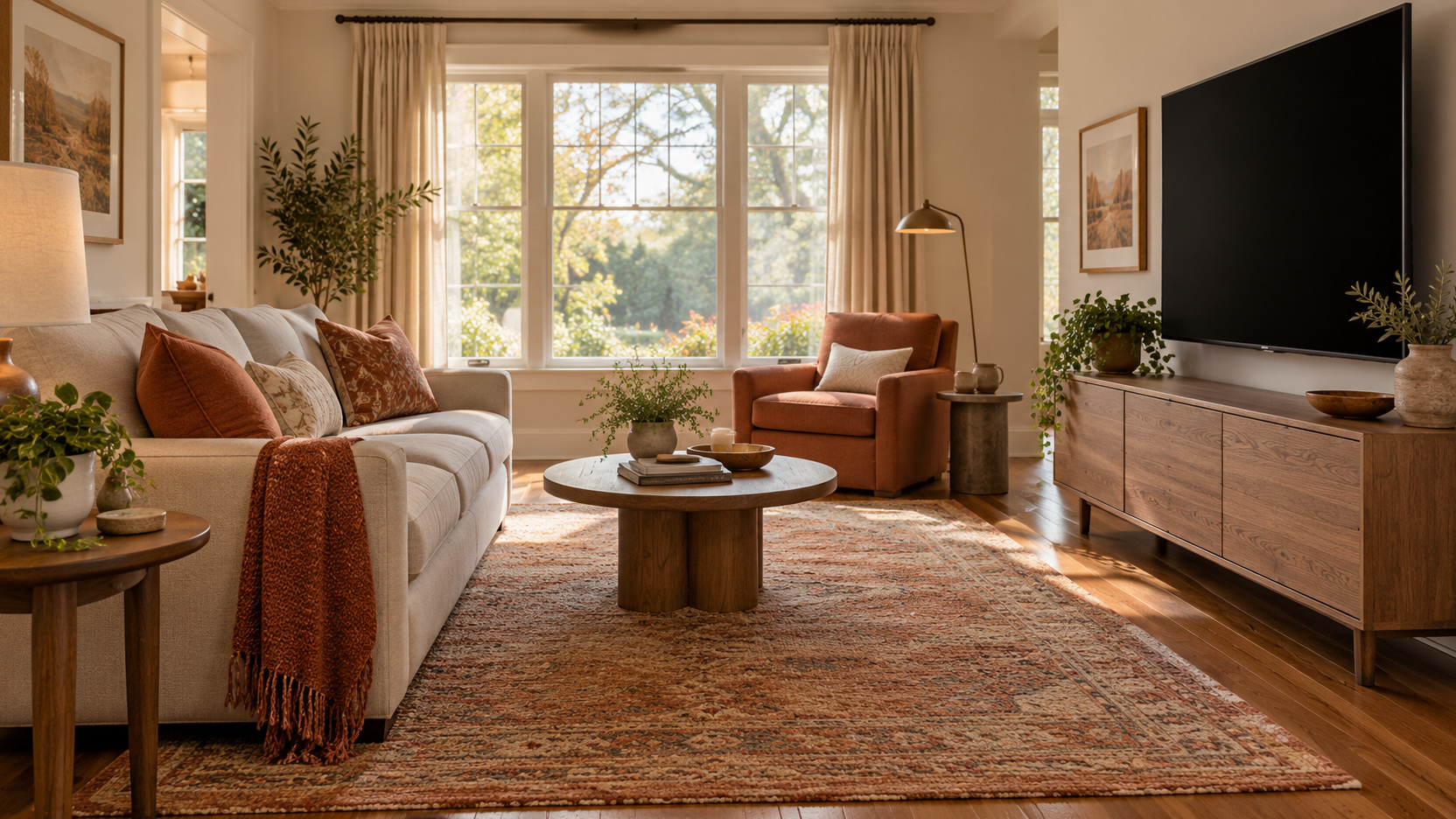
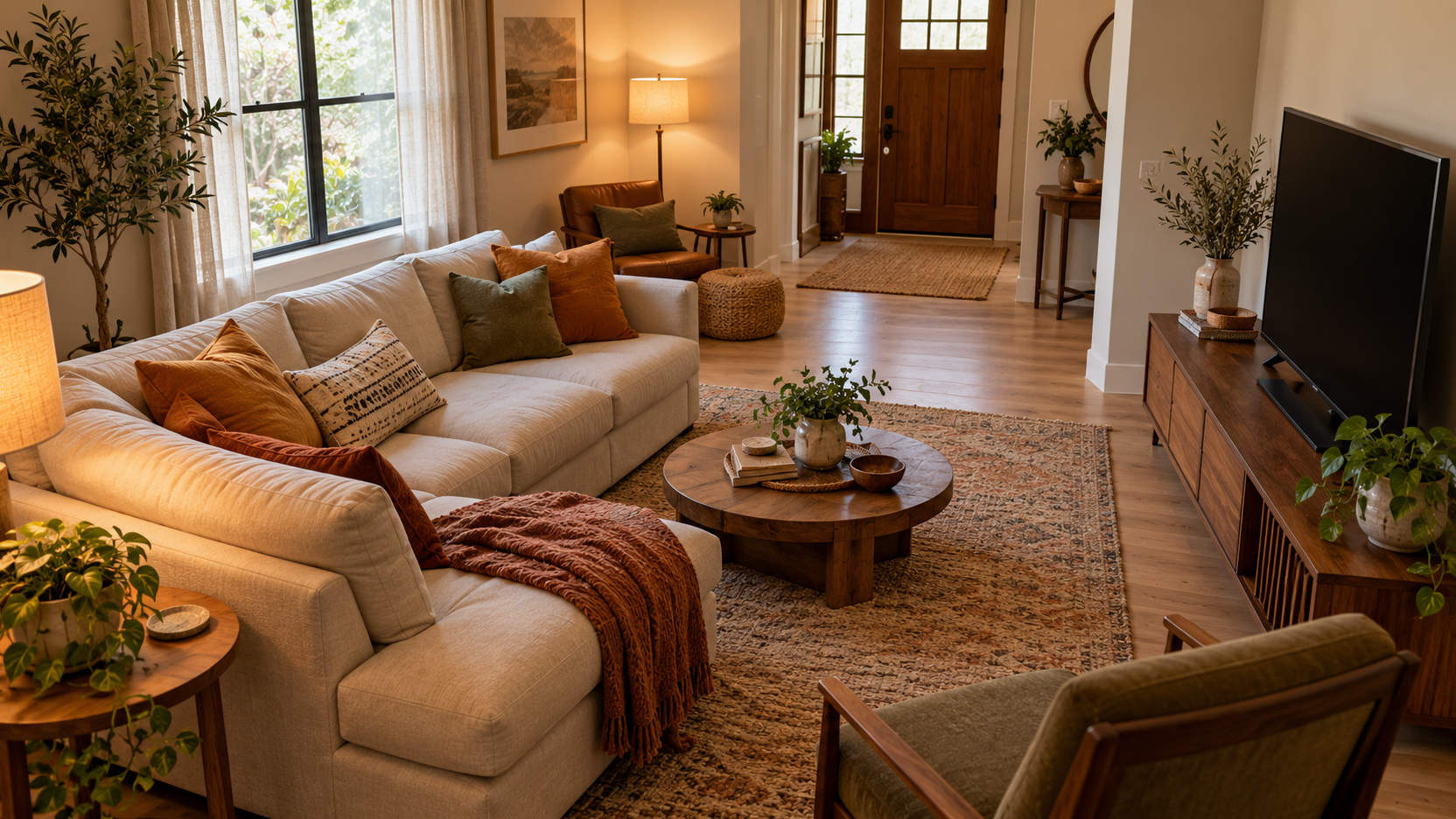
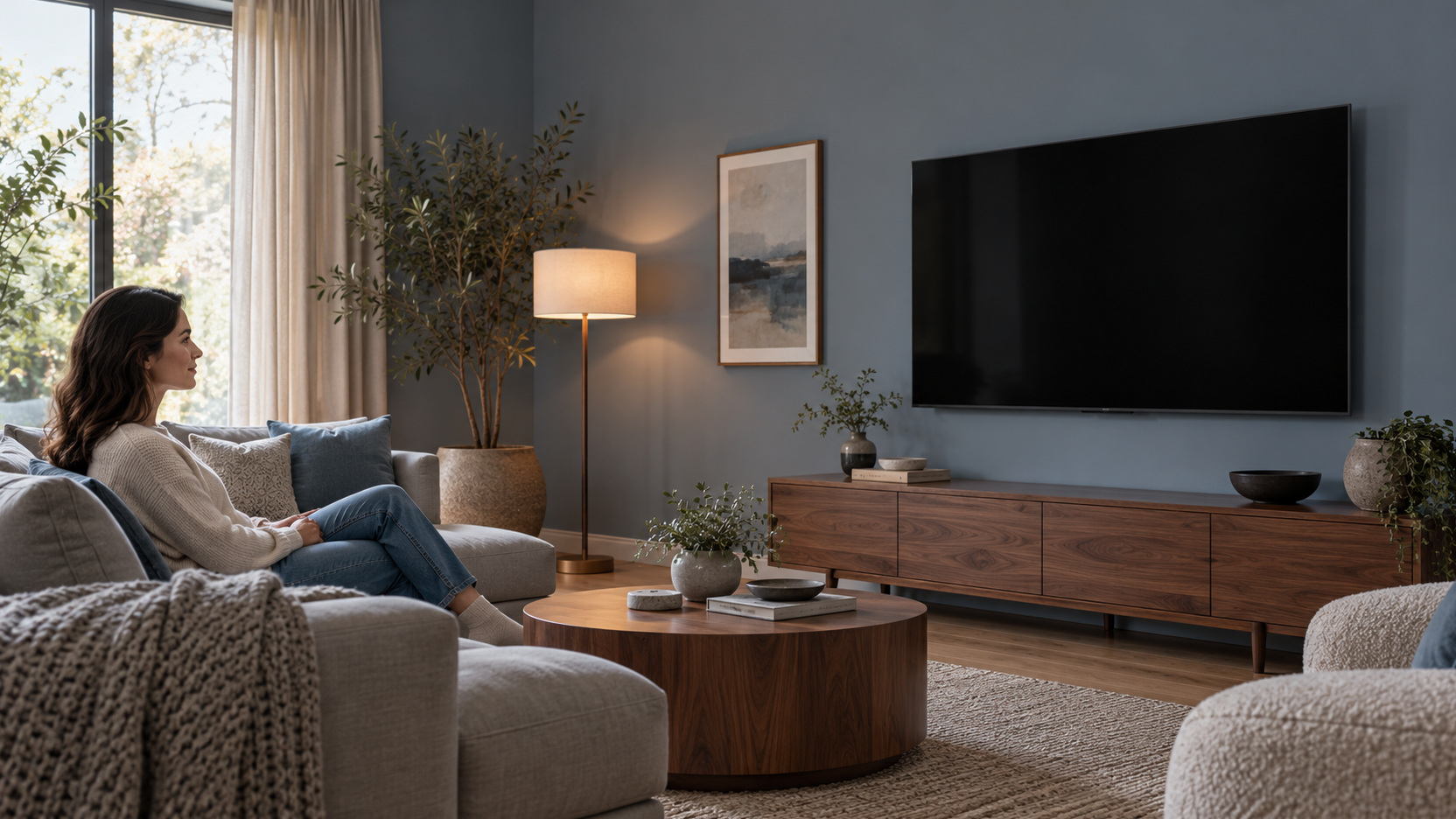
For a living-room television, begin the mounting-height decision with the viewers rather than the empty wall. Sit where you normally watch, settle into the usual position, and identify the height of your eyes above the floor. A screen center near that level is a useful starting point, adjusted through a real seating trial and the television’s installation requirements. The final position also needs to account for the screen’s actual dimensions, furniture below it, sound equipment, and every regular seat. A simple measurement and a full-size outline can reveal awkward compromises before the installer drills anything. The goal is comfortable everyday viewing from the room you have, not a universal height applied to every wall.
Measure Eye Level in the Position You Use
Ask another person to measure while you sit naturally in the main viewing seat. Record the floor-to-eye height without stretching into an unusually upright pose. Cushion compression and reclining habits can affect the position used during an evening. Take the measurement under the conditions that will matter after installation, rather than standing beside the sofa and estimating where a seated head would be.
Sony’s mounting-height guidance places the screen center at viewers’ eye level as a general recommendation, while acknowledging seating and personal preferences. Use that as a starting relationship, not a claim that every room must produce the same floor measurement. A low lounge seat and a more upright chair may lead to different observations even with the same television.
Measure the other frequently used seats too. If their eye heights differ, test a sensible compromise rather than pretending only one viewer exists. Note which seat gets the most use and whether occasional seats have acceptable sight lines. The purpose of collecting these measurements is to guide a shared decision with evidence, not to create an impossible demand that every eye line coincide exactly.
Use the Television's Actual Physical Dimensions
The advertised size of a television is its diagonal screen measurement, not its vertical height. Look up the actual dimensions of the selected model, especially the height without its tabletop stand. The outer television may include a frame or other details beyond the active picture. Use the correct dimensions for planning the physical clearance, and identify the picture center separately if the model’s construction makes that distinction relevant.
Do not use the total height with the stand when locating a wall-mounted unit. That figure includes parts that may not remain in the wall arrangement. Check the selected television and installation drawings instead of borrowing measurements from another model of the same advertised size. Two products can have different outer dimensions and mounting-point locations even when their diagonal size matches.
Convert the Preferred Center Into Screen Edges
Once the planned center height and physical television height are known, the edge calculation is straightforward. Subtract half the television height from the center height to locate the lower edge, and add half to locate the upper edge. Keep units consistent. This establishes where the whole object will sit, which matters for furniture clearance and the outline used during a room trial.
For example, suppose the planned center is 42 inches above the floor and the selected television is 32 inches high without its stand. Half the height is 16 inches, giving a lower edge at 26 inches and an upper edge at 58 inches. This is an illustrative calculation, not a recommendation to mount every television at 42 inches. Replace both figures with the measurements for your viewers and actual model.
This calculation also makes a furniture conflict visible. If a cabinet is taller than the proposed lower edge, the arrangement cannot remain exactly as drawn. You may need another cabinet, a different position, or a tested compromise in screen height. Discovering that conflict now lets you compare real options instead of raising the television automatically after everything has arrived.
Keep Screen Position Separate From Bracket Position
The wall bracket is not necessarily centered at the picture center, and the television’s mounting holes do not establish a universal drilling height. The installer needs the selected television, compatible mount, and their instructions to translate the desired final screen position into attachment locations. Provide the intended center and edge measurements as the viewing brief, then have the required bracket position determined from the actual equipment rather than guessing from a generic diagram.
Make a Full-Size Outline Before Committing
Use a harmless temporary method appropriate to the wall finish to mark the television’s outer rectangle. A paper outline can make the size and position easy to judge without attaching the screen. Mark the proposed center as well so you can distinguish the viewing relationship from the furniture clearance. Check that the method itself is suitable for the surface and remove it according to the material guidance.
Sit in the regular positions and look toward the outlined area. Ask whether the center feels natural and whether the upper and lower parts of the proposed picture demand an uncomfortable compromise. The outline cannot reproduce actual image quality, but it can reveal basic placement issues. Try it while the seating and furniture are arranged as they will be during viewing.
Allow the other regular users to evaluate the same proposal. Discuss the position by referring to what changes from each seat rather than relying on whether it looks balanced while standing. A living-room wall is often judged from the doorway, while television use occurs from lower positions. The test should represent the activity the installation is meant to support.
Account for Furniture and Sound Equipment Below
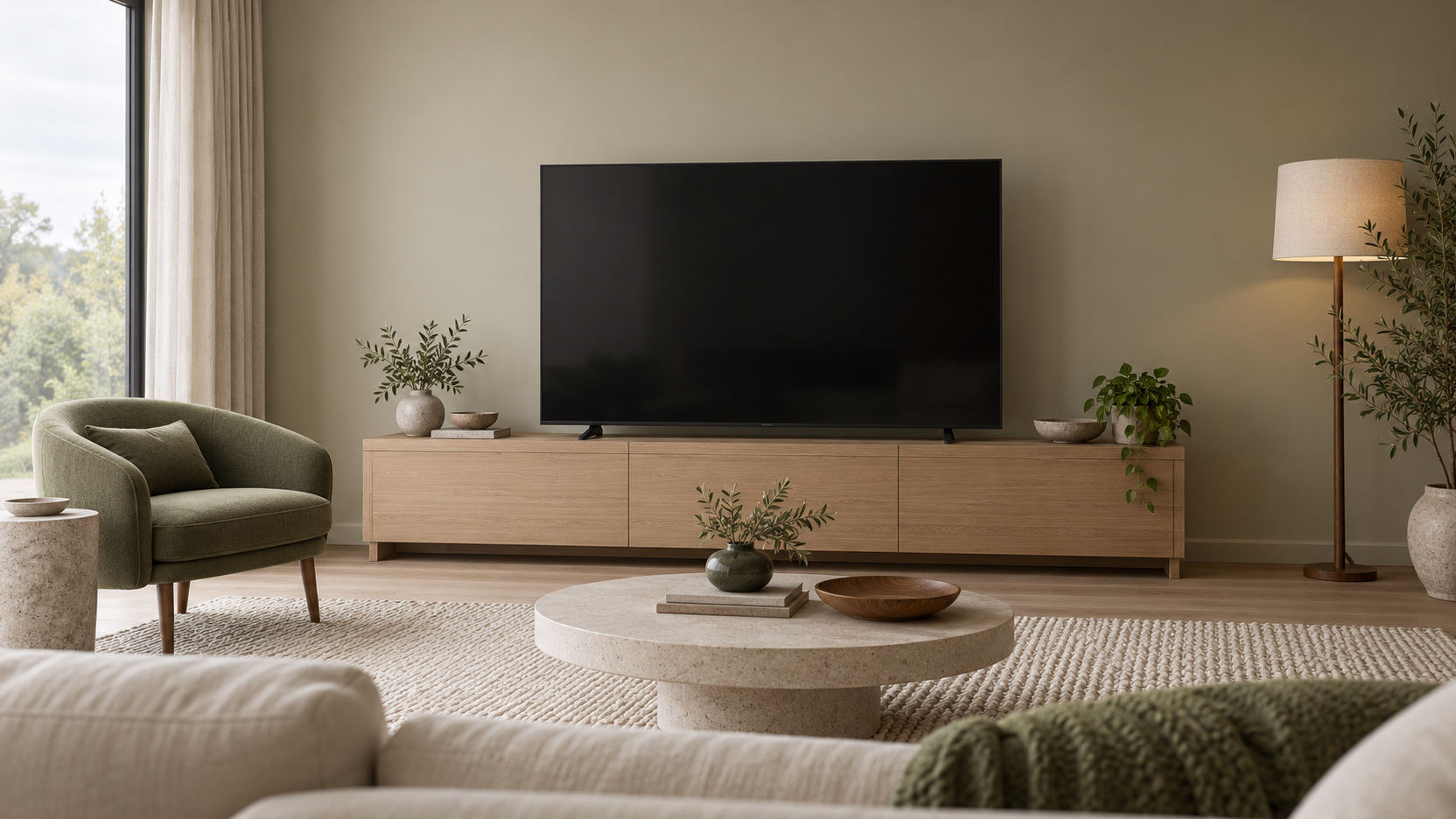
Place the intended cabinet, console, or other furniture in the plan before approving the screen height. Include its actual top height and anything that will remain above it. A soundbar or center speaker may need room that changes the usable gap. Equipment should follow its own placement and ventilation instructions rather than be crowded into whatever space remains after the television is fixed.
Check access to controls, receivers, and connections that may be affected by the arrangement. A soundbar should not obstruct a television feature it needs to leave clear, and the television should not make other equipment awkward to operate. Confirm the relevant model guidance. The complete viewing area should work as an installation, with the height decision integrated into the things used below the picture.
Avoid Letting an Existing Cabinet Decide Everything
A tall cabinet can push the proposed television center above the preferred viewing relationship. That does not automatically make the cabinet the controlling requirement. Compare whether a lower unit, different wall, or adjusted seating arrangement offers a better complete result. Keep the household’s viewing needs visible while evaluating the furniture, rather than treating the screen as decoration that must sit at a standard gap above any object already present.
Treat Fireplace Placement as a Separate Assessment
An above-fireplace position can introduce both a high viewing location and equipment-environment concerns. Samsung’s wall-mounting guidance advises against mounting its televisions over a fireplace and discusses heat and elevated sight lines. Check the actual equipment and fireplace requirements rather than transferring one general decorative arrangement to every installation. A different wall may resolve several compromises at once.
Do not assume a tilting mount settles every concern created by a high position. Tilt changes the orientation of the screen, but the screen’s center can still remain far above the viewers. Environment, clearance, mount suitability, and the actual seated trial are distinct parts of the decision. Evaluate the complete proposal with appropriate installation expertise if the location remains under consideration.
If the fireplace is the room’s visual focal point, consider whether television viewing needs to share it. Seating can sometimes address more than one area without stacking every feature vertically. Review the room’s movement and conversation needs alongside viewing. A layout change may offer a more practical result than trying to rescue an unsuitable screen height through an accessory alone.
Review Reclining and Multiple Viewing Positions
A reclined viewer’s natural line of sight may differ from a person sitting upright. Test the position normally used instead of assuming the earlier eye-level measurement fully represents it. Include the distance to the screen and the angle through which it is viewed. A wall position that looks workable from one pose should be checked from the other frequent arrangements before installation.
Occasional viewing while standing can be considered without letting it dominate a room used mainly from seats. Identify the primary activity and compare the compromises openly. If the television serves very different areas, a compatible adjustable mount may be worth evaluating through its permitted operation. Confirm its clearance and installation conditions, then test the actual viewing proposal rather than expecting an accessory to remove every difference.
Check Horizontal Placement at the Same Time
The height calculation is only one part of the sight line. A screen placed far to one side can make the main seat awkward even when its vertical center is well chosen. Review which seats face the screen and how the room supports ordinary viewing. Keep the layout useful for other activities as well, rather than arranging every chair around a height measurement while overlooking its direction.
Ask about the selected television’s viewing characteristics if important seats are off-center. Sony’s height guidance notes that viewing-angle specifications vary by model. Try the actual model where possible and consult its information. A general statement that a large screen can be seen from anywhere should not replace an assessment of the seats your household uses.
Use the outline to check what may block the lower picture from each position. A tall decorative object, lamp, or another person’s usual seating location can affect visibility. Adjust the room arrangement while the plan is flexible. The screen should remain usable through an ordinary evening, not only from a single empty-room viewing point.
Have the Installation Checked Against the Brief
A mounting brief can fit on one page: television model, compatible mount, preferred picture center, calculated outer edges, and the furniture and soundbar that will remain below. Give those measurements to the installer before agreeing to attachment locations. The television and mount instructions determine support, fittings, and bracket offsets; the viewing calculation describes the finished result rather than a drilling method. Have wall conditions assessed by someone qualified for the work.
For the earlier example, the brief would show a 42-inch center, 26-inch lower edge, and 58-inch upper edge for a 32-inch-high television. Suppose the household’s cabinet is 24 inches high. The two-inch difference is only a geometric gap, not approval for a soundbar, ventilation, or the cabinet’s contents. Put the actual equipment requirements alongside that gap before deciding whether this arrangement can work.
If the cabinet and soundbar need more room, compare two complete alternatives. A lower console could retain the tested picture center, while retaining the existing cabinet might require raising the screen and repeating the seated trial. Neither choice follows automatically from the calculation. Draw both rectangles, include the audio equipment, and ask the regular viewers which compromise works from their own seats.
At completion, check the agreed screen edges and ordinary viewing positions with the installer. A television that is securely attached can still occupy a different position from the one specified. Confirm that controls and connections remain accessible and that sound equipment has its required space. Keep this short brief with the equipment instructions so a later replacement can be checked against the actual room rather than an unexplained old bracket height.