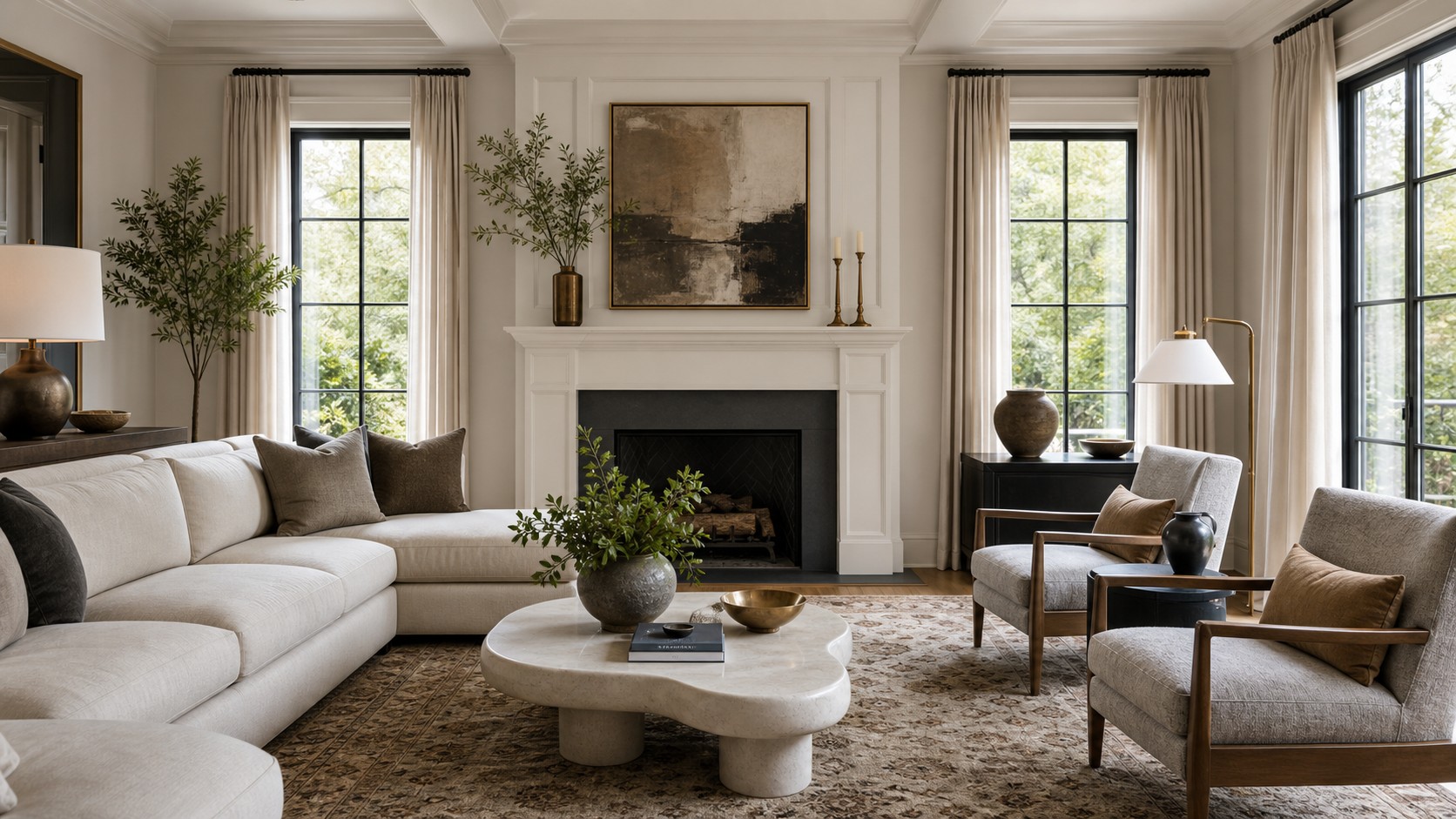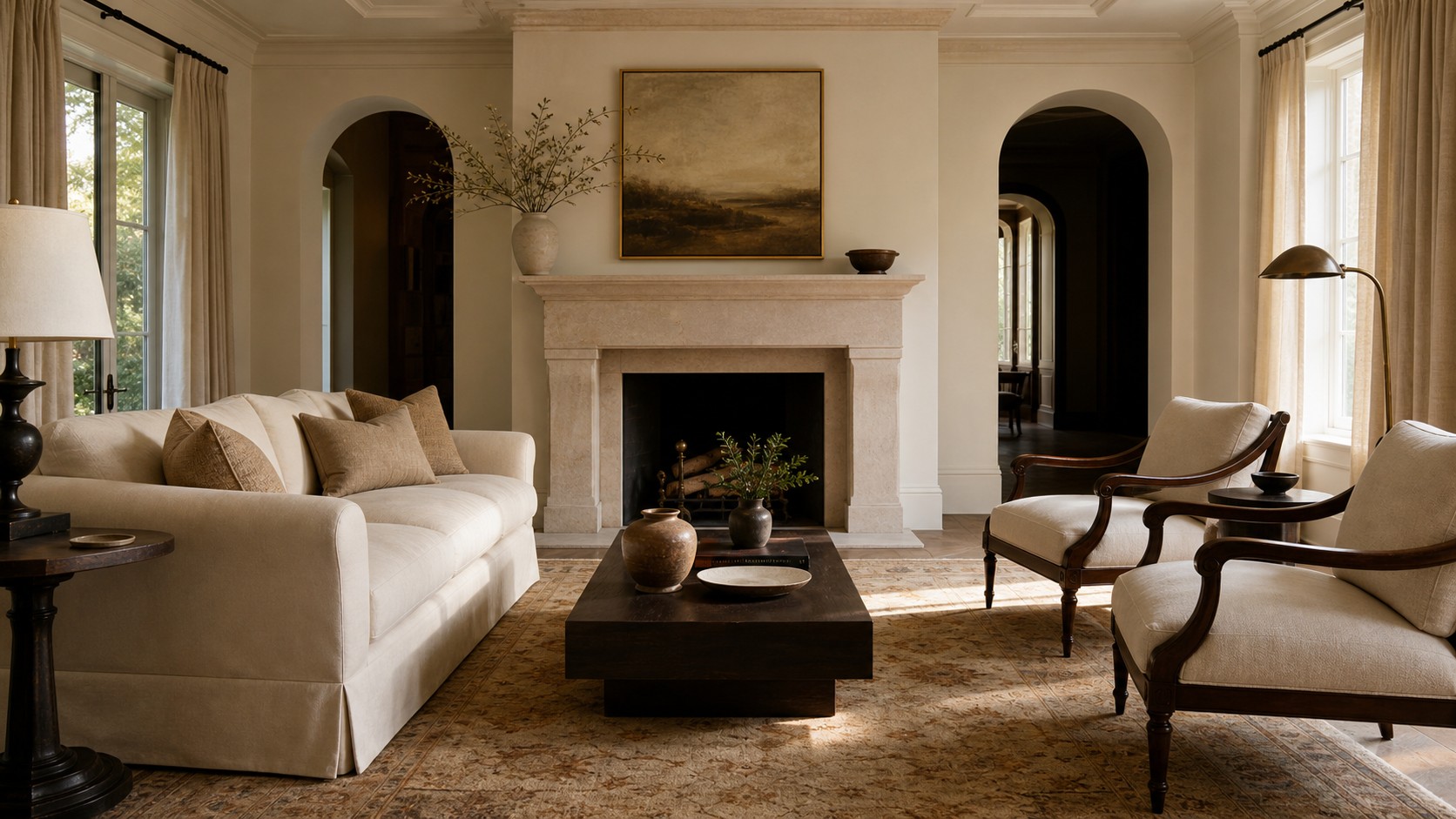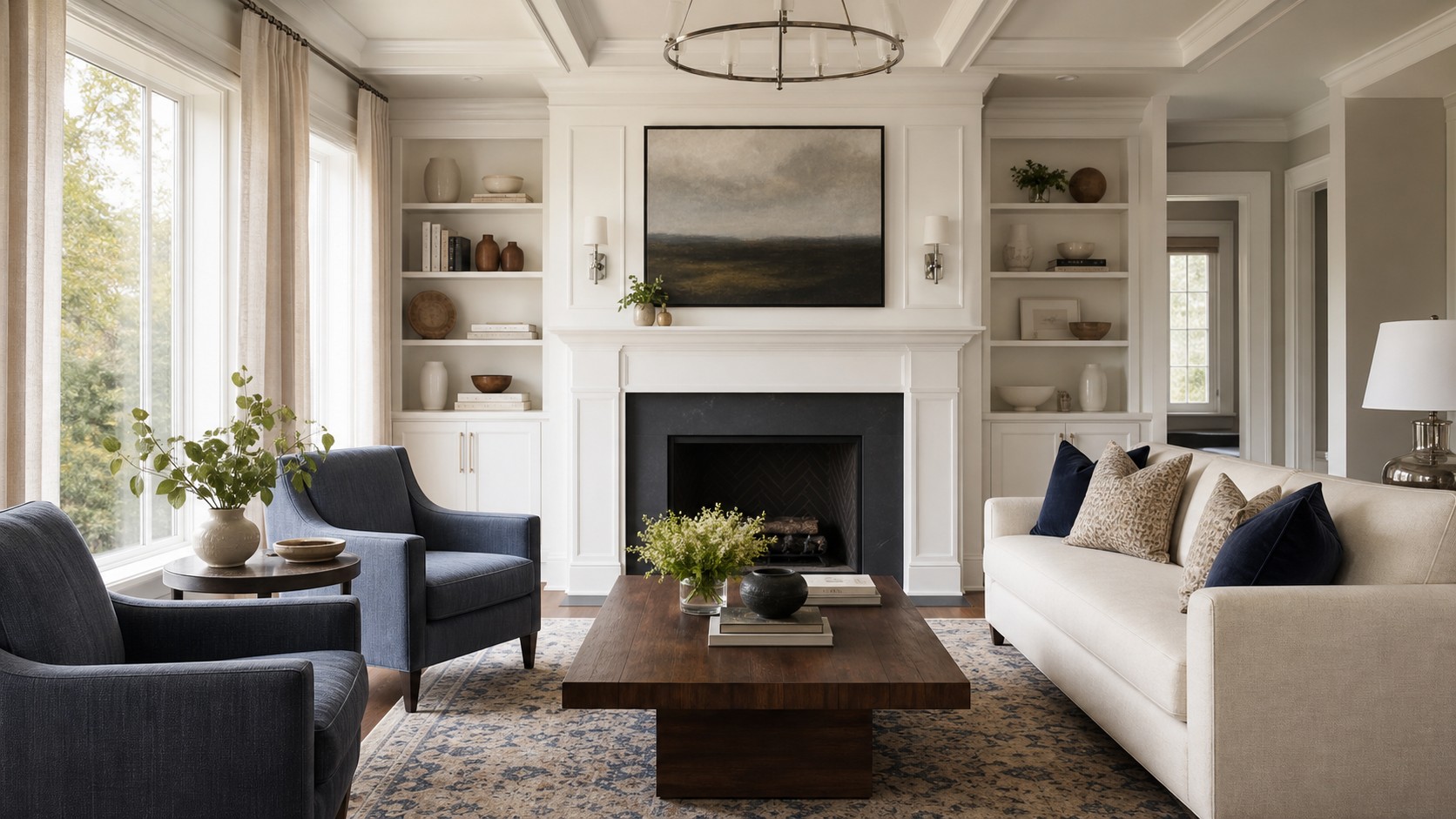
A transitional family room succeeds because it is not tied to one decorating moment. It borrows the warmth, symmetry, and craftsmanship of traditional interiors, then edits those ideas through cleaner lines and a lighter visual touch. The result feels familiar without looking formal and fresh without becoming stark. More importantly, transitional design leaves room for real life. A sturdy sofa, a useful table, washable textiles, and meaningful objects can coexist with polished finishes. When those elements are chosen with proportion and longevity in mind, the room can absorb new colors and accessories for years while its foundation continues to feel settled.
A: It blends traditional comfort with modern simplicity for a polished but livable space.
A: Warm whites, taupe, greige, beige, charcoal, navy, and soft earthy tones.
A: Yes—use plush seating, layered rugs, warm lighting, and textured fabrics.
A: Start with a durable neutral sofa, then build around chairs, tables, and storage.
A: Very good, especially with performance fabrics, storage pieces, and easy-clean surfaces.
A: Add texture, contrast, art, greenery, patterned pillows, and layered lighting.
A: Yes, dark wood adds classic contrast when balanced with lighter fabrics and walls.
A: Choose a large, low-pattern rug in wool, jute blend, vintage style, or soft geometric design.
A: It should coordinate, not match exactly. Mix finishes and shapes for a collected look.
A: Invest in classic silhouettes, neutral foundations, quality materials, and simple updates over time.
Begin with an enduring room plan
The most timeless family rooms are organized around how people actually gather. Before choosing a paint color or ordering a sofa, identify the room’s natural center. It may be a fireplace, a broad window, built-in shelving, or the wall that best accommodates a television. Arrange the primary seating to acknowledge that feature while preserving easy conversation. A sofa facing two chairs is often more adaptable than a large collection of unrelated seats. It creates a recognizable zone, keeps sightlines open, and allows people to enter without navigating an obstacle course of furniture.
Leave enough space for movement, but avoid pushing every piece against a wall. Transitional rooms feel comfortable when furniture relates closely enough to form a group. A coffee table should be within easy reach, side tables should serve nearby seats, and lamps should illuminate the places where someone might read. If the room is large, use a console, bench, or pair of stools to define secondary areas. Good planning is nearly invisible, yet it is the reason a beautiful room also feels natural on an ordinary evening.
Choose upholstery with quiet structure
A transitional sofa usually has a tailored silhouette without severe edges. Look for a gently squared arm, a low rolled arm, or a subtle slope rather than highly ornate carving or an aggressively angular profile. Seat depth matters as much as appearance. A family room sofa should support lounging while allowing shorter guests to sit comfortably. Medium-depth cushions, a supportive back, and durable construction make a stronger long-term investment than a dramatic shape that photographs well but feels awkward after twenty minutes.
Neutral upholstery gives large pieces staying power, although neutral does not have to mean plain beige. Mushroom, oatmeal, warm gray, flax, camel, and soft olive can all function as flexible foundations. Performance fabrics are especially useful in an active room, but examine the weave and hand before buying. A fabric that resembles linen, brushed cotton, or soft wool contributes more character than a slick synthetic surface. Add contrast through chairs in a slightly deeper tone or a restrained pattern so the room feels collected rather than purchased as a matching set.
Build a warm, nuanced neutral palette
Timeless transitional rooms rarely rely on a single neutral repeated everywhere. They use neighboring tones to create depth: creamy walls, taupe upholstery, brown wood, charcoal accents, and off-white textiles. Begin by observing the room’s fixed elements, including flooring, stone, and cabinetry. Their undertones should guide the palette. Warm oak floors generally sit more comfortably with ivory and putty than icy white, while cool stone may benefit from greige and softened blue-gray. Coordinating undertones creates calm without requiring every surface to match.
Once the main neutrals are established, introduce one or two muted colors. Dusty blue, moss, rust, burgundy, and smoky teal have enough complexity to bridge classic and contemporary furnishings. Use them in smaller, replaceable layers such as pillows, a throw, ceramics, or artwork. Repeating an accent in three restrained places helps it feel deliberate. The room remains flexible because the expensive pieces stay adaptable, yet it avoids the unfinished quality that can occur when everything is cream, white, and pale wood.
Mix wood tones with intention
A room furnished in one wood finish can look like a showroom, while too many unrelated finishes can feel unsettled. Transitional design finds the middle ground. Choose a dominant wood tone based on the floor or the largest case piece, then add one or two complementary tones. Medium oak pairs gracefully with walnut, ebonized accents, or a pale washed finish. The woods do not need identical undertones, but they should share a sense of warmth or coolness and appear more than once in the space.
Shape and finish also affect how woods relate. A substantial traditional chest can feel lighter beside a simple round coffee table, and a polished console gains ease when paired with a more tactile woven stool. Avoid forcing symmetry by buying matching end tables unless the architecture calls for it. A small chest on one side of the sofa and a slender table on the other can provide equal visual weight while adding history and usefulness. That subtle variation is central to a room that looks developed over time.
Use classic materials in edited forms
Stone, wood, linen, wool, leather, brass, and ceramic remain relevant because their appeal comes from material character rather than novelty. In a transitional family room, these materials work best in straightforward shapes. Consider a honed stone fireplace surround with minimal molding, a wool rug with a softened geometric pattern, or a brass lamp with a simple linen shade. Each choice carries a trace of tradition, but the reduced detailing prevents the room from feeling period-specific.
Natural materials also age more gracefully than finishes designed to imitate a short-lived trend. Leather develops a patina, wood gains small marks, and unlacquered metal changes tone. Not every surface must be precious; family rooms need forgiving materials. The key is placing authentic texture where it will be noticed. A solid wood table, a woven basket, or a handmade ceramic lamp can lend credibility to practical performance upholstery and easy-care window treatments.
Let the rug establish scale and softness
An undersized rug is one of the fastest ways to make a seating group feel disconnected. Ideally, the front legs of the sofa and chairs should rest on the rug, creating a shared visual platform. In a generous room, all furniture legs may fit comfortably within its borders. Measure the arrangement rather than the empty floor, then mark possible dimensions with painter’s tape. This simple step reveals whether the rug supports the furniture or floats like a small island beneath the coffee table.
Balance symmetry with relaxed variation
Traditional rooms often depend on perfect pairs, while contemporary rooms may favor deliberate asymmetry. Transitional styling combines both. Use symmetry to establish calm around a strong feature: matching sconces beside a fireplace, two chairs opposite a sofa, or balanced shelves on either side of a television. Then loosen the composition with varied pillows, an off-center bowl, or artwork of different sizes. This approach gives the eye an orderly framework without making the space feel staged or overly formal.
Visual balance matters more than duplication. A tall lamp and compact table on one side of a sofa can balance a lower lamp on a wider chest at the other. Similarly, a large vase may counter several smaller objects across a mantel. Step back and assess the distribution of height, color, and empty space. Transitional rooms need breathing room, so resist filling every surface. A few areas of quiet make the meaningful pieces more noticeable and help the architecture participate in the design.
Layer lighting for everyday flexibility
A central ceiling fixture rarely provides enough warmth or control for a family room. Combine ambient, task, and accent lighting so the room can shift from active afternoons to quiet evenings. Recessed lights or a restrained chandelier can establish general illumination. Table and floor lamps bring light closer to seated eye level, which feels more intimate. Picture lights, sconces, or small shelf lights can emphasize art and architectural detail. Put fixtures on dimmers wherever possible to adjust the atmosphere without changing the decor.
Lamp style is an effective place to express the transitional blend. A classic ceramic base can wear a crisp drum shade, while a streamlined metal floor lamp can stand beside a traditional chair. Keep bulb color temperatures consistent, generally in a warm range that flatters wood and skin tones. Shades should conceal the bulb from common sightlines and be large enough for their bases. Thoughtful lighting makes materials richer, softens contrast, and ensures the room remains welcoming after daylight disappears.
Dress windows without overwhelming them
Window treatments should frame the view and correct the room’s proportions. Full-length drapery mounted near the ceiling can make windows appear taller and walls more graceful. Linen-look fabric, cotton blends, and subtle textures suit transitional rooms because they soften hard surfaces without adding excessive ornament. Choose panels with enough fullness to hang generously. Skimpy fabric can undermine an otherwise polished room, while a simple pinch pleat or tailored ripple fold provides controlled structure.
When privacy or sun control is necessary, pair drapery with woven shades, relaxed Roman shades, or understated roller shades. Layering improves function and gives the window more depth. Keep rods and hardware simple, choosing a finish already present in lighting or furniture. Patterned curtains can work, but they are more likely to date the room than a quiet solid. If pattern is important, select a small-scale stripe or softened motif that supports the palette rather than becoming the main event.
Style surfaces with personal restraint
Accessories make a timeless room feel inhabited, yet they should reveal something about the household. Start with objects that carry memory or utility: books connected to real interests, a bowl used for collected keys, framed family photographs, travel finds, or inherited ceramics. Mix those pieces with a few sculptural forms and natural elements. Vary heights and leave visible space around groupings. The goal is not to fill shelves but to create a rhythm of object, book, artwork, and open background.
On a coffee table, a tray can organize remotes, coasters, and a candle while allowing the surface to be cleared quickly. A stack of two or three books adds height beneath a small object. On built-ins, alternate vertical books with horizontal stacks and avoid repeating identical arrangements in every opening. Seasonal changes can be subtle: branches in spring, a woven throw in autumn, or deeper pillow covers in winter. The room evolves without requiring a complete redesign.
Edit trends rather than rejecting them
A timeless room does not need to ignore current design. Trends can introduce energy, reveal new materials, and prevent a classic foundation from becoming predictable. The useful question is where to use them. Try a fashionable color in a pillow, an unusual silhouette in a small side table, or a bold finish on a portable lamp. These choices can be changed easily if tastes shift. Reserve the largest investments for forms and materials with a longer record of comfort and versatility.
Before adding a popular feature, ask whether it supports the room’s function and existing story. An oversized sculptural chair may be beautiful, but it should not block circulation. A dramatic wall treatment should complement the architecture rather than compensate for its absence. Choose trends because they genuinely appeal to you, not because a room appears incomplete without them. Personal conviction gives a current detail a better chance of lasting beyond its moment.
Create a room that can mature gracefully
The enduring quality of transitional design comes from its capacity to change in small increments. Neutral upholstery can receive new pillow colors, a familiar table can move between rooms, and sturdy storage can adapt as children grow. Leave some flexibility in the plan for an extra chair, a play basket, or a future reading corner. Furniture that is useful in more than one location is especially valuable. A console may become a desk, and a small chest can serve as an end table or bedside piece.
Patina and evidence of life should not be confused with failure. A family room becomes more compelling when it includes a mix of new purchases, inherited pieces, and objects acquired slowly. Maintain upholstery, repair quality furniture, and replace worn layers selectively. This approach is both practical and visually rich. It prevents the cycle of discarding an entire look whenever preferences change and allows the room to become a record of the people who use it.
A timeless room is a thoughtful room
Transitional family room ideas endure when they are grounded in proportion, comfort, and honest materials. Start with a clear furniture plan, choose large pieces for quality rather than novelty, and build depth through related neutrals, wood, texture, and warm light. Then add enough variation to keep the arrangement personal and relaxed. No single sofa, color, or accessory guarantees longevity. It is the relationship among the pieces, and the care with which they support daily life, that makes a room feel relevant year after year.
The best final edit is to spend time in the space. Notice where a drink has nowhere to land, where a lamp is needed, or where a walkway feels narrow. Remove objects that create noise and keep the ones that add comfort, usefulness, or memory. A transitional family room should never feel frozen. It should provide a steady foundation that welcomes small changes, ordinary routines, and the gradual accumulation of a life at home.