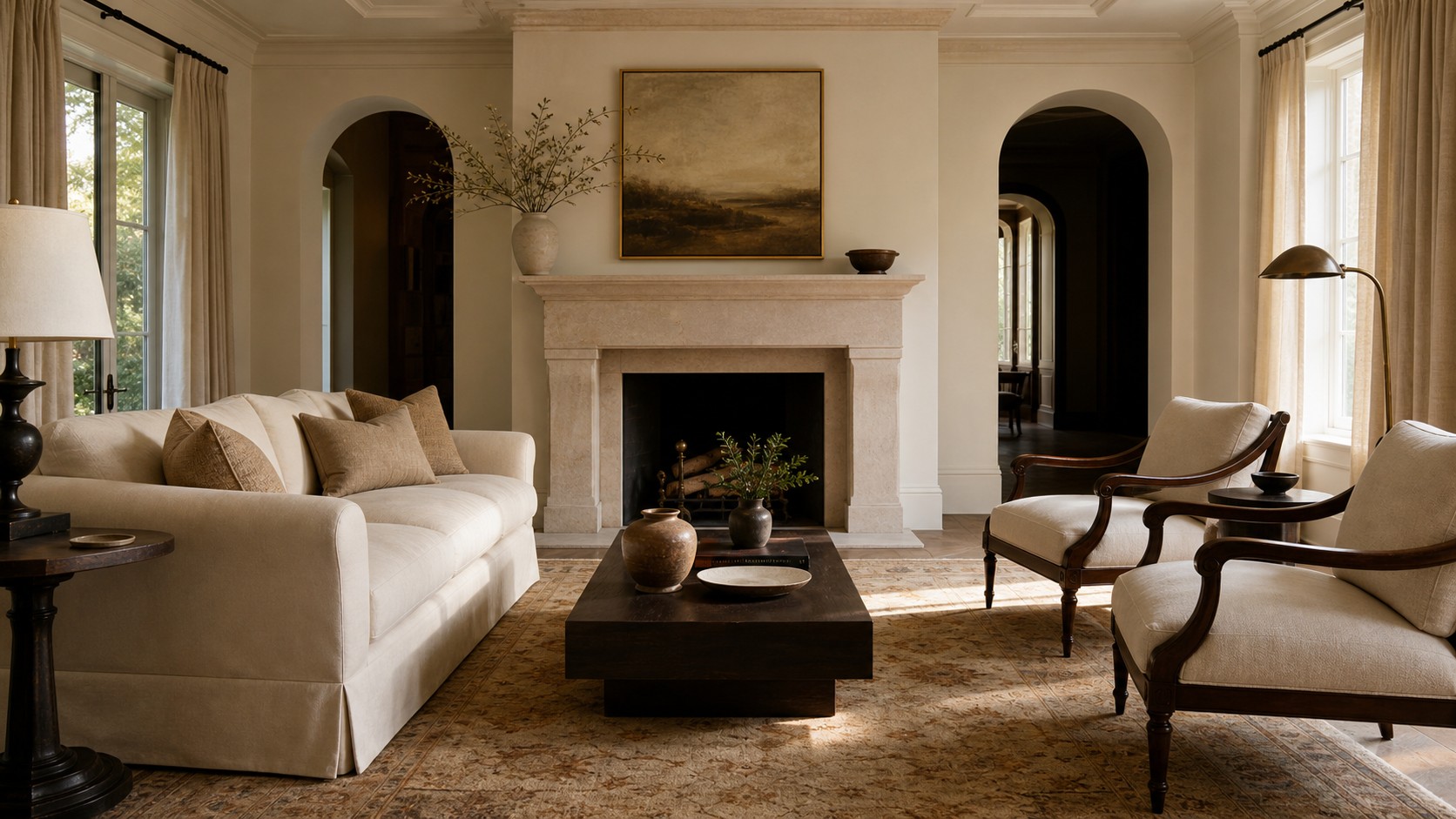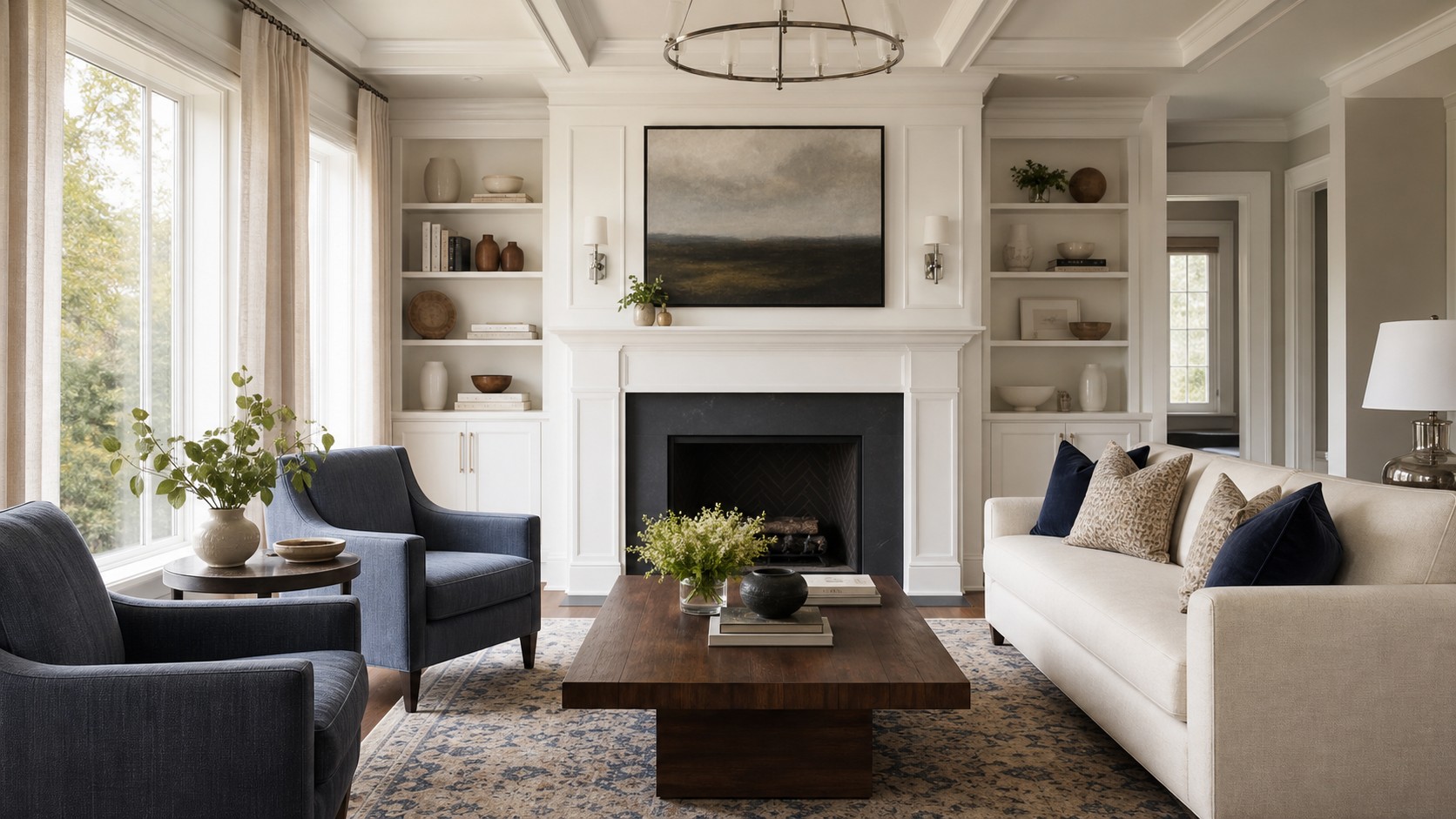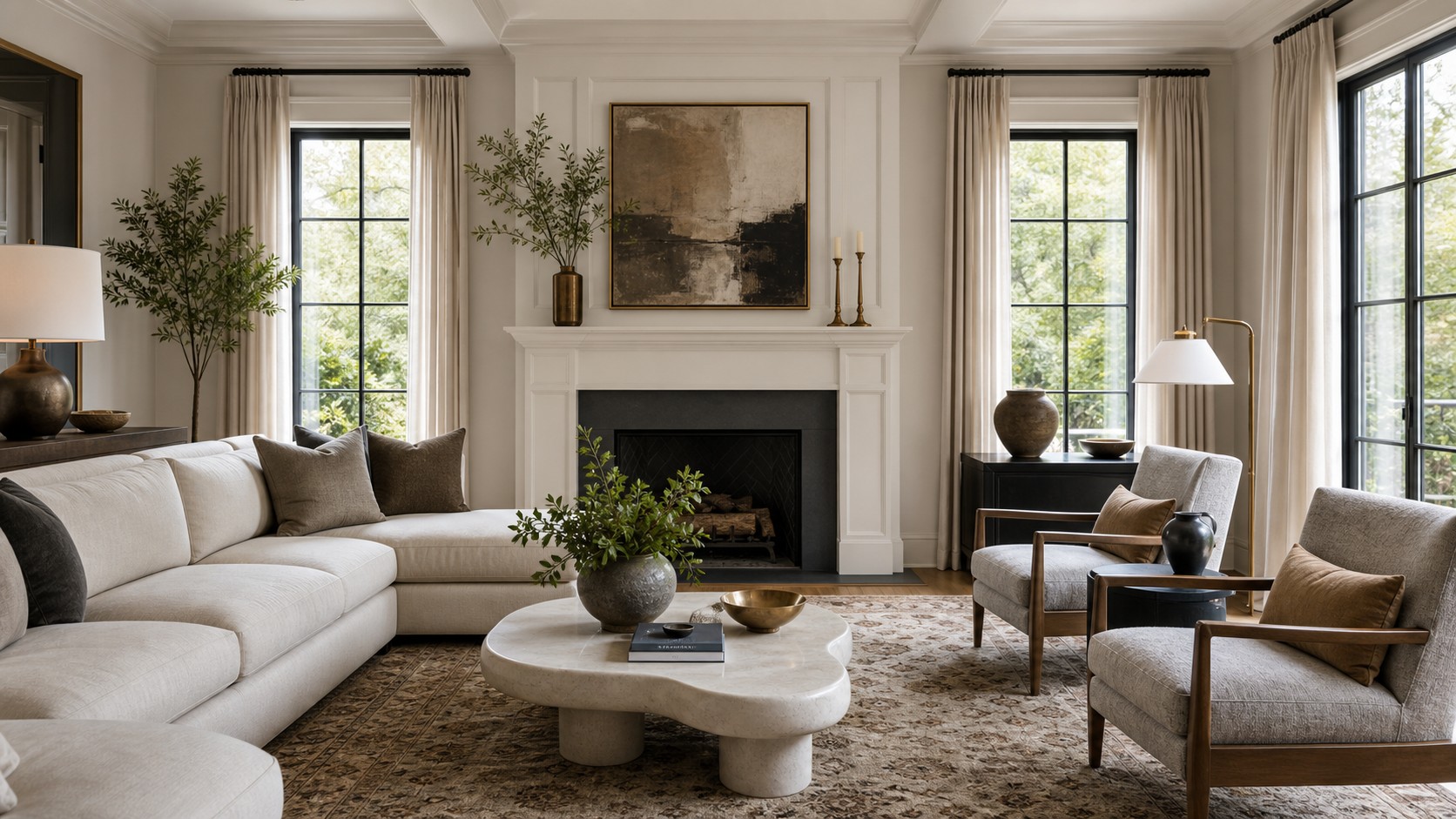
The most convincing transitional family rooms do not split the space into modern pieces on one side and traditional pieces on the other. They translate both styles into a shared language. Classic design contributes warmth, history, symmetry, and familiar forms; modern design contributes clarity, open space, simplified lines, and practical materials. The balance is less about achieving a perfect fifty-fifty ratio than choosing elements that support one another. When color, scale, and finish repeat across the mix, a curved heirloom chair can sit naturally beside a streamlined sofa. The room feels intentional, not divided, and gains the flexibility to evolve as tastes and routines change.
A: It is a space that blends classic details with modern lines, creating a room that feels timeless, comfortable, and updated.
A: Warm whites, taupe, greige, soft gray, camel, navy, charcoal, and muted earth tones work especially well.
A: Yes. Choose performance fabrics, washable rugs, rounded tables, durable woods, and storage-friendly furniture.
A: Add clean-lined furniture, black accents, sculptural lighting, simple window treatments, and uncluttered styling.
A: Layer texture with rugs, pillows, throws, wood, metal, ceramics, woven pieces, and subtle patterns.
A: No. Transitional rooms look best when furniture coordinates through color, scale, and finish rather than matching exactly.
A: A neutral sofa with clean arms, comfortable cushions, and timeless proportions is the safest foundation.
A: Yes, but use them thoughtfully in pillows, art, chairs, or accessories instead of every major piece.
A: Swap dated lighting, add a larger rug, simplify accessories, and introduce modern pillows or art.
A: Use warm lighting, soft textiles, layered seating, natural materials, and personal details like books, photos, and collected objects.
Choose which side will lead
Every transitional room benefits from a dominant note. In a newer home with broad windows and minimal trim, modern architecture may lead while traditional furniture brings warmth. In an older house, classic millwork may set the tone while cleaner upholstery and lighting provide freshness. Aim for a gentle majority rather than equal competition. A room that feels roughly two-thirds one direction and one-third the other often appears more coherent because the eye understands its primary character.
List the elements that cannot or should not change: flooring, fireplace, windows, cherished furniture, and major storage. Label each as modern, classic, or neutral. This inventory reveals the room’s existing balance. If carved cabinetry and detailed molding already create a traditional base, avoid adding more ornament to every new purchase. A simple sofa, abstract artwork, and streamlined lamps may be enough to bring the space forward while respecting what gives the home identity.
Start with a bridge piece
A bridge piece contains qualities from both styles and makes the rest of the mix easier. It might be a sofa with clean cushions and a gently rolled arm, a classic wood chest with minimal hardware, or a wool rug that reinterprets a traditional medallion in a faded palette. Because the piece does not belong exclusively to either camp, it creates common ground. Use its color, shape, or material as a reference for later choices.
The area rug is often the strongest bridge because it touches every part of the seating group. A subtle pattern can connect an antique table to contemporary chairs, while its background color links upholstery to the floor. Lighting can perform the same role. A familiar lantern rendered in simple blackened metal or a modern globe fixture in aged brass combines old associations with current form. One effective bridge is better than many pieces that try too hard to display both identities.
Pair clean upholstery with classic furniture
Large upholstered pieces have a strong visual presence, so cleaner silhouettes can immediately modernize a traditional room. Look for a sofa with a straight back, restrained arms, and visible but simple legs. It need not be boxy or uncomfortable. Rounded corners, loose back cushions, and a generous seat preserve softness. Against that calm form, a vintage chest, turned-leg side table, or traditional spindle chair reads as character rather than clutter.
Reverse the formula when the room already feels very contemporary. A sofa with a subtle English arm, a skirted chair, or tufting used on one ottoman can introduce familiarity. Keep the fabric quiet and the surrounding pieces spare. The point is contrast with connection. If a classic chair has a curved arm, repeat that curve in a modern lamp or round table. If the sofa has dark wood legs, echo the tone in the older furniture so their differences feel deliberate.
Modernize traditional motifs
Traditional patterns remain useful when their color and scale are edited. Plaids, florals, stripes, damasks, and medallions can feel current in a limited palette or an enlarged, simplified rendering. Consider a botanical pillow in charcoal and cream rather than many saturated colors, or a broad check on one chair rather than a small check across an entire suite. Familiar motifs make a modern room warmer, while restraint prevents them from becoming nostalgic.
Architectural motifs can be edited similarly. Wall molding painted the same color as the wall adds depth without high contrast. A classic mantel can be simplified by removing excessive appliques or surrounding it with plain plaster. Traditional cabinet doors may receive understated hardware. Preserve craftsmanship that belongs to the house, but allow detail to breathe. Modernity often comes from reducing visual interruption, not erasing every historic reference.
Warm modern lines with tactile materials
Modern furniture can look severe when every surface is hard, smooth, and sharply edged. Transitional rooms soften those lines through texture. Place a nubby wool rug beneath a streamlined coffee table, add linen curtains beside black window frames, and pair a low modern sofa with a woven throw. The silhouettes stay clear, but the room becomes approachable. Tactile variation also gives neutral palettes enough depth to work without constant color.
Use nature as a reliable connector. Wood, stone, leather, rattan, wool, and clay are not exclusive to one era. Their irregular grain and subtle color variation can mediate between polished contemporary pieces and ornate older forms. A live-edge table may be too rustic for the intended mood, but a simple solid-wood table with visible grain can provide the right warmth. Choose natural materials in edited shapes, allowing the substance rather than decorative detail to create interest.
Simplify the color story for How to Create a Transitional Family Room That Feels Modern and Classic
A controlled palette allows varied furniture styles to coexist. Select a broad neutral for walls and large upholstery, a wood family, one muted color, and a small dark accent. For example, warm white, medium walnut, dusty blue, and charcoal can connect modern metal frames with traditional wood furniture. Repeat each color across both style categories. A blue classic-pattern pillow might relate to a blue modern vase, while charcoal appears in an antique frame and a contemporary floor lamp.
Undertones are more important than labels. A cool gray sofa can clash with a yellowed antique even though both are neutral. Place samples beside fixed finishes and examine them in morning and evening light. If the room includes warm wood, choose whites and grays with enough warmth to participate. A slightly complex color often bridges styles better than a pure one. Putty, mushroom, blue-gray, and olive change subtly with light and make mixed materials feel layered.
Balance curved and straight silhouettes
Classic design frequently uses curves, while modern design emphasizes straight planes. A transitional room becomes dynamic when it includes both. If the sofa and fireplace are strongly rectangular, introduce a round coffee table, barrel chair, arched lamp, or oval mirror. If traditional architecture already contains arches and scrolls, use rectilinear tables and clean frames to steady the composition. Shape should move through the room rather than collecting in one corner.
Do not confuse balance with equal numbers. One large curved chair may offset several straight pieces because its visual weight is strong. Consider the negative spaces around furniture as well. A round table improves circulation in a tight group and softens the gap between seats. Repeating a curve two or three times at different scales creates continuity: perhaps an arched doorway, a rounded chair back, and a small circular tray.
Mix metals without creating noise
Metal finishes can mark a style era quickly, but a controlled mix feels more natural and lasting. Choose a dominant finish for fixed or repeated elements, such as cabinet hardware and sconces. Add a secondary finish through portable lighting or a small table. Aged brass brings warmth to blackened steel, while polished nickel can lighten dark bronze. Keep each finish visible in more than one location so it looks intentional.
Pay attention to sheen as well as color. Highly polished metal feels more formal and attention-seeking; brushed, aged, and matte finishes are easier to combine. A traditional brass candlestick can sit near a modern brass lamp when both have a softened surface. Avoid introducing a new metal with every accessory. Wood, ceramic, glass, and woven materials should remain part of the mix so metallic details act as punctuation rather than the entire sentence.
Use symmetry as a base, then loosen it
Symmetry is one of the clearest classic tools. It makes a room feel stable and can organize diverse pieces. Begin with a balanced seating arrangement, paired sconces, or two substantial objects on a mantel. Once the structure is established, add modern informality through mismatched side tables, an asymmetrical art arrangement, or varied pillows. The room retains calm but avoids the ceremonial feeling of perfect mirroring.
In an open-plan space, symmetry can define the family room without walls. Two chairs facing a sofa establish a recognizable boundary, and a centered rug reinforces it. A console behind the sofa provides another axis. Within that framework, chairs do not have to match exactly if their heights and visual weights are similar. This controlled flexibility is useful when incorporating inherited pieces or furniture collected over time.
Give old pieces a clear role
An heirloom becomes more powerful when it has a purpose beyond proving its age. A chest can store games, a drop-leaf table can become a compact desk, and an old bench can provide extra seating. Place the piece where its function is credible and give it enough surrounding space to be appreciated. Crowding several antiques together may turn them into a category, while one well-positioned piece adds depth to the whole room.
Restoration should preserve character while supporting use. Repair loose joints, replace unsafe wiring in lamps, and protect delicate surfaces, but avoid stripping away every sign of age. New upholstery can transform a classic chair; choose a simple solid or graphic weave rather than recreating a period scheme unless that suits the home. A thoughtful update lets the original form remain visible while connecting it to the room’s contemporary colors and habits.
Keep contemporary pieces from feeling disposable
Modern does not have to mean trend-driven. Look for clear geometry, good materials, and construction that can withstand use. A simple table in solid wood or stone will generally outlast one whose appeal depends on an unusual coating or exaggerated shape. Examine how pieces are joined and whether their proportions feel comfortable rather than merely dramatic. The best contemporary furniture provides visual relief around more detailed classic elements.
Limit highly recognizable trends to small, movable items. A distinctive lamp, pillow, or occasional table can refresh the room without controlling it. If a current shape genuinely solves a problem, it may deserve a larger role; a swivel chair, for example, can improve an open room regardless of fashion. Function gives modern design staying power. Novelty alone rarely does.
Integrate media with both styles
A television can sit comfortably in a modern-classic room when its surroundings use the same design language. A streamlined screen may be grounded by a classic wood credenza, or built-ins with traditional proportions may receive flat, minimally detailed doors. Avoid arranging small decorative objects around the screen in an attempt to distract from it. A few larger forms and controlled negative space create a calmer relationship.
If the television hangs above a fireplace, confirm that viewing height and heat conditions are comfortable before committing. Other placements often work better. A dark painted panel, recessed niche, or cabinetry can reduce the screen’s visual contrast. Hide cables, but keep components ventilated and accessible. Transitional design is at its best when modern necessities are handled openly and elegantly rather than disguised through cumbersome decorative devices.
Finish with art and objects that cross eras
Art does not need to match the furniture’s period. Contemporary work can energize a traditional mantel, and an old landscape can add soul above a modern console. Connect art through color, scale, or framing instead of subject matter. A simplified frame can update an older work, while a warm wood frame may soften a graphic print. Large pieces create stronger bridges than many tiny accents because their relationship to the architecture is clearer.
Accessories should also cross categories. Pair a turned wood bowl with a clean stone object, old books with a modern ceramic vessel, or a classic portrait with a sculptural lamp. Keep groupings limited enough that each contrast remains visible. Personal objects are especially valuable because they sit outside style labels. A travel find, family photograph, or handmade piece can make the modern-classic mixture feel authentic rather than calculated.
Check the balance from every doorway
Before considering the room finished, view it from adjoining spaces and common seated positions. One style may dominate from a particular angle even if the main view feels balanced. Look for clusters of dark wood, sharp metal, ornate detail, or pale upholstery. Distribute those visual qualities so the room reads as one composition. Small adjustments, such as moving a lamp, exchanging pillows, or shifting artwork, can restore the dialogue between old and new.
A successful transitional family room feels modern and classic because both influences have been edited toward comfort and coherence. Establish a lead, find a bridge piece, repeat colors and finishes, and let contrasting silhouettes improve one another. Preserve the details that give the home character while clearing space around them. The result should not invite guests to identify which pieces belong to which category. It should simply feel warm, current, settled, and ready for the way your household lives now.