Light the Room for the Way You Watch
The best lighting for watching TV lets the family enjoy the picture while still using the room comfortably. Someone may be carrying a drink, another person may be reading beside the sofa, and children may be moving through the space before bedtime. A completely dark room does not suit every household routine, while bright lights in the wrong positions can reflect across the screen. Begin with how the room is used, then decide which lights should remain on and where their brightness belongs. A comfortable viewing arrangement usually comes from placement and control rather than simply adding more lamps.
Describe an Ordinary Viewing Evening
Think about the activities that happen alongside television viewing. Include conversation, reading, eating, and movement through the room, not just the program on screen. Each activity needs a different kind of illumination. A useful plan allows the family to do those things without flooding the display with unnecessary light.
Identify which seats need additional light and which routes must stay easy to navigate. An end seat beside a reading lamp may have different needs from the middle of the sofa. Avoid choosing the room’s lighting only from the television’s perspective. Comfort includes the people and tasks sharing the space.
Check What the Screen Reflects
Look at the screen from the main seats while the usual lights are on. A dark scene or inactive screen can reveal bright reflected fixtures more clearly than a colorful daytime program. Identify the source of each obvious reflection. This gives you a placement problem to solve rather than a vague impression that the room is too bright.
Check lamps behind the viewers as well as lights near the television. A fixture can be far from the screen and still appear in its reflection. Move a portable lamp slightly or switch off one fixture to confirm the source. Keep the comparison limited so you know which change affected the picture.
Repeat the check from more than one seat. A lamp that is harmless from the center may distract someone at the edge of the sofa. The useful arrangement should work for the household’s normal positions. Small adjustments can sometimes improve several views without changing the entire lighting scheme.
Use Gentle General Light Where It Helps
Some low-level room illumination can make a shared family space more usable during viewing. Choose a position that lights the surrounding room without putting a bright source directly in the picture’s reflection or the viewers’ line of sight. A shaded lamp, indirect fixture, or suitable dimmed room light may provide that function. Test the result from the actual seats instead of assuming any one fixture type always works. The aim is an amount and distribution the household finds comfortable, not a universal brightness setting for every television.
Keep Reading Light Local
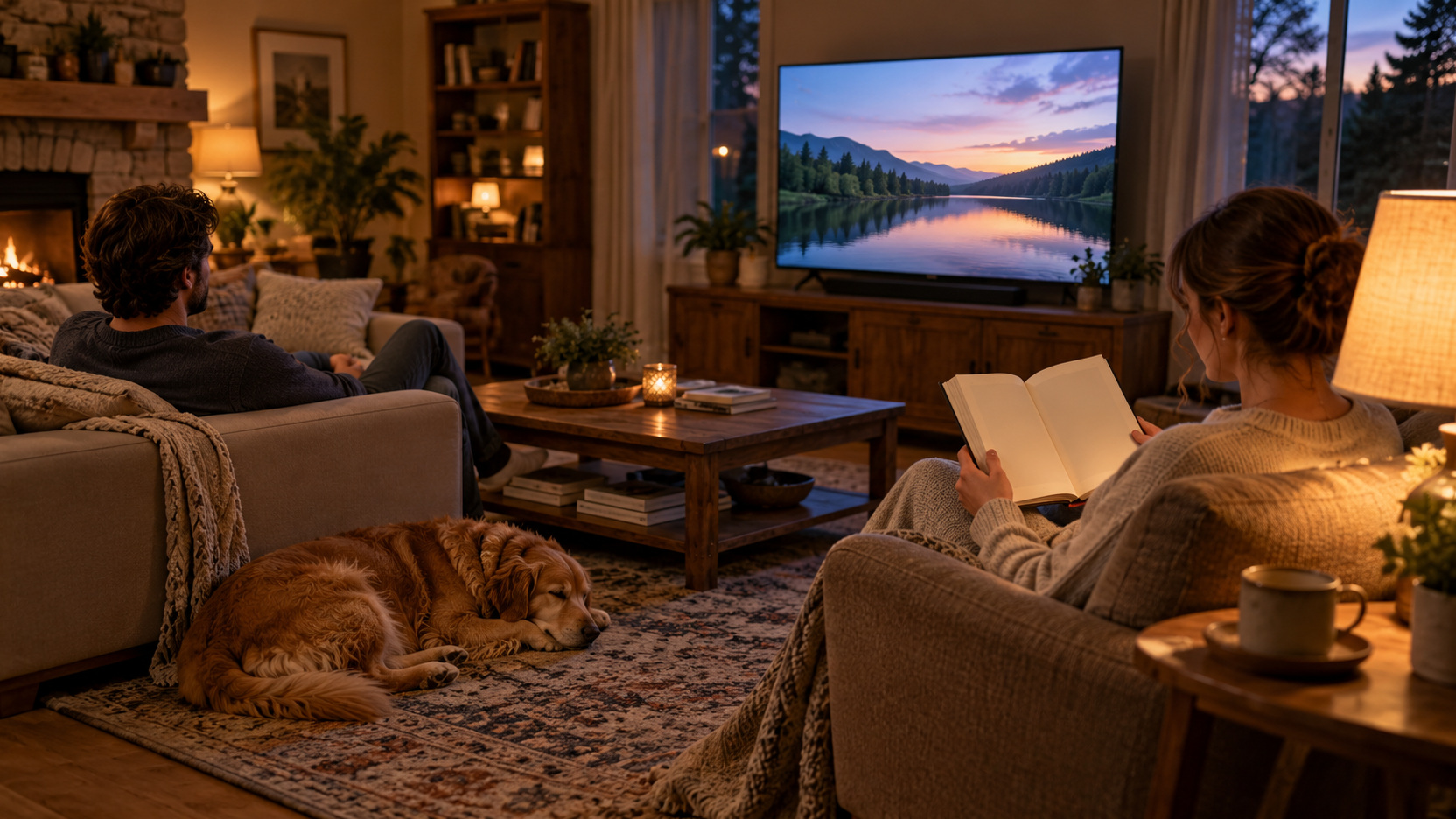
If someone reads while another person watches TV, place task light where the page or project needs it. An adjustable shaded lamp can be useful when it directs light onto that task rather than across the room. Check the reader’s position and the screen reflection together. A light that illuminates the page well may still need a different angle to suit the neighboring viewer.
Discuss the arrangement with both people. The reader should not have to work in insufficient light to preserve a perfect cinema effect, and the viewer should not face an exposed bright bulb. Try a modest change in lamp location, shade direction, or seating position. A shared room often benefits from a workable compromise rather than one idealized viewing condition.
Shield Bright Sources From Seated Eyes
Look at the lamp itself from a relaxed seated position. If the bulb or a bright LED element is directly visible, the fixture may feel distracting even when it does not reflect on the screen. A suitable shade or different position can change that experience. Use the light as intended and follow its guidance for compatible bulbs and accessories.
Avoid improvising covers or placing fabric over a fixture to dim it. Aesthetic adjustments must remain appropriate for the lighting product. If an existing lamp cannot provide a comfortable direction or brightness, consider a compatible bulb or a more suitable fixture. The decision should solve a specific problem you observed in the room.
Check glare from polished furniture and decorative surfaces too. A bright patch on a coffee table may enter a seated viewer’s field of vision even when the television itself looks clear. Repositioning the lamp can help determine whether that reflection is avoidable. Keep the whole seated view in mind rather than assessing the screen alone.
Give Different Lights Separate Controls
Independent control lets the household keep useful light on while reducing a distracting source. A reading lamp, room lamp, and any television backlight serve different purposes. Grouping them under one all-or-nothing switch can make a flexible room harder to use. Consider the controls available in the existing setup before adding automation.
Make ordinary operation understandable. A simple switch or compatible dimmer may be enough, while supported smart controls can help if they fit the household. Keep the relevant controls reachable to the people who use the room. A viewing routine should not require finding one particular phone or asking the same person to operate every light.
Verify Dimming Compatibility
Check that the bulb, fixture, and dimming control are intended to work together. A dimmable bulb does not establish that every existing switch or smart accessory will operate it properly. Read the relevant manufacturers’ compatibility information and use qualified electrical help for wiring changes. Do not treat flickering or unreliable operation as an acceptable trade for a lower brightness.
Test the range the family will actually use. A lamp may behave well at full output but poorly near the low setting you prefer for a film. Confirm smooth practical operation with the chosen controls. Keep purchase and installation details so a later bulb replacement can preserve the working combination.
Consider what happens when the light is switched off and back on. Some products remember a setting; others return to a default or depend on their control arrangement. Verify the exact product behavior rather than assuming it. Predictable operation makes an evening routine easier for everyone sharing the room.
Coordinate Daylight With Evening Lighting
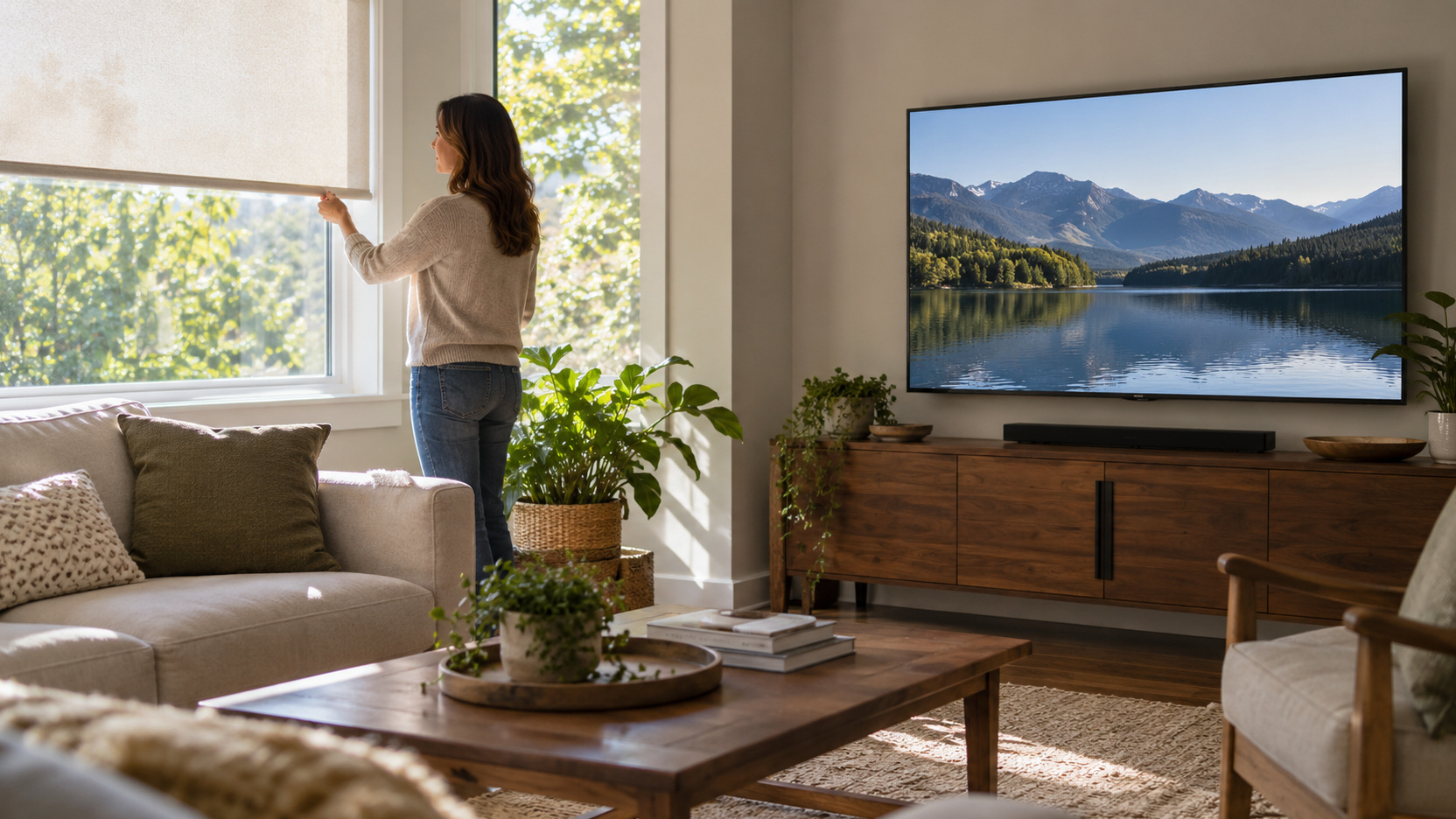
A lighting plan that works after dark may behave differently while windows are bright. Observe the room at the times the family usually watches television. Suitable blinds or curtains can help manage incoming light while preserving the amount of daylight you want elsewhere. Window control is a distinct adjustment from turning down the room’s lamps.
Check whether the screen or seating arrangement can be reoriented practically before buying stronger lighting to compete with sunlight. For workstations, OSHA’s environment guidance discusses arranging screens in relation to windows and reducing glare sources. In a family room, apply the same observation-based approach to your own seats and screen. The room’s layout and windows determine which change is feasible.
Understand What a TV Backlight Adds
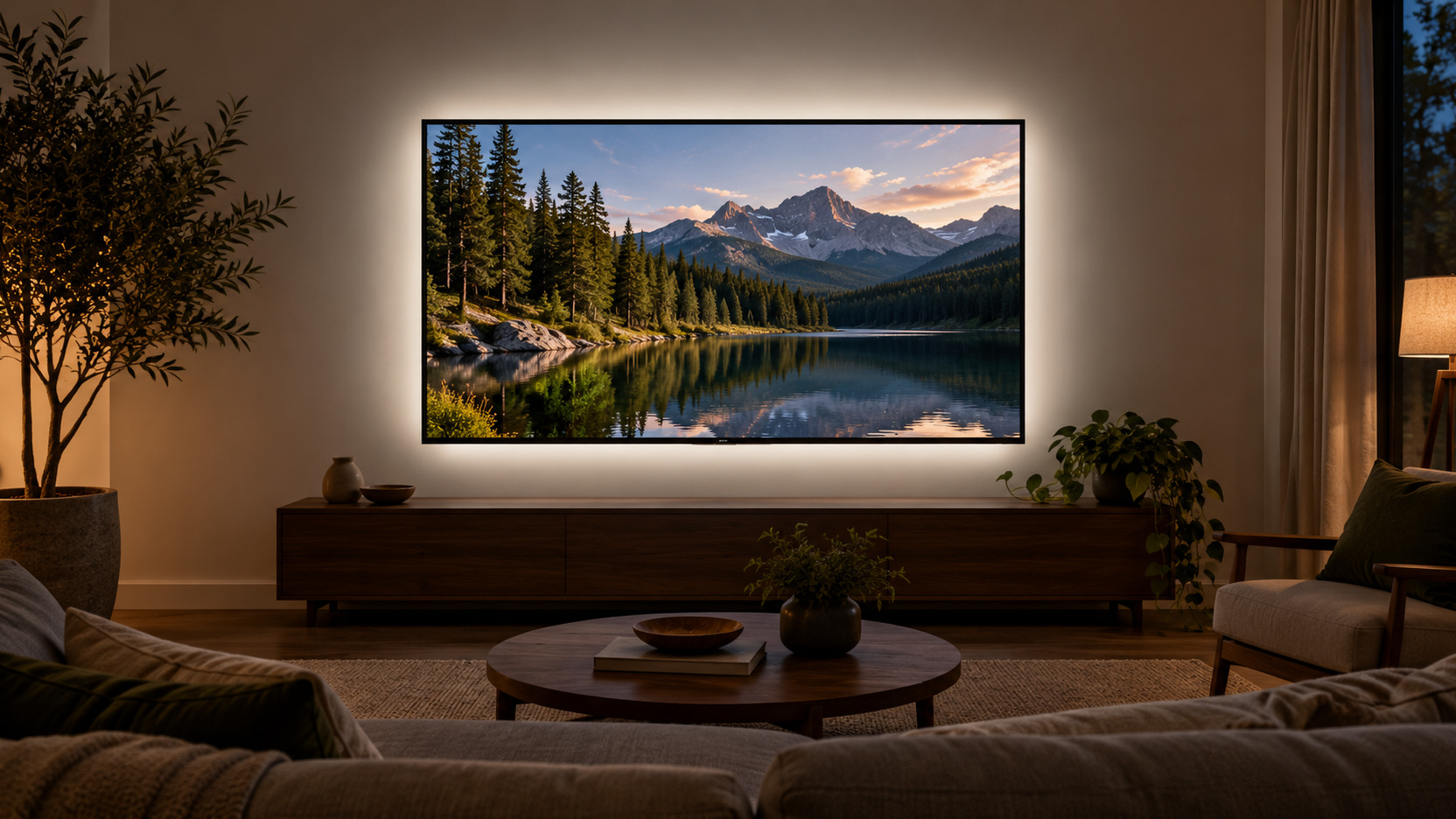
A light behind the display can illuminate the surrounding wall while keeping the source itself out of view. That arrangement is often called bias lighting when it is designed as a restrained viewing surround. It serves a different purpose from colorful decorative effects or a lamp lighting the whole room. Check the television’s clearance, the wall surface, and the lighting product’s installation requirements before deciding whether it is useful. Keep its output subtle enough that the wall does not become the main visual feature during a program.
Choose the Look of the Room Deliberately
Color temperature influences the atmosphere of ordinary room lighting. A household may prefer warm lamps for evening conversation, while a viewing surround chosen for color-conscious work has different considerations. Avoid assuming that one color temperature must govern every activity. Decide what each light is intended to do and assess the combination in use.
Do not confuse decorative color changes with improved picture accuracy. A colorful wall wash may be enjoyable as a design feature, but it is a separate preference from a neutral viewing environment. If faithful screen color matters to you, consult the display and bias-lighting product guidance. Keep marketing claims about comfort or precision tied to what the product actually supports.
Test With More Than One Kind of Program
Use a mix of familiar content when assessing the room. A bright sports broadcast can hide reflections that become obvious in a dark film scene. Try both at the family’s normal viewing times. Keep the television’s picture settings consistent while comparing room-light changes.
Let the program run long enough for people to settle into their normal positions. Someone may lean back, move to another seat, or begin reading after the initial test. Watch how those ordinary actions affect the arrangement. The room needs to work during a whole evening, not only while everyone sits upright for a quick demonstration.
Invite each regular viewer to describe what feels distracting or difficult. Their preferences may differ, and one person’s ideal dimness may be another person’s obstacle. Adjust the local task light or source position before declaring the entire scheme unsuitable. Separate controls make those compromises easier.
Preserve Practical Movement Through the Room
Keep enough appropriate illumination for ordinary movement when people enter, leave, or handle items. A viewing arrangement should not make the room difficult to navigate merely to imitate a dedicated theater. Consider nearby doorways and transitions to brighter rooms. Keep controls accessible so someone can raise the relevant light without disturbing every viewer.
Add Equipment Only After Identifying the Need
Try the existing fixtures in better positions or settings before purchasing a new lighting system. If the remaining problem is a reflected bulb, a different shade or placement may be more useful than additional brightness. If the room lacks a local reading light, choose one for that task. Give each proposed addition a concrete purpose.
Compare installation demands, control compatibility, and normal operating costs as part of the decision. Avoid choosing solely from photographs of perfectly staged rooms. Your wall finishes, window positions, seats, and household routines will influence the result. A smaller change that works reliably can provide more value than a complicated system nobody wants to operate.
Check the Arrangement With Visiting Viewers
Guests may use a different seat or need more light to find their belongings. Keep a straightforward way to raise the relevant illumination without requiring a lesson in the household’s technology. A useful family setup should remain understandable during an ordinary visit. This check can reveal controls that are convenient for one regular user but awkward for everyone else. Include that feedback when deciding where to keep the most frequently used control.
Save a Viewing Routine That Remains Flexible
Once the room feels comfortable, remember which lights and settings worked for the common activities. Keep a practical film arrangement, a brighter conversation arrangement, and any useful reading option without making them rigid rules. Reassess when furniture moves or the television changes, because reflections and clearance may change too. The best lighting supports the household’s actual use of the room and can be adjusted when that use evolves.
Keep the routine understandable to someone who did not set it up. Explain the relevant switches and any useful local adjustments in ordinary terms. If a guest or another family member cannot operate the arrangement comfortably, simplify that part of the control scheme. Predictable everyday operation is part of a successful lighting plan.