Choose a Soundbar as Part of the Whole Setup
A soundbar should fit more than the width of a television. It needs an appropriate place to sit, a supported connection to the equipment you use, and a listening character that suits your room and habits. The right purchase may be a compact standalone bar, a package with a subwoofer, or a system with supported surround additions. Begin with the television you own and the improvement you want, then evaluate complete configurations within your budget. That order makes product comparisons more useful: instead of buying a collection of impressive labels, you are selecting an audio arrangement that can be installed, controlled, and enjoyed in your actual family room.
Write a Short Soundbar Purchase Brief
Describe your main use in one or two sentences. You might watch quiet dramas after the children go to bed, follow sports with friends, or want television and music from one straightforward system. Include the listening problem that prompted shopping. The brief helps you distinguish necessary features from interesting extras.
Set a complete spending limit rather than a bar-only limit. Leave room for required fitting accessories, delivery, and any help you need to install and configure the system. If a subwoofer or surround pair is essential to your goal, include it from the beginning. A low starting price can be misleading when the demonstrated sound depends on separately purchased equipment.
Identify the Exact Television and Its Audio Connections
Find the model number of your television and read its documented audio outputs. Look for the relevant HDMI ARC or eARC port, or an optical output where appropriate. Then compare those connections with the requirements of the proposed soundbar. Similar-looking sockets should not replace a model-specific compatibility check.
Sonos’s home-theater requirements illustrate why this matters: its products use different supported connection arrangements, and particular features depend on the route. Treat that as an example of the checking process rather than a recommendation for one brand. The soundbar, television, source, and intended audio format need to work together. Ask for clarification before purchasing if the documentation leaves a gap.
List external sources as well as built-in apps. A console, streaming player, and disc player may have different requirements or connection paths. Explain the devices you own when requesting compatibility advice. The useful answer should describe how your complete setup will operate, not simply confirm that the soundbar has an HDMI connector.
Measure the Location With the Television in Place
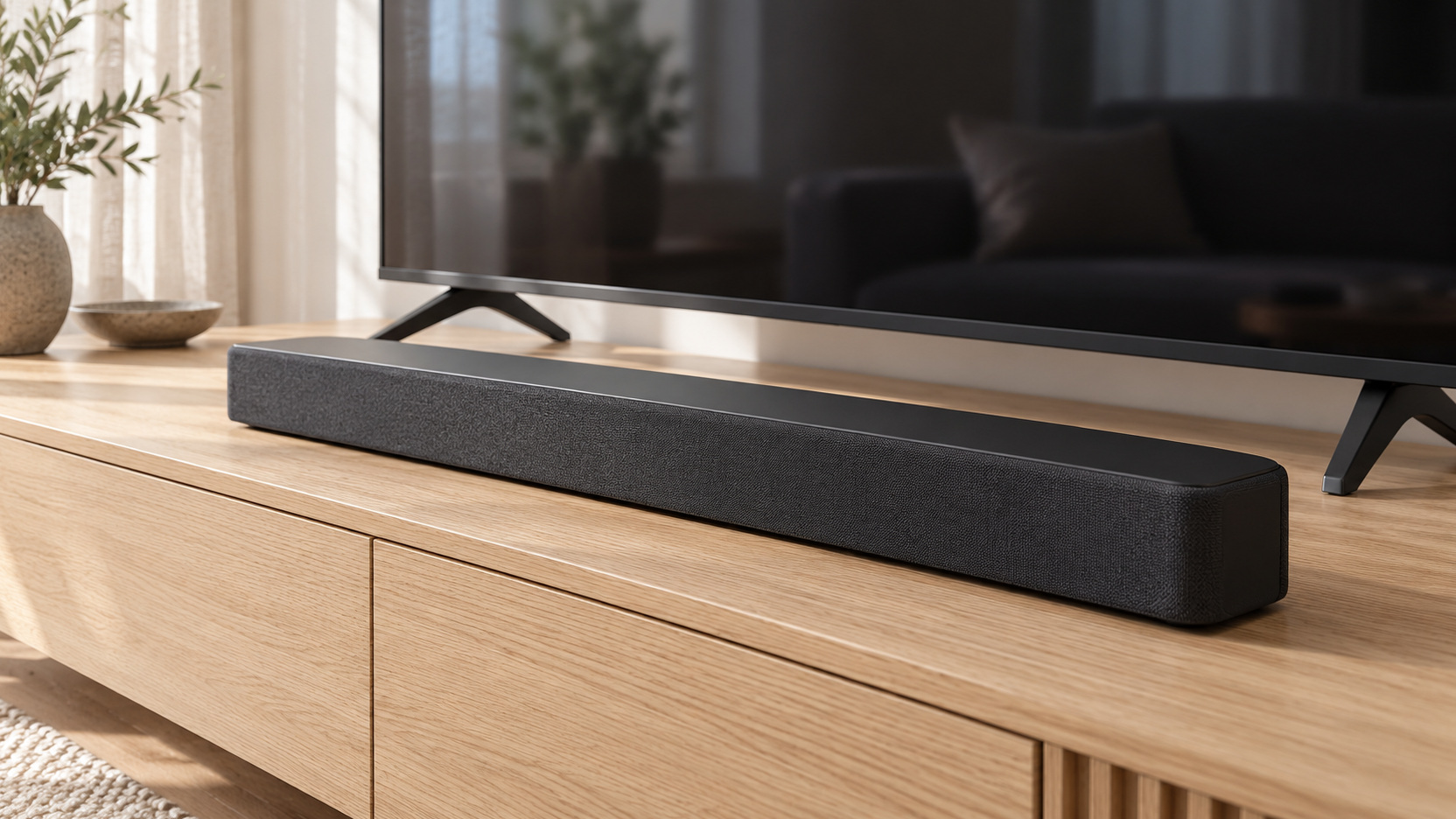
Measure the usable console width and depth, then compare the soundbar’s full dimensions. Include the space around it required by the manufacturer. The bar must not crowd the stand feet, extend precariously beyond the support, or occupy an area reserved for another device. A photograph cannot supply those measurements reliably.
Check height carefully if the television rests on a console. A soundbar may overlap the bottom of the picture or obstruct a remote receiver. Consider the actual TV stand arrangement rather than the screen’s diagonal size. A narrower bar can still be too tall for the available space.
Read Placement Requirements Before Choosing a Shape
Some soundbars use side-firing or upward-firing drivers, so their placement requirements extend beyond a clear front grille. Shelving, a deep cabinet recess, or objects above the bar may interfere with the prescribed arrangement. Read the guide for the exact product. Do not assume that a soundbar designed for open placement will behave the same way inside furniture. Check the supplied leads and actual plugs too: their projection can affect usable depth near a wall. The approved connections need room without sharp strain, so include them in the physical placement check before delivery.
If you prefer wall mounting, verify the approved hardware and relationship to the television. Include access to connections and the equipment below it. Ask an installer how the arrangement will remain serviceable. The soundbar’s attractive profile should not hide an impractical fitting plan.
Bring a photograph and measurements of the location to a retailer if needed. Clearly distinguish a fixed limitation from something you can change, such as a decorative object. That allows advice to focus on realistic options. A product that requires rebuilding the room may not be the convenient upgrade you intended.
Judge Dialogue at the Volume You Actually Use
Listen to a familiar conversation before auditioning impressive effects. Use an ordinary evening level, including a passage with music under the words, and compare any documented speech controls. Ask which mode is active so both candidate products are being judged under understood conditions. A successful demonstration should make the exchange easier to follow without requiring the loud presentation you would avoid at home. Try the quiet scene from a side seat as well as the centered demonstration position. If the family mainly watches dramas, that result can deserve more weight than the excitement of an action clip. A product whose dialogue improvement is clear at your usual level answers the purchase brief more directly than one that only sounds impressive when turned up.
A separate center-channel specification describes part of a product’s arrangement, but it does not replace listening. Processing, placement, room conditions, and content all affect the experience. Ask the demonstrator to explain the available controls and show how to return to the normal setting. This keeps a useful feature from becoming another menu adjustment only one household member understands.
Decide Whether a Separate Subwoofer Belongs in the Package
A subwoofer can add low-frequency impact and change the complete system’s cost and footprint. Identify an appropriate potential location before selecting a bundle. Check power requirements and the manufacturer’s setup advice. An unused corner is not automatically the best location simply because the component fits there.
Consider the household’s listening hours and adjoining spaces. If you often watch quietly, hear how the system performs with restrained bass and its supported low-volume settings. You should still enjoy the result under those conditions. A demonstration that relies on strong bass may tell you little about an ordinary late evening at home.
Compare packages with and without the addition if both are supported options. The goal is not to avoid a subwoofer at all costs or to regard one as compulsory. Choose the arrangement that delivers the improvement you want within the room’s practical limits. Make the component list explicit in the quotation.
Distinguish Virtual Effects From Separate Surround Speakers
A soundbar may try to create a broad sound field from the front enclosure, while another package uses separate surround speakers beside or behind the seats. Ask which arrangement is playing during the demonstration. A convincing effect in that room is worth hearing, but it does not establish what your geometry will deliver. Compare the physical component diagram with the positions you can actually provide at home.
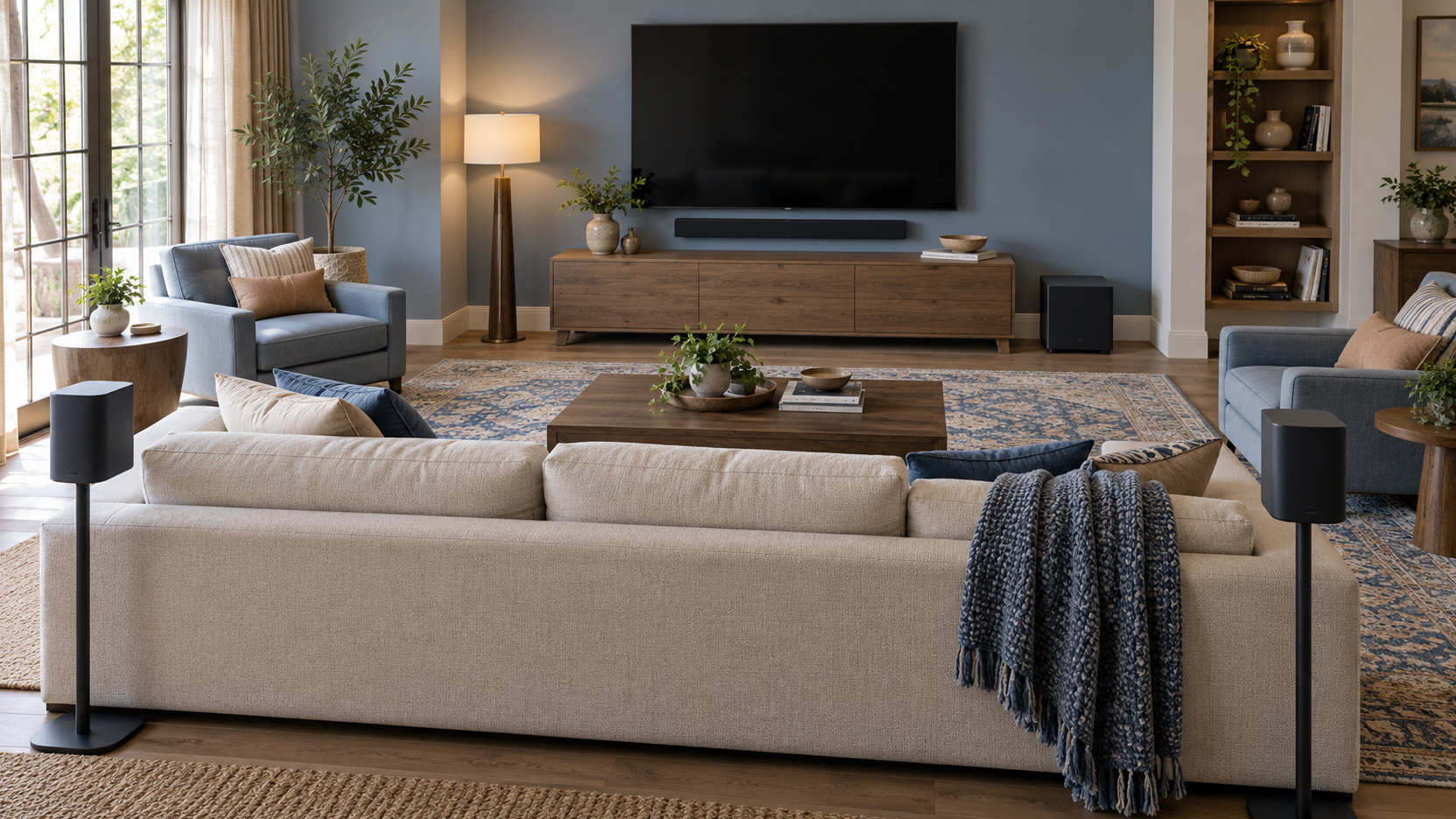
For separate surrounds, check approved positions, power needs, and exact compatibility with the bar. Wireless audio links can still leave power cables to manage. If a package contains a subwoofer or surrounds you cannot accommodate, audition the configuration you intend to use rather than assuming it will match the complete demonstration. The useful purchase is the installed arrangement, and a bundle discount cannot create a workable home for an unused component.
Evaluate Atmos as a Specific Feature Rather Than a Promise
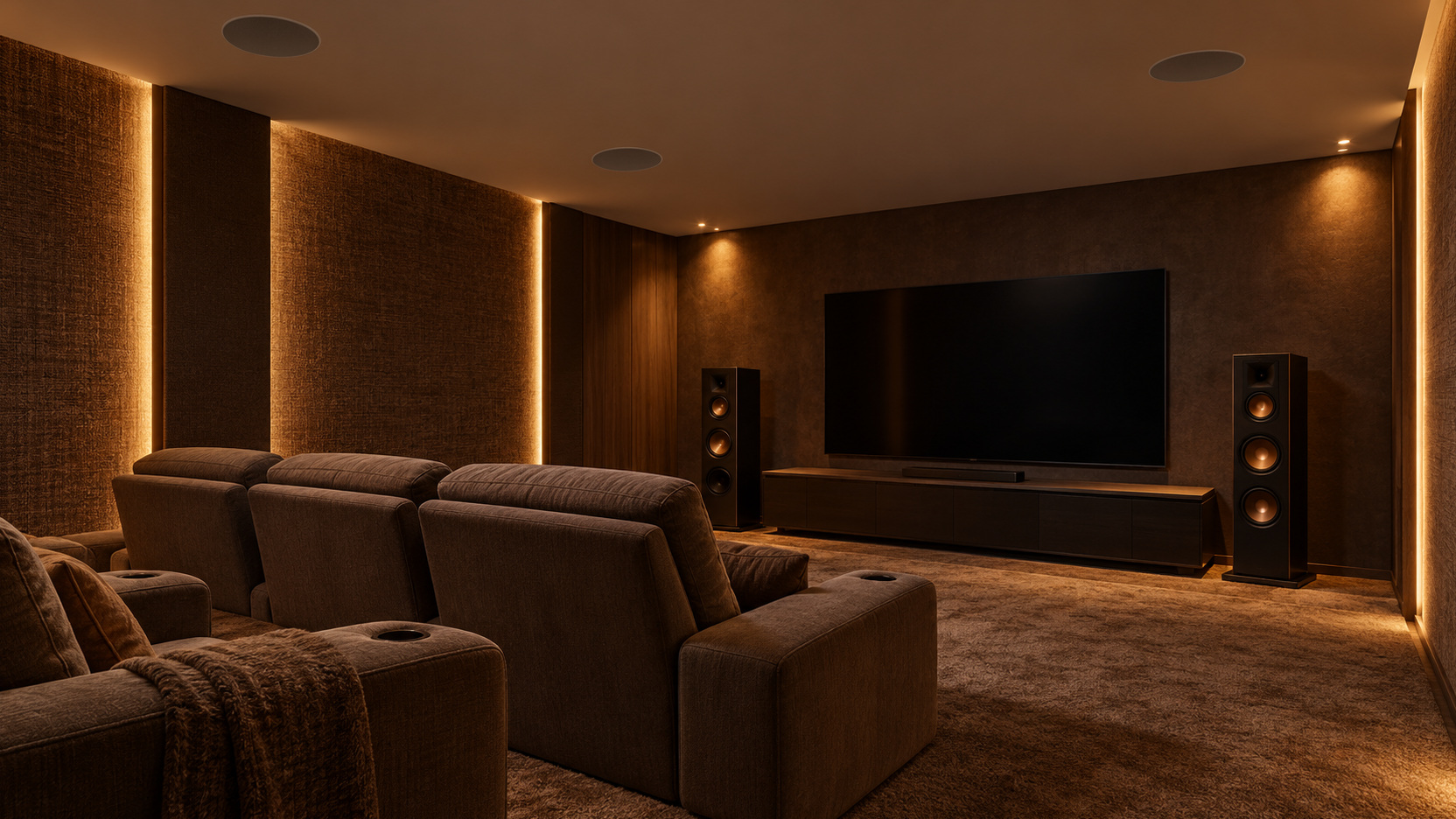
Dolby Atmos capability should be understood through the actual equipment and room. Some products use upward-firing drivers; others use different methods to present a height impression. Dolby’s speaker guidance describes overhead and upward-firing approaches. Check the product’s requirements and audition familiar supported content. An Atmos badge does not alone tell you how effective the presentation will be from your sofa.
Make Everyday Control Part of the Demonstration
Ask to start television playback, change the volume, switch to music if relevant, and return to the program. Use the controls you expect the family to use. Find out whether routine functions need a phone, a separate remote, or a particular connection feature. An elegant enclosure can still introduce a control routine that the household dislikes.
Differentiate initial configuration from everyday use. Account and network requirements may be important during setup even when the ordinary remote sequence is simple. Ask what happens if the internet connection is unavailable and which functions continue to work. The answer should come from the documentation for the selected product, not assumptions about the whole brand.
Include the least enthusiastic equipment user in the trial. They may notice that input switching is unclear or that a necessary setting is buried in an app. Resolve those concerns before ordering. A family-room system should not depend on one person being present to make it work.
Compare Product Generations and Expansion Terms
Write down the exact model and generation of each candidate. A familiar product name may cover more than one version with different connections or supported additions. Verify the accessory and surround compatibility for the specific item you will receive. Retail photographs and broadly worded listings should be checked against the component details.
If you plan to expand later, ask which currently supported components can be added. Consider whether that route suits a likely change in your room or listening habits. Expansion potential has value when you will probably use it. It should not justify buying a system that fails your immediate requirements.
Arrange a Useful Home Assessment
Ask about trial, return, and installation terms before purchasing. Determine whether opened equipment can be returned, who handles collection, and which charges may remain. This is particularly relevant when your room differs substantially from the demonstration. Clear terms let you make a practical assessment without inventing expectations afterward.
Once installed, replay your reference scenes from all regular seats. Confirm that the soundbar fits the agreed location and that the connection path works for each source. Keep settings changes deliberate and reversible while testing. The first successful burst of sound is only the beginning of checking the arrangement.
Evaluate the system during at least one ordinary evening. Listen at the usual level, change sources, and let another person operate it. Pay attention to whether the original problem has improved. A product that looks impressive but leaves the household reaching for help has not fulfilled the brief.
Select the Complete Arrangement That Earns Its Cost
Make the final choice through a concrete tradeoff. A compact standalone bar that makes drama dialogue clearer may suit a small shared room better than a discounted package whose subwoofer has nowhere appropriate to sit. In another room, the complete package may justify its cost because the household enjoys films, can place every component correctly, and hears a useful benefit at its normal level. Compare those results with the original brief rather than awarding points for features you will not use. Keep a short record of the modes used in the audition so you can reproduce the comparison at home. A candidate should fit, connect as documented, improve the relevant listening tasks, and remain manageable within the complete budget.
Save the component list, installation details, and useful settings with the receipt. If one regular source fails the agreed connection route, resolve it through support or the applicable trial process rather than compensating with repeated mode changes. Once the familiar scenes and ordinary controls work, let the system become part of viewing. Its value should remain audible after the demonstration ends.