Choose the Sound System Your Room Can Support
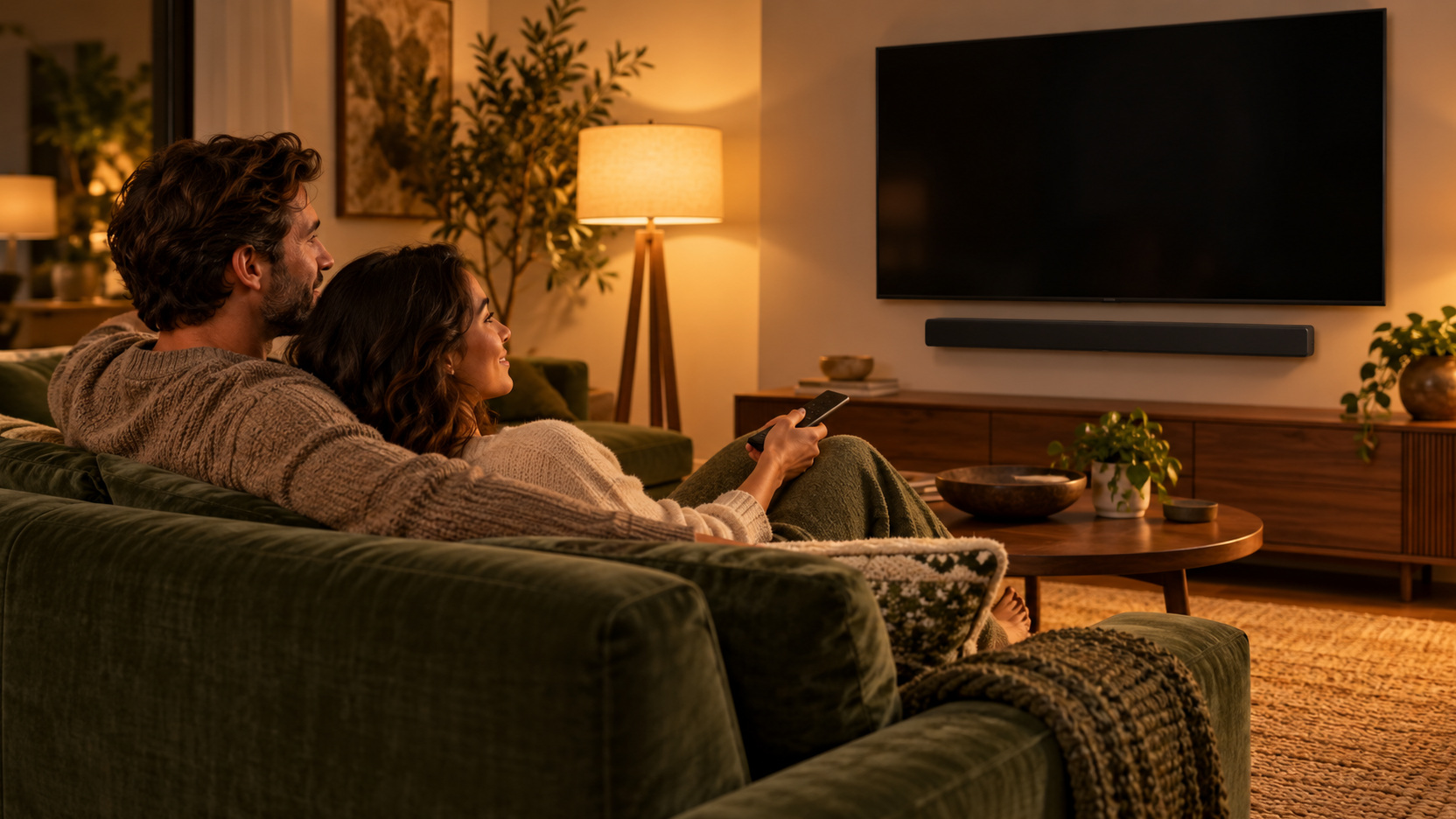
A soundbar and a surround system can both make television more enjoyable, but they ask different things of a home. One concentrates much of the equipment near the screen; the other distributes speakers around the listening area. The better choice depends on what you want to hear, where people sit, and how much installation and everyday operation you are willing to manage. A family watching conversation-heavy programs in an open living room may value clear speech and simple controls more than precisely located movie effects. Someone building a dedicated viewing space may welcome the extra speakers. Start with that distinction, then compare actual systems rather than assuming every soundbar is simple or every surround package is complete.
Define the Upgrade Before Comparing Equipment
Choose a soundbar first when the main aim is clearer everyday television with equipment concentrated near the screen. Favor a distributed surround arrangement when distinct effects around the seats matter and the room can support the speaker positions, cables, power, and setup. A soundbar with separate surrounds offers a middle route, so compare the complete configuration rather than the name on its central component. This initial direction makes shopping manageable without promising that every product in either category behaves alike.
Then describe the problem you want the system to solve. Quiet voices beneath music call for a dialogue comparison; a thin overall presentation calls for listening to speech, music, and effects together. Use familiar scenes at reasonably comparable levels, including the level you normally choose at home. A louder demonstration can feel more impressive without answering either question, while a clear improvement on your actual programs gives the purchase a practical purpose.
Understand Where the Speakers Actually Are
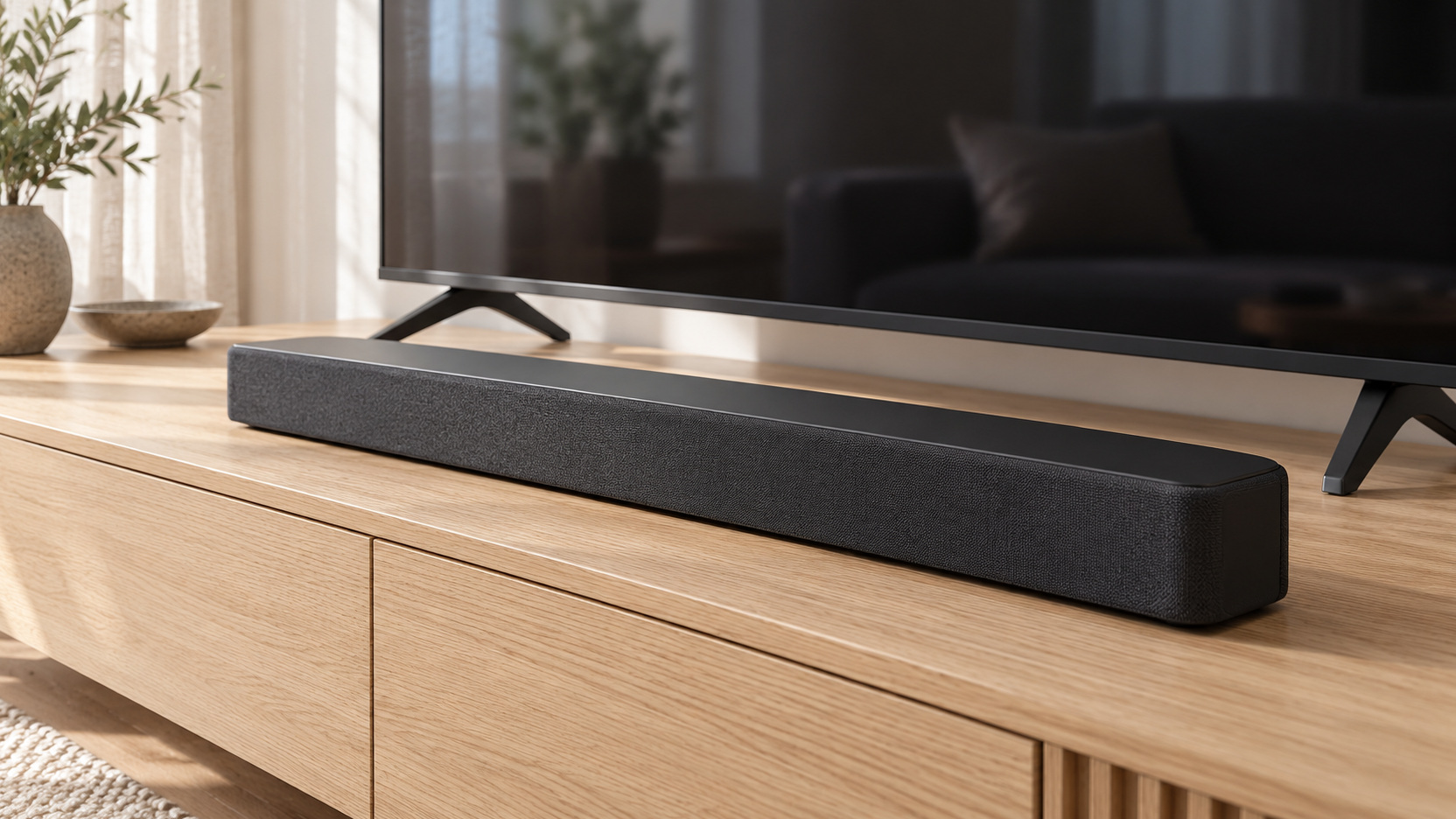
A basic soundbar places multiple drivers within one enclosure near the television. Some packages add a separate subwoofer; others support surround speakers or height effects. Those additions change the space, power, and positioning requirements substantially. A photograph of the central bar may therefore understate the complete installation you are considering.
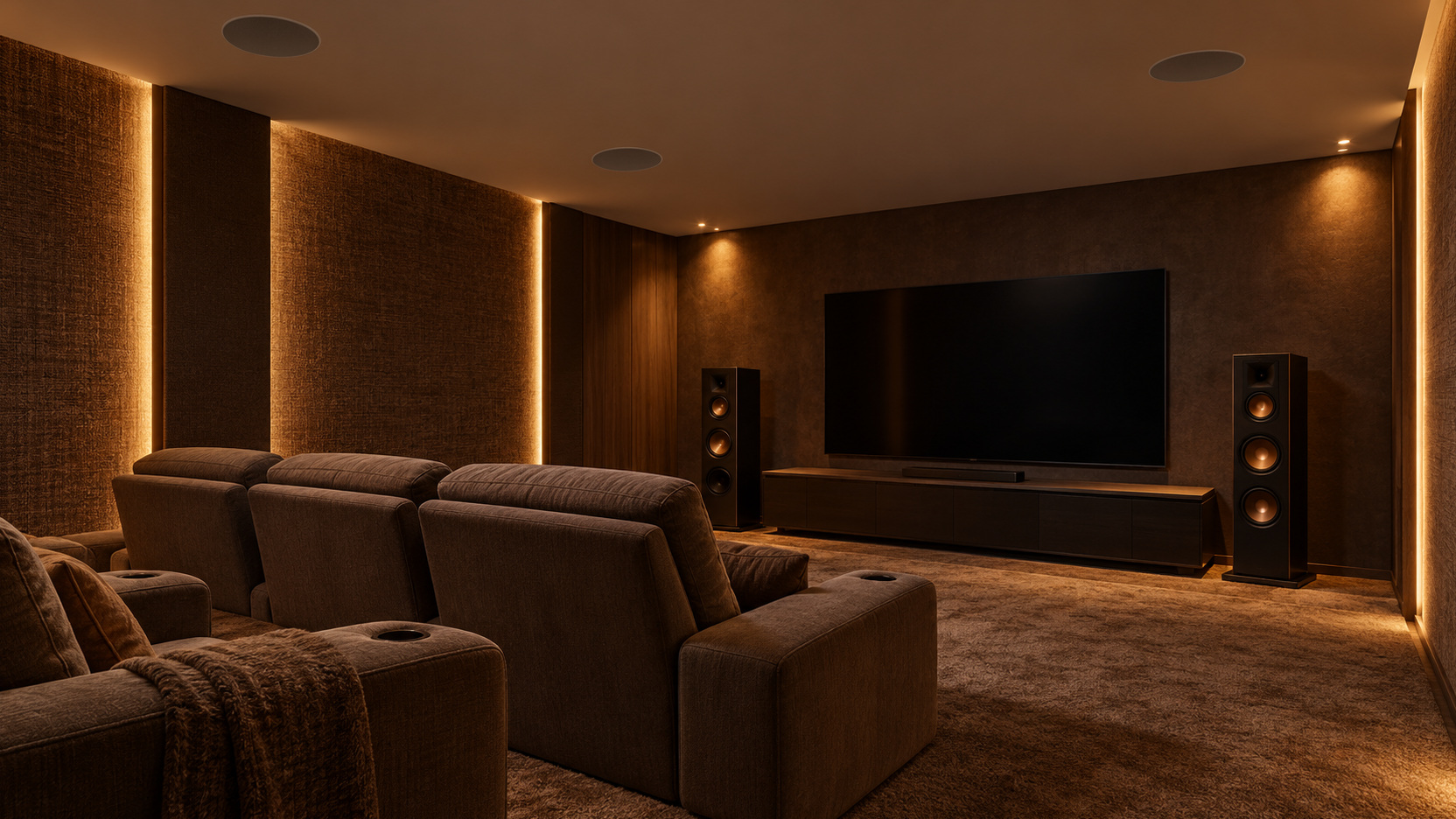
A conventional surround arrangement uses separate speakers for defined positions around a listener. An AV receiver commonly handles connections, processing, and amplification for compatible passive speakers. Other systems use powered or proprietary components. Check the actual arrangement and included equipment before comparing a surround package with a soundbar bundle.
The categories overlap. A soundbar with separate surrounds is itself capable of a surround arrangement, while a receiver can be used with fewer speakers initially. Dolby’s home-theater guide describes both soundbar and receiver-based approaches. Use the equipment map, rather than the category name alone, to understand what will live in your room.
Map the Seats and the Available Speaker Positions
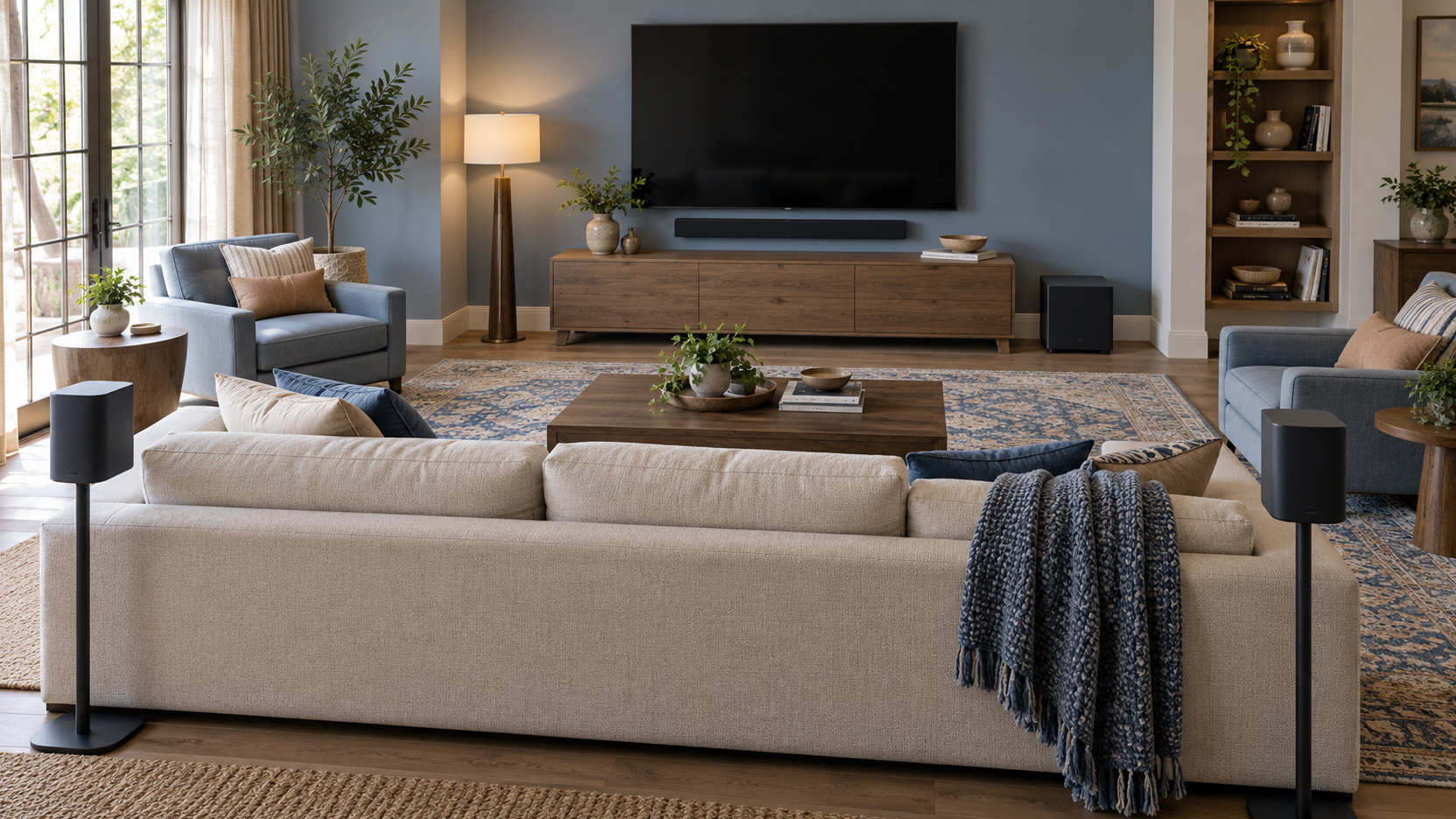
Draw the television, sofa, additional chairs, doorways, and major furniture. Mark where speakers could stand without interfering with normal use. Include the locations behind and beside the seats, since those positions often determine whether a distributed system is practical. A room can have plenty of floor area but few useful speaker locations.
Think about the listening area as people actually occupy it. A centered sofa is easier to organize around than seats scattered through an open living and dining space. Separate speakers need a coherent relationship to the listeners, and their prescribed positions should guide the plan. Putting them wherever a shelf happens to be available can compromise the result.
Give the less central seat a fair trial. The person in the side chair should not disappear from the decision simply because the demonstration position sounds impressive. You may accept some variation across seats, but make that an informed compromise. A shared family room should work well enough for its regular viewers, not just one carefully selected spot.
If the sofa moves for guests or a dining table shares the listening area, show both arrangements in the plan. A speaker position that works only in the carefully staged layout may become inconvenient during ordinary use. Ask how the system should be adjusted or used when the furniture changes. This can favor a simpler configuration even where a more elaborate one is physically possible. The decision should reflect how often the room actually changes, rather than how rarely it resembles the ideal drawing.
Decide How Much Installation You Want to Own
A receiver-based system can reward careful planning, but the ownership includes stands or mounts, cable routes, connections, configuration, and future troubleshooting. A soundbar can reduce the number of separate front components, yet additional speakers still need their own arrangements. Consider who will install the system and who will maintain it afterward. The attractive option is the one whose demands fit your household’s interest and available time.
Check the Television Connection and the Source Path
List the devices you use: built-in television apps, a streaming player, a console, or a disc player. Then establish how audio will travel from each source to the proposed system. Depending on the equipment, sources may connect to the television or through a receiver. The selected path must support the formats and video features you actually intend to use.
HDMI ARC and eARC are relevant connection features, but the labels do not eliminate the need for model-specific checks. Optical connections remain available on some products and have their own format limitations. Sonos’s television requirements, for example, distinguish optical and HDMI connections across its products. That is a useful reminder to match an exact system to an exact television.
Ask the retailer or installer to confirm the complete signal route in writing. Include the intended streaming service or player where a particular format matters. A compatibility promise about one component should not be treated as a promise about the entire chain. This prevents discovering after installation that your everyday source uses a different route from the showroom demonstration.
Treat Dialogue as a Separate Listening Test
Speech intelligibility deserves its own assessment. Listen to a conversation at the level you would use on an ordinary evening, then include a scene with music beneath the voices. Consider whether words become understandable without making everything else uncomfortably prominent. Do not assume that adding more speakers automatically solves unclear dialogue.
Explore the system’s relevant controls during the demonstration. Some products offer speech enhancement, center-channel adjustment, or low-volume modes, but implementation varies. Ask what those controls affect and whether the family can find them easily. A useful listening improvement that requires a difficult menu sequence may be less useful in practice.
Put Bass in the Context of Your Home
A separate subwoofer can add low-frequency impact, but more impact is not always the household’s priority. Consider adjoining rooms, close neighbors, and the times you usually watch. Try the system at an evening level as well as during an impressive demonstration. A dramatic scene should remain enjoyable within the limits of your home.
Placement and adjustment also deserve time. The included subwoofer cannot simply be assumed to work best in the empty corner nearest a socket. Follow the manufacturer’s setup guidance and evaluate the proposed location with familiar content. Ask whether an installer will help with placement rather than only making the equipment produce sound.
If the family routinely reduces bass, include that condition in comparisons. You may prefer a system that remains satisfying at restrained settings over one whose appeal depends on an effect you rarely use. There is no need to apologize for that preference. The purpose of the purchase is comfortable listening in your home.
Count Cables and Power Even in Wireless Packages
Wireless audio communication does not necessarily mean a speaker operates without a power cable. Check the power requirements of each surround speaker and subwoofer before deciding where it can go. Include the cable length, socket availability, and any manufacturer requirements for the wireless connection. The final layout should reflect those details, not the simplified marketing photograph.
Keep routes compatible with movement through the room and with equipment access. A cable that works only while a chair remains in one precise position is a fragile arrangement. Discuss appropriate installation methods with the installer rather than improvising hidden routes through unsuitable spaces. Neatness is most valuable when the system remains usable and serviceable.
Compare a Complete Price Rather Than a Starting Price
Put both options on the same footing. Include speakers, required amplification, a subwoofer if wanted, compatible stands or mounts, necessary cables, delivery, installation, and configuration. Some soundbar bundles include the components shown; others advertise optional additions separately. A receiver price alone is not a complete surround-system price. The comparison becomes clearer once each quotation describes an operational arrangement.
Consider Expansion Without Making It an Obligation
A receiver-based approach may permit a wider choice of compatible components, while a soundbar ecosystem may offer a simpler approved upgrade route. Neither benefit guarantees indefinite compatibility. Ask which additions are supported by the selected model and what dependencies they introduce. Record the product generation and the relevant documentation with the purchase.
Do not buy an inconvenient system solely for a hypothetical future room. If you expect to move soon, a flexible plan may matter; if not, give today’s listening needs appropriate weight. Expansion is useful when it supports a likely change in how you watch. A future possibility should not displace the practical reason for purchasing equipment now.
Also consider what happens if one component fails. Find out whether it can be serviced or replaced independently and how the warranty process works. This is particularly relevant for packages with proprietary pairing or control arrangements. Ownership becomes easier when the response to a fault is understood before the equipment arrives.
Rehearse the Ordinary Evening Routine
Ask someone who did not configure the demonstration to start a program, adjust the volume, change the source, and turn everything off. This reveals more about household usability than a salesperson’s practiced sequence. Include the actual remote or app you expect to use. The system should make an ordinary evening feel straightforward.
For a shared room, discuss whether phones or accounts are required for routine listening and which functions remain available without them. Setup access and everyday access may differ. Establish a simple place for controls and a clear way to return to television sound if settings become confusing. A short household instruction can be more valuable than another rarely used feature.
Choose the Compromise You Will Enjoy Repeatedly
Consider a family whose sofa backs onto a busy passage. They mainly watch dramas and want clearer speech after dinner, so a front-focused soundbar that passes the dialogue test may deliver the whole improvement they need. Adding rear speakers would require resolving a position and power route in that passage. If they rarely use cinematic effects, the extra installation may contribute less than a simple control routine and satisfying low-volume sound.
A film enthusiast with a stable central sofa and workable speaker positions has a different brief. Separate surrounds may produce the placement of effects they enjoy, and the effort of arranging them can be part of a worthwhile project. They should still compare dialogue and quieter scenes, since the system has to support an entire film rather than one spectacular moment. A compatible soundbar surround package can also be auditioned against a receiver-based alternative through the same room plan.
Choose the arrangement that solves the original problem within its complete installed cost. Confirm the ordinary sources, regular seats, and remote sequence before ordering, then stop where the improvement is sufficient for your household. An unused upgrade route is not a failure to complete the system. When the equipment makes repeated evenings better without an operating burden the family dislikes, it has earned its place.