Understand the Atmos Experience Before Paying for It
Dolby Atmos promises a more enveloping listening experience, but the value of that promise depends on how it reaches your home. The format, the source, the equipment, the room, and the seats all contribute. An Atmos label on a television or soundbar is therefore a starting point for investigation, not a complete description of what you will hear. If you enjoy carefully produced movie sound and can accommodate an appropriate arrangement, height effects may be a rewarding addition. If your priority is simple, clear everyday television, other improvements may deserve the budget first. Understanding those tradeoffs lets you evaluate Atmos without treating it as either essential or merely a marketing term.
Separate the Sound Format From the Speaker Package
Atmos is an audio technology rather than one fixed collection of speakers. Creators can give individual sounds positions within a three-dimensional scene, and compatible playback renders that scene through its available speaker layout or processing. For example, a passing aircraft can have a path above the listener rather than simply emerge from a fixed front channel. This does not mean every soundtrack continually uses dramatic overhead effects, or that every system reproduces them equally. Two products advertising Atmos can therefore create substantially different experiences; the format’s spatial information and the equipment’s method of presenting it both matter.
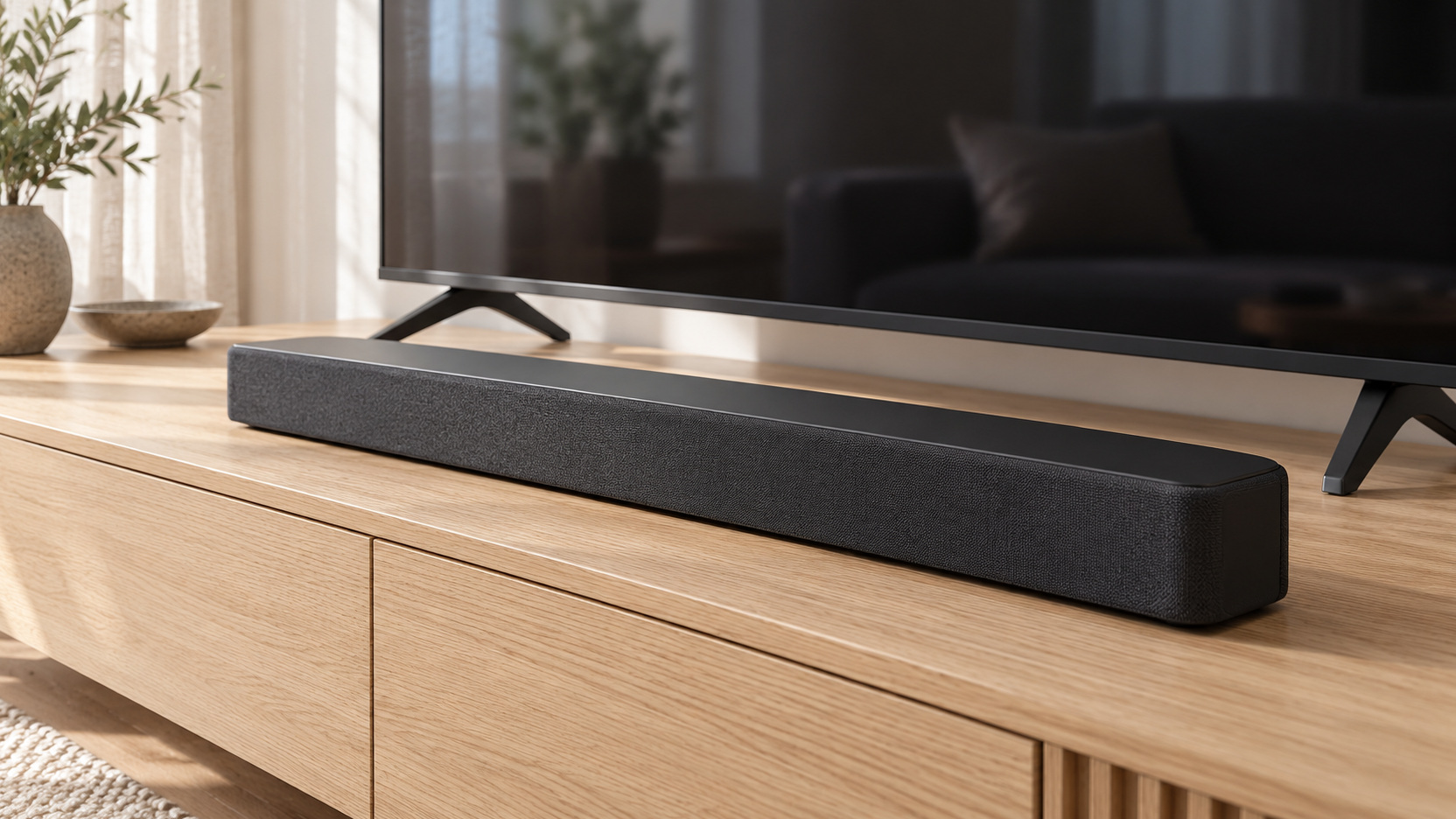
Do not assume a specific speaker count from the format name alone. A soundbar, a receiver with separate speakers, and another supported playback device can take different approaches. Ask how the candidate system creates its height presentation. The answer should describe actual hardware and processing rather than repeat the badge printed on the box.
Distinguish Three Ways to Present Height
An installation can use speakers positioned overhead, upward-firing drivers that rely on a reflected path, or virtualization intended to create a height impression without dedicated overhead or upward-firing units. These approaches place different demands on a room. Dolby’s soundbar setup guide explains upward-firing and virtualized methods. Ask which method the proposed product actually uses. Overhead speakers involve their own fitting and wiring plan. Upward-firing components need placement and a suitable path toward the ceiling. Virtualization uses processing and a different physical arrangement. None of those descriptions alone establishes whether the result is worthwhile from your seats. Consider the approach as part of the complete installation. A receiver-based system may offer considerable placement control but require more components and fitting. A soundbar may be easier to accommodate while depending more strongly on its prescribed surroundings. The practical choice should emerge from your room and interest in setup, not from an abstract ranking of equipment categories.
Read Layout Numbers Without Confusing Their Purpose
In a conventional Atmos layout such as 5.1.2, the first number describes listener-level channels, the second subwoofer channels, and the final number height channels. Dolby’s home-theater guide explains these conventions. The label helps you understand the intended arrangement, but it is not an independent sound-quality rating. Two systems with similar channel descriptions can still differ in their physical implementation and room suitability.
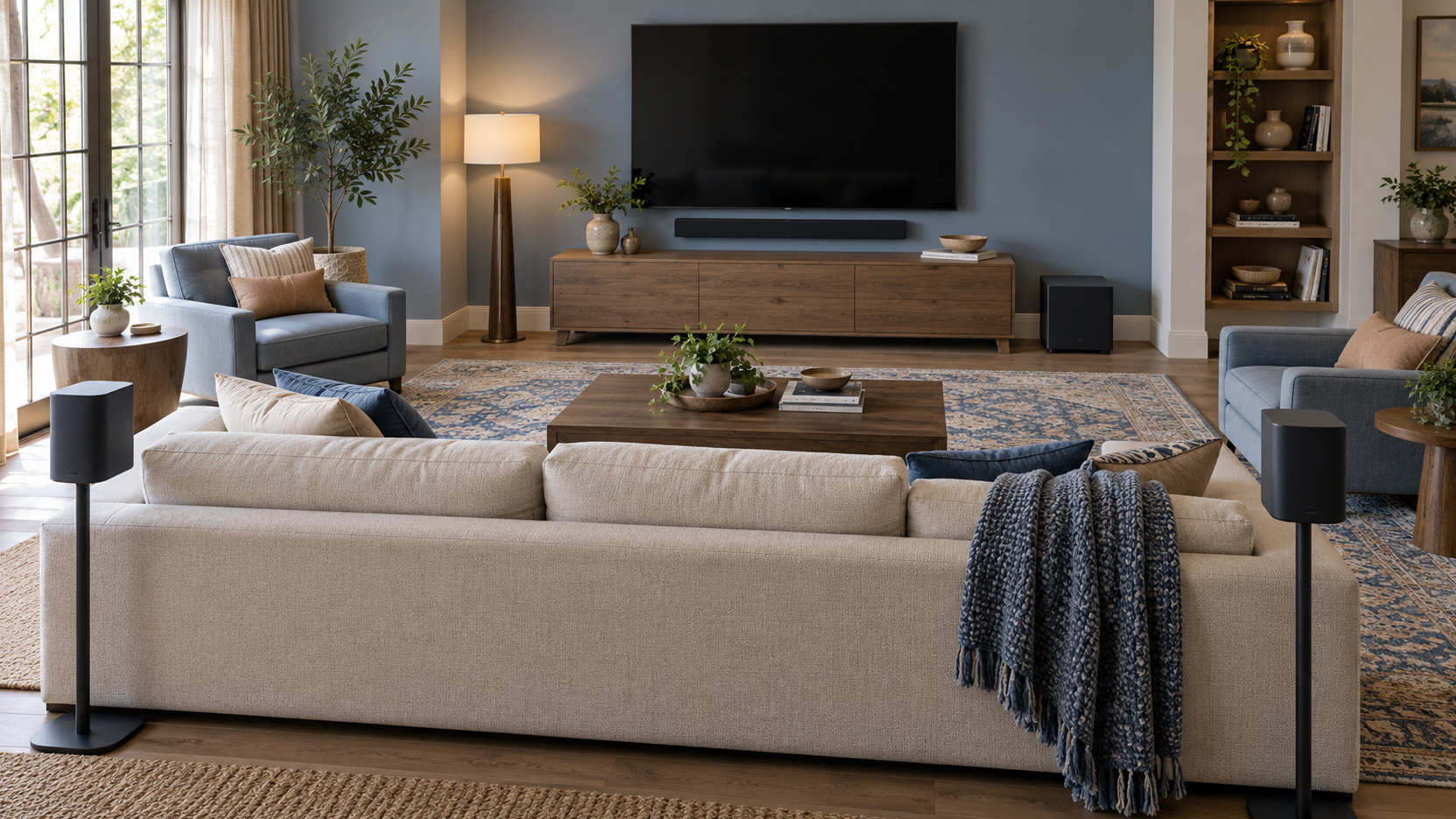
Translate the selected product’s numbers into its component diagram. For a receiver-based 5.1.2 proposal, identify the five listener-level positions, subwoofer arrangement, and two height positions before discussing where they fit. A soundbar’s channel specification may describe drivers and processing within a much smaller collection of enclosures. Ask which components are separate, which are in the bar, and how the height effect is produced. This makes the label useful for the room plan without promising that every numbered channel is a separate box placed around the sofa.
Check the Ceiling and the Upward Path
For an upward-firing approach, examine the actual ceiling and the proposed equipment position. Height, shape, surface, and obstructions can matter to the reflected path. Dolby’s soundbar guidance discusses ceiling suitability and the need for clear access above upward-firing drivers. Follow the current product instructions and seek model-specific advice where the room differs from the recommended conditions.
An enclosure beneath a shelf or inside a cabinet may obstruct that path even when its front remains clear. Compare your planned location with the manufacturer’s diagrams before ordering. Do not solve the conflict by assuming the system will compensate automatically. A room limitation should be addressed during selection, while alternatives are still available.
Photograph the room from the listening seats and measure relevant features if an installer is advising you. Show sloped sections, deep beams, or other details that affect placement. This gives the consultation a concrete basis. The aim is a realistic assessment, not an expensive attempt to reproduce a showroom whose geometry your home cannot offer.
Assess the Seats as Carefully as the Speakers
An Atmos demonstration is often arranged around a favorable listening position. Your family may use a broad sectional, a side chair, or several rows of seats. Include those locations in the evaluation. A rewarding effect in the center should not conceal a poor experience for regular viewers elsewhere.
Try the proposed arrangement from more than one relevant seat when a demonstration permits it. Listen for an overall sense of space and coherent movement rather than waiting only for an obvious overhead moment. Ask what the installer expects across your particular seating area. Acceptable variation is a household decision, but it should be understood before purchase.
Verify the Entire Route From Content to Playback
Atmos-capable speakers need appropriate material delivered through a supported path. A service, subscription, title, audio track, source device, television, connection, and audio system can all affect availability. Check the exact combination you plan to use. One compatible component cannot guarantee that every link supports the intended format.
Sonos’s Atmos support guidance illustrates these dependencies through its products, including streaming services, source devices, and HDMI connections. It also distinguishes Dolby Digital Plus and Dolby TrueHD connection requirements. Use the support documentation for your selected equipment rather than generalizing those instructions to every possible system. Ask the retailer to confirm your proposed route if necessary.
Inspect the service’s current device and plan requirements before treating a favorite program as a test. Availability can differ by title or track, and supported tiers can change. Keep the chosen example specific. A recognizable film name alone is not proof that the copy you are playing contains Atmos audio.
Confirm Actual Playback Rather Than Relying on a Badge
Use the audio system’s documented information display or app to check the format it is actually receiving. A catalogue badge describes available content, but the current track and playback route may deliver something else. Consult the selected equipment’s instructions for the indicator, then play a specific supported title and track. If the expected format is absent, investigate the route before judging the strength of the height effect.
For example, compare the selected track, the source device’s output, the television’s supported passthrough or output settings, and the audio connection in the manufacturer’s recommended order. Change one supported setting at a time and replay the same passage. Once the indicator confirms Atmos, keep that title and route as a troubleshooting reference. If another program sounds less immersive later, return to this reference first; the difference may be its soundtrack rather than a fault requiring every setting to be changed again.
Audition More Than an Overhead Demonstration Clip
An obvious effect moving above the listener can explain the technology, but it is only one part of a soundtrack. Include a sustained scene containing dialogue, background ambience, and changing activity. Listen for a coherent presentation that remains enjoyable throughout. A brief spectacular effect should not outweigh the system’s everyday sound. The purchase has to work during the rest of the film too. Try a second pass through the same scene at your usual evening level, then move to another regular seat. Describe whether the benefit remains audible in the scene’s background activity, not only during the obvious effect. If the demonstration permits a meaningful comparison with another supported mode, ask the operator to explain that change before listening. This keeps the audition focused on a difference you can actually use.
Preserve Speech and Low-Volume Use as Priorities
Atmos capability does not remove the need for clear dialogue. Compare conversation at your ordinary listening level and investigate any supported speech controls. If words remain difficult to follow, address that issue separately. A more elaborate sound field is not a substitute for understanding the program.
Evaluate quiet evening use as well as a daytime demonstration. You may use restrained bass or a supported night mode when others are resting. Hear the complete system under those conditions. The arrangement should provide value during the hours when your household actually watches.
Consider how easily those controls can be changed. A family may want a cinematic presentation for one occasion and a manageable low-volume mode for another. The operating routine should accommodate both without repeated troubleshooting. Everyday convenience belongs beside the quality of the height effect.
Price the Real Atmos Upgrade
Compare the existing arrangement with the complete proposed system. Include any receiver, speakers, supported additions, mounts, cables, installation, and configuration required. Subscription or source-device changes may also matter where they are necessary for your intended content. The total should describe a functioning route from program to listening seat.
Ask what portion of the improvement comes from replacing basic equipment and what portion comes specifically from Atmos. A better overall system can sound more convincing for several reasons at once. Where possible, compare similar-quality alternatives with and without the feature. That provides a fairer basis for deciding whether the Atmos premium matters to you.
Choose Between a Living-Room Compromise and a Dedicated Plan
A shared living room has responsibilities beyond listening. Doorways, storage, daylight, and furniture movement remain relevant even when an immersive demonstration is compelling. Work within those conditions and select equipment suited to them. It is reasonable to prefer a less elaborate arrangement that serves the household comfortably.
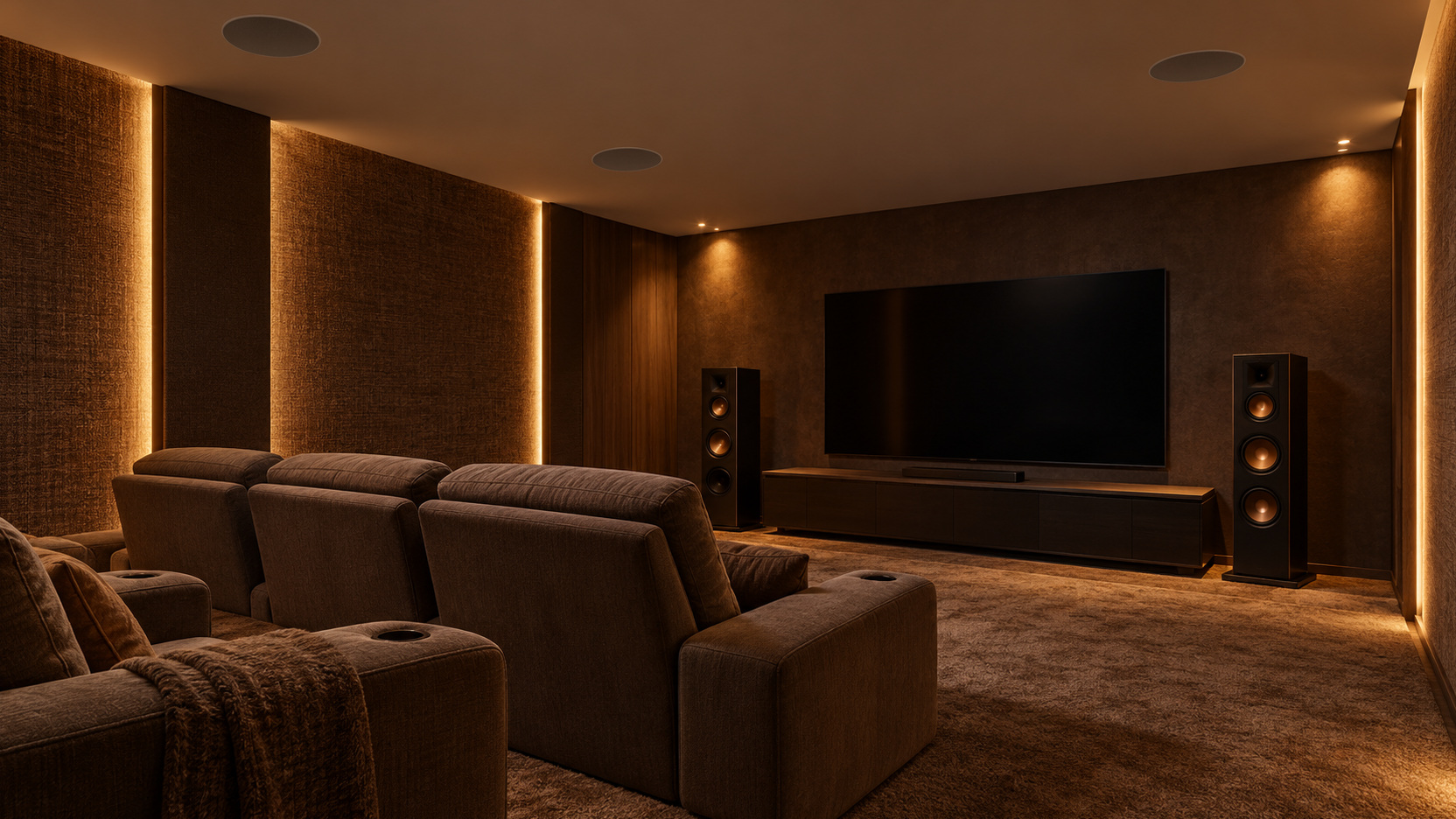
A dedicated room may permit more precise speaker locations and a larger installation. If that is your project, use the appropriate layout guidance and professional help for fitting where needed. Keep the seating plan central to the design. Additional components have value when their positions and operation are deliberately coordinated.
Do not let a future dedicated-room ambition make today’s setup awkward. You can choose a supported upgrade path where likely expansion matters. Confirm exact compatibility and avoid promises of indefinite support. A clear current plan remains the most reliable reason for buying equipment.
Decide Whether Atmos Adds Something You Will Use
Atmos is worth considering when supported material forms a meaningful part of your viewing, your room suits the chosen method, and an audition delivers a benefit you enjoy from the regular seats. A household that watches films in a stable listening arrangement may value that added sense of space. If most viewing is casual television, the sofa is frequently rearranged, or clear speech is the unresolved problem, another improvement may contribute more. Direct the budget toward the benefit you will repeatedly use.
For a staged installation, compare the useful initial arrangement with the cost and requirements of adding height later. The installer should identify which later components and positions are necessary rather than treating the first purchase as the whole effect. Confirm the signal path, complete price, and ordinary controls at each stage. Then replay familiar material from the family seats, including dialogue and quiet-evening listening. An Atmos upgrade has earned its cost when the added involvement survives those everyday conditions, with a manageable operating routine, rather than appearing only in a specially chosen demonstration clip.