Choose the Material for the Part It Must Become
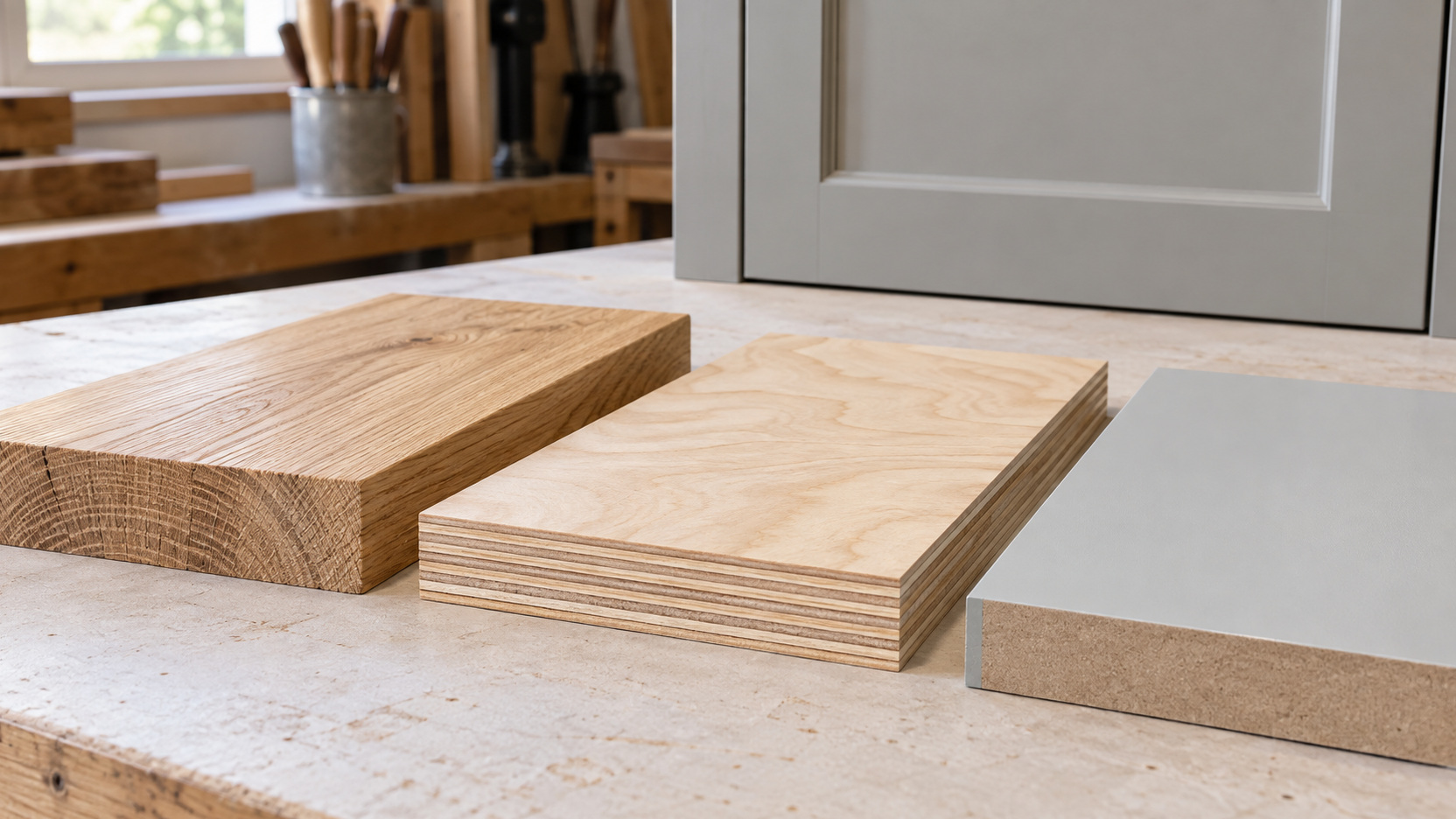
A cabinet can combine a solid-wood edge, a veneered plywood panel, and a painted MDF component without being a contradiction. Each material may be doing a different job. Comparing solid wood, plywood, and medium-density fiberboard becomes more useful when you identify that job before ranking the labels. A broad tabletop, a narrow leg, a painted door, and a long shelf do not ask the same things of their materials or connections. Look at the complete furniture, including dimensions, support, finish, environment, and service needs. The right choice is the one whose actual construction suits its purpose and whose care requirements fit the household using it.
Understand What the Three Names Describe
Solid wood is wood cut and formed from timber rather than reconstructed as a fiber panel. Plywood is assembled from thin wood layers, while MDF is made from wood fibers formed into a panel with a binder. These broad descriptions identify different starting materials, not finished furniture quality grades. Species, panel specification, thickness, fabrication, and connections still influence how a particular component performs.
The US Forest Service Wood Handbook treats wood, wood-based composites, fastenings, and related properties in detail. Its scope reinforces an important practical distinction: different products have different properties and applications. You do not need to apply engineering calculations when buying a cabinet. You do need to avoid turning a broad category name into a claim about every finished assembly made from it.
Veneer belongs in the discussion as a surface rather than a fourth competing core material. A real wood veneer can cover plywood, MDF, or another substrate, and the visible grain does not identify the core. Ask for the material of each important component. A clear description might specify a veneered panel with solid edging, which tells you much more than a photograph of attractive wood grain.
Use Solid Wood Where Its Character Is Wanted
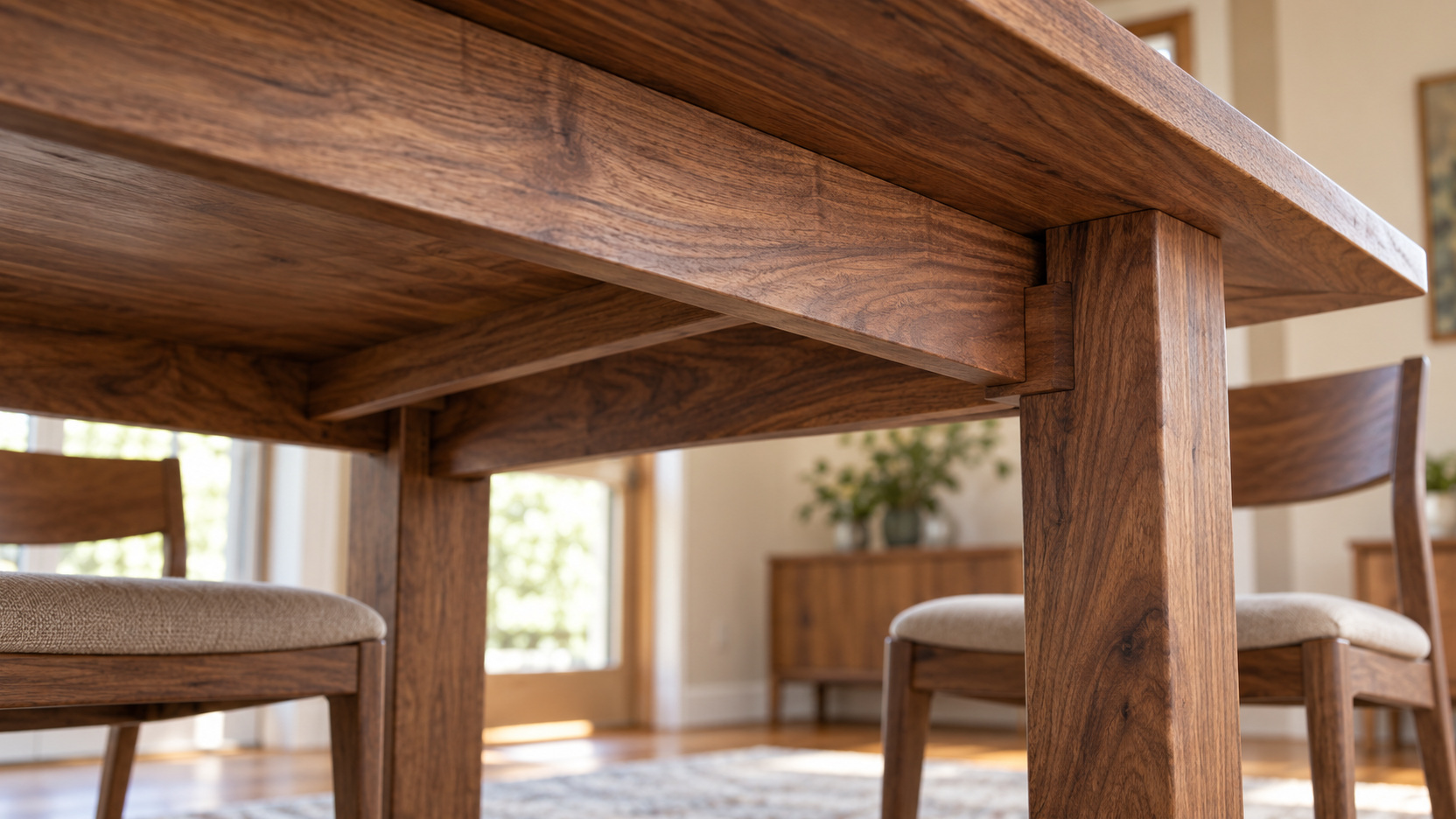
Solid wood can offer distinctive grain, shaped details, and an appearance many people enjoy as it ages. Its suitability depends on the species, component dimensions, condition, finish, and construction. A solid-wood leg and a broad solid-wood tabletop also behave differently within furniture. Consider the piece’s actual design instead of assuming the solid label establishes every desirable quality at once.
Wood responds to moisture conditions, so the design must accommodate the relevant movement rather than ignore it. This matters especially when broad components connect to other parts. Ask how the maker accounts for the material in the finished assembly and follow the supplied environment and care guidance. Adding your own rigid fastenings or refinishing method should not be treated as an improvement without an appropriate assessment.
Choose Plywood When a Specified Layered Panel Fits the Job
Plywood bonds thin veneers with grain directions arranged across one another. APA explains how cross-laminated construction supports dimensional stability. That makes a specified plywood panel worth considering for a cabinet carcass or broad furniture component where the design benefits from a layered panel. It does not make the panel independent of moisture or guarantee every shelf span. Identify the grade, thickness, strength direction where relevant, and actual supports instead of counting visible layers as the quality score.
For a long book shelf, compare the complete support arrangement before choosing between plywood, MDF, and solid wood. A central support, shorter clear span, or designed reinforcing element can matter more than the visible edge. Ask for the maker’s applicable load guidance and inspect ordinary display condition without overloading it. If the edge has thick trim, establish whether that trim is structural or mainly decorative. A panel suited to one supported span does not establish that a wider version of the cabinet behaves the same way.
Plywood also needs a finished face and edge appropriate to its location. A deliberate exposed-layer edge and a veneered face can both be attractive, but neither provides permission for sustained wetting. APA distinguishes adhesive bond exposure classifications from other performance properties; do not convert an exterior-bond description into an all-purpose waterproof-furniture promise. For a furniture component, confirm its own finished-use and care conditions. Repair expectations should distinguish veneer damage, a chipped edge, and a failed fitting, because the known core does not make those one repair task.
Use MDF for a Smooth Finished Component With Appropriate Conditions
MDF is a useful starting point for a painted cabinet front or routed decorative panel where a uniform finish-ready surface is the leading requirement. MEDITE describes PREMIER’s smooth painting and veneering surface, while specifying dry indoor conditions for that grade. This explains both its appeal and a limit: do not treat an ordinary dry-use panel as interchangeable with a moisture-resistant grade beside persistent dampness. A shaped solid-wood leg, a broad plywood carcass, and an MDF painted front can therefore be sensible parts of the same furniture. The material follows the component’s purpose. Connections need appropriate preparation too: the European Panel Federation’s MDF guidance addresses screw selection, position, and pilot holes, particularly at thinner edges. For purchased furniture, ask how the fitting is designed and serviced rather than adopting a universal screw rule or repeatedly driving loose hardware into the same damaged hole.
Identify the Substrate Under the Finish
A painted door or wood-grain surface can hide the component material. Ask for a breakdown that distinguishes tops, sides, backs, shelves, doors, drawer parts, and trim where relevant. A furniture listing may highlight one visible material while using others elsewhere. That mixed construction may be entirely sensible, but you need to understand it before making comparisons or planning repairs.
For a familiar example, IKEA’s SEKTION and SINARP cabinet combination identifies several materials, including particleboard, oak veneer, and solid-wood edging in its description. Its construction should not be confused with plywood or MDF simply because it looks like oak. Read the actual materials section rather than treating every wood-looking panel as one of your preferred categories.
If the seller cannot identify a component, record that uncertainty. An unknown core is not automatically defective, but it limits what you can conclude about care, repair, and comparison with another product. Ask whether further model information is available. A confident explanation of the complete build is more useful than reassurance based only on the visible finish.
Match Shelves and Panels to Their Support
A shelf’s usefulness depends on more than its material. Span, thickness, supports, intended loading, and fitting all contribute to the finished arrangement. Follow the manufacturer’s load guidance for that exact furniture rather than inventing a capacity from the words plywood or solid wood. A supported short shelf and a long unsupported panel should not be compared as if their labels describe equivalent jobs.
Think about what will actually sit on the shelf and how it will be distributed under the applicable instructions. Books, occasional display pieces, and equipment create different practical requirements. Ask whether an adjustable shelf has the same permitted use as a fixed component. If the intended load is outside the product guidance, choose another design instead of relying on an improvised reinforcement.
Check Connections and Moving Parts Separately
Door hinges, drawer runners, handles, and assembly fittings need suitable attachment to the actual component. The material name alone does not reveal how those connections are designed. Ask how a frequently operated part can be serviced and whether replacement fittings are available for the model. A cabinet lasts usefully when panels, hardware, and operating clearance work together rather than competing for attention in the purchase decision.
Operate a relevant example as intended and notice the fit. Doors should have the clearance their design requires, while drawers should suit the contents and working space you need. Clarify unexpected rubbing or movement before ordering. A polished front is only one part of the experience; the operating assembly is what the household will handle every day.
Read the assembly instructions before purchase when possible. They can identify fitting responsibilities, support arrangements, and any anchoring requirements. Consider whether the work is manageable with the available help and tools. Correct assembly is essential to the intended product behavior, regardless of whether a panel is made from solid wood, plywood, or MDF.
Include Moisture and Care in the Location Decision
Evaluate the environment where the furniture will live and the contact it will receive. A damp arrival area, a dry bedroom, and a kitchen task zone can have different needs. Use the maker’s suitability and care information for the actual finished product. Avoid translating a general material preference into permission for exposure that the product does not support.
Edges and damaged finishes deserve particular attention during a condition review because they are part of the complete protective and decorative treatment. Do not assume that a resilient-looking face explains the behavior of every edge or fitting. Report damage with the model and location identified. Seek the approved care or repair route rather than applying an unrelated coating to solve an uncertain problem.
Make Repair Expectations Specific
Solid wood is often associated with refinishing, but the finish, shape, and condition still govern the proposed method. A veneered component may have different limits, and a painted panel can require work beyond a small visible patch for a consistent result. Ask a suitable professional to assess the actual furniture if restoration is central to your purchase. The useful promise describes a realistic intervention rather than saying one material can always be renewed.
Consider which damage you are most likely to want addressed. A replaceable shelf, a worn handle, and a chipped veneer are different service problems. Ask whether the component is removable as designed and what supply route currently exists. Parts availability can be more useful for your particular cabinet than a theoretical ability to repair its core material.
Keep the product identification, finish description, and assembly guidance after delivery. These records help a service provider distinguish materials that photographs cannot identify reliably. They also preserve the care conditions agreed at purchase. A future repair conversation becomes more focused when the exact component and surface treatment are known.
Include appearance expectations in that conversation. Repaired or newly supplied parts may differ from aged adjacent surfaces, and the acceptable outcome should be discussed in advance. Ask whether work will be local or affect a broader area. A realistic result can still be worthwhile when you understand how it will look and function in the room.
Compare Finished Furniture on Equivalent Terms
When two products use different materials, compare the whole job they are intended to do. Record dimensions, operating function, permitted loading, support, finish, assembly, and service information alongside the material breakdown. A lower price may reflect a different scope or configuration, while a higher price may include design or appearance features you do not need. The comparison should identify practical differences rather than announce a universal winner.
Choose solid wood when its particular character and construction suit the task, plywood when the specified panel serves the design well, and MDF when its finished application meets your requirements. Mixed construction can also be an appropriate solution. The category alone cannot establish how long furniture will remain useful. Thoughtful design, correct fitting, and suitable use turn materials into a coherent piece.
Bring the decision back to the room and the household. The right furniture should fit its operating space, carry its intended contents, offer an acceptable appearance, and have a care routine you can maintain. Keep the evidence behind that choice rather than relying on a memorable label. Choosing materials by purpose gives you a clearer purchase and a more useful understanding of what arrives at home.