A Lasting Table Needs a Coherent Top and Base
Dining tables receive repeated demands that are easy to overlook while admiring the surface. Chairs move around the base, people lean into meals, leaves are fitted for guests, and cleaning happens across edges and joints. A lasting build connects those activities to the actual construction: an appropriate top, dependable base, well-executed connections, and correct assembly. The useful comparison asks how the complete table supports ordinary dining in its selected size. Material names and impressive thickness can provide clues, but they do not tell the whole story. Examine the working table, including chair clearance and any extension system, before deciding which design deserves a place in your home.
Confirm the Table's Complete Configuration
Start with the actual size, top material, base arrangement, and extension option on your order. A collection may offer several combinations, and a display piece can represent only one of them. Ask whether the construction and fittings differ between sizes or surfaces. Keep the selected details together so your comparison describes the table that will arrive rather than a general family of products.
Read what is included in delivery and assembly. Some tables arrive with the top or base separate, and their correct connection is part of the installation. Clarify who performs the work and which instructions apply. A substantial-looking product still depends on its parts being fitted as designed, with the required access and suitable handling during the process.
Examine the Base as the Working Foundation
The base carries the tabletop and shapes the space available to diners. Four-leg, pedestal, and trestle designs create different chair positions and contact points. Ask how the selected base supports the offered top and whether any size-specific arrangement applies. The most appealing silhouette is useful only when it works with the table’s actual load-bearing design and the way people sit around it.
Observe the display table under intended use, without rocking it or applying an improvised load. Unexpected movement needs an explanation from the representative. It may involve a fitting issue, floor contact, or another condition that deserves clarification, rather than an instant verdict based on one material. Do not accept unresolved instability merely because the top looks thick or the base feels heavy.
Check the relationship between base placement and chair placement. A strong-looking trestle can occupy a preferred foot position, while a pedestal can change where chairs fit beneath a broad top. Try the arrangement with relevant chairs when possible. Structural form and everyday comfort should be considered together, especially when the table will be used for long meals or other seated activities.
Recognize Strong and Weak Connection Evidence
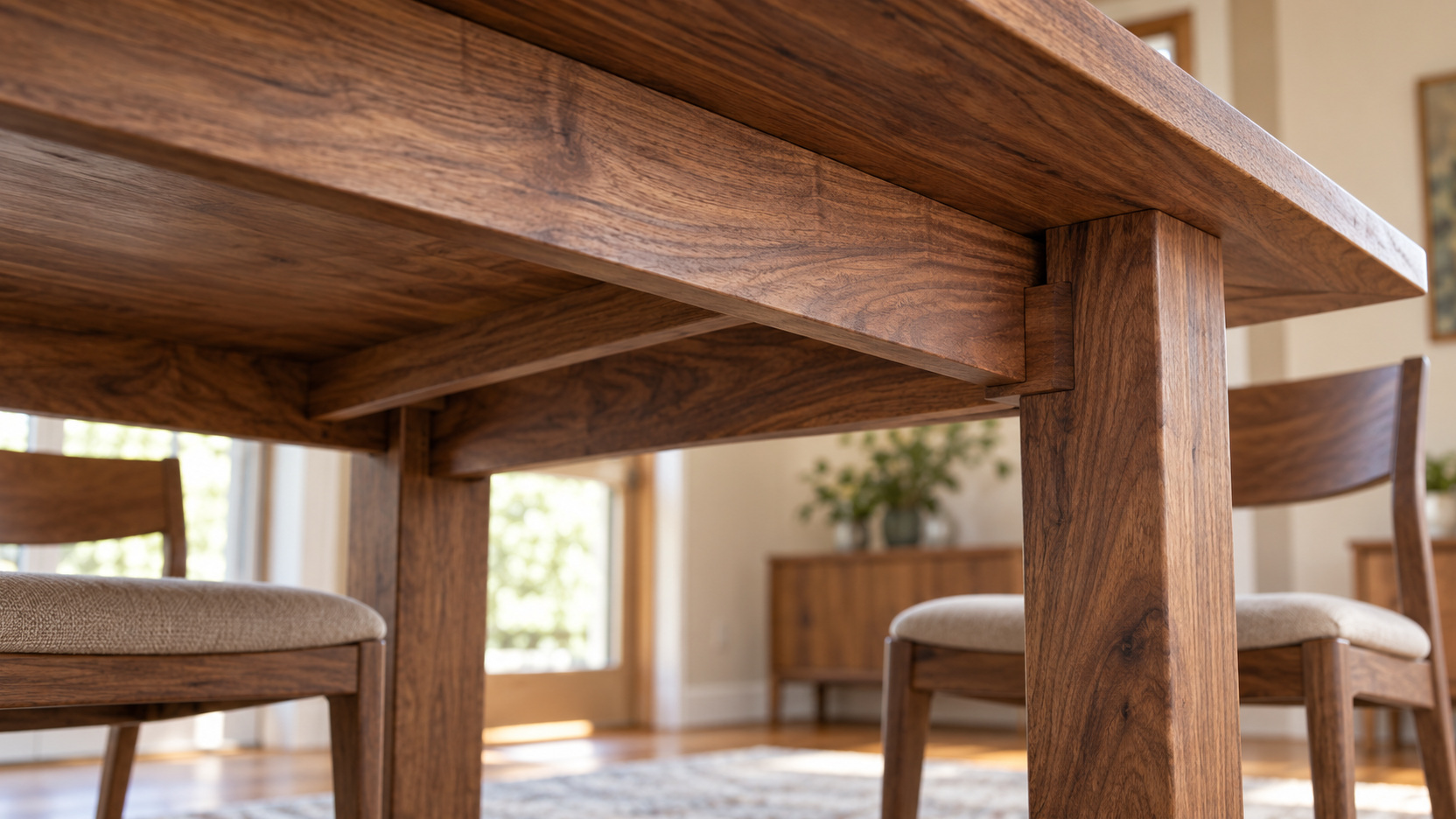
A lasting connection should keep adjoining parts fitted and aligned during ordinary use. On an accessible example, look for a clean meeting of leg and apron, correctly located reinforcement where the design calls for it, and hardware that serves an identifiable attachment. A visible gap that changes when the table is used normally or a base that shifts unexpectedly deserves an explanation. A thick decorative apron is not evidence of a well-fitted hidden joint. Ask what each described connection does and where it appears in the ordered configuration.
A detachable base can be a good design when its identified fittings locate the parts securely and have a clear reassembly procedure. It is not weaker merely because bolts are visible. Conversely, a familiar joinery name does not resolve loose execution or incorrect display assembly. Have the supplier distinguish a fitting problem from the intended design rather than accepting unexplained wobble as craftsmanship. Inspect only permitted areas and do not twist or overload the table to prove a point.
Give extensions a separate normal-operation check. A leaf that locates cleanly and has the specified open-position support provides useful evidence; a section that sits conspicuously out of alignment or moves unexpectedly under permitted use needs clarification. Confirm whether the display is fully assembled before interpreting the symptom. The right answer may involve fitting, adjustment, or another model, but it should address the actual behavior instead of repeating a general solid-wood claim.
Retain the fitting sequence and hardware identification for moving or service. Some tables need components supported or aligned in a particular order during reassembly. Follow the maker’s instructions and identify which parts remain attached, rather than assuming every base can be taken apart in the same way. A connection is practically serviceable when the method and replacement route are known. That is more useful quality evidence than an assumption that hidden hardware will always be easy to source.
Understand How the Top Is Built
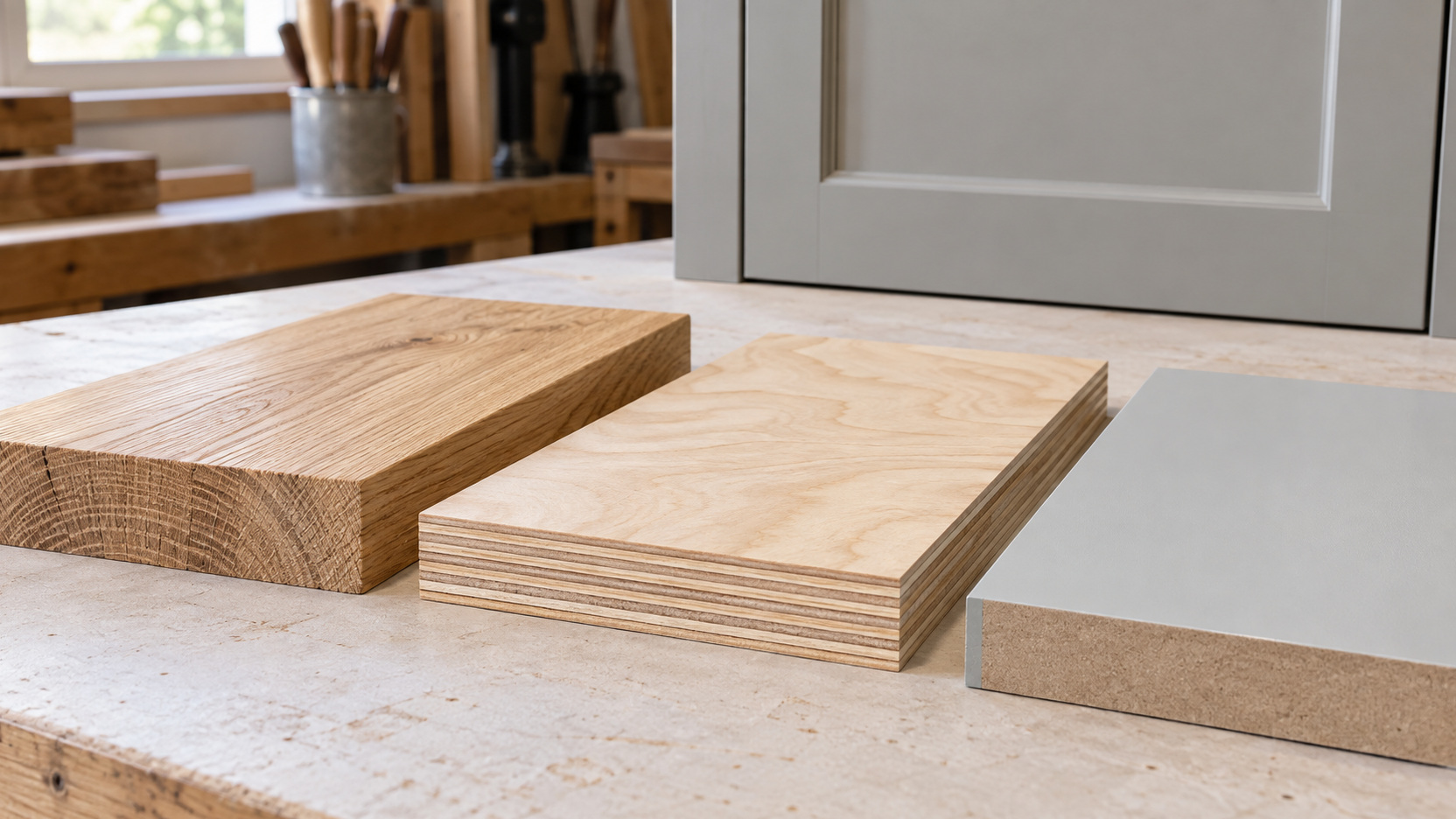
A wood-looking top might be solid wood or a veneer over a specified core. A thick-looking edge can also include a treatment that does not describe the entire panel. Ask for the actual construction and finish of the offered surface. That information influences care and repair expectations, while the top-to-base arrangement remains a separate part of the table’s performance.
Allow Wood Movement Through the Maker's Design
Wood responds to moisture conditions, and a solid-wood top needs an attachment design appropriate to that behavior. You do not need to modify the table yourself to improve it. Ask the supplier how the product is intended to accommodate its material and follow the supplied guidance. The construction should account for the actual top rather than treating a broad wooden panel as dimensionally unchanging.
A specific attachment example makes wood movement easier to recognize. Rockler’s tabletop clips attach a top to an apron while engaging a groove that permits seasonal expansion and contraction. This explains why an attachment can be secure without rigidly fixing a broad solid-wood top against all cross-grain movement. Other tables use different designed methods, so ask which system the maker supplies instead of adding these clips yourself. On a permitted construction view, identify the actual movement provision and its intended direction. A seller who can explain that feature has supplied better evidence than a promise that making every screw tighter would improve the table.
Avoid adding rigid attachments, replacing fittings, or gluing a movement-related gap without suitable assessment. An improvised alteration can change how the assembly behaves. If a change in alignment or surface shape concerns you, document the condition and contact the provider. A repair method should reflect the construction instead of assuming that making every connection more rigid always improves a wood table.
Evaluate Extension Systems in Both Positions
An extending table needs examination when closed and when opened. Ask the representative to demonstrate the intended sequence, including how leaves are supported and how any locks or fittings are used. Notice whether the working arrangement changes chair positions or access. The extended table should be assessed as an actual dining configuration, not merely as a longer measurement on a listing.
Confirm where leaves are stored and what handling is required. A self-storing design has different practical demands from separate leaves kept elsewhere. Include the lifting, floor space, and assistance prescribed by the maker in your household assessment. An extension feature is valuable when you can use and maintain it conveniently at the times you need it.
Check Legroom With the Chairs You Intend to Use
Chair fit involves more than the gap between the table and floor. Aprons, rails, trestles, and bases can interfere with arms, knees, or feet in different positions. Try a relevant chair with someone sitting normally and moving in and out. Check each intended seating position, including the ends and the extended configuration. A generous tabletop does not automatically provide comfortable seating everywhere around its edge.
Treat Edge Details as Everyday Contact Surfaces
Table edges receive frequent handling and can meet chair backs or passing objects. Look at the shape, finish, and how the edge is made on the offered surface. A profile that looks attractive in a photograph may feel different under the forearms during dining or working. Consider comfort and care alongside the decorative effect, especially where the table serves more than meals.
Ask how localized edge damage would be assessed and repaired. Solid trim, veneer, painted finishes, and other surfaces can call for different methods. Do not assume a product can be sanded or touched up simply because it resembles wood. The relevant construction and finish information should guide the service discussion before a problem occurs.
Look at finish consistency under ordinary room light rather than relying only on close-up images. Natural variation may be expected, while an unfamiliar feature can need explanation. Discuss the supplier’s description of acceptable variation and how concerns are handled on delivery. A clear expectation makes the arrival inspection more useful and reduces confusion between intended character and a condition requiring attention.
Include the Floor and Assembly in Stability Checks
Install the table according to the supplied instructions, including any prescribed level adjustment or fitting sequence. A floor condition can affect contact, so do not diagnose the entire build from an unexplained wobble. Ask the installer or provider to address the condition through the appropriate method. Avoid improvised supports or fastening changes that depart from the product guidance.
After assembly, confirm that the selected components and working configurations are complete. Operate an extension only as instructed and check the ordinary arrangement with chairs. Raise unresolved movement, fitting problems, or missing parts while the delivery details are readily available. The finished setup is the table you will use, so its verification deserves as much attention as the original shortlist.
Plan Care Around the Actual Finish
Everyday cleaning should follow the table’s prescribed method. Water, household chemicals, and abrasive tools should not be judged solely through the general material category. Keep the exact finish instructions and use appropriate protection where the maker recommends it. A care routine that the household can manage is part of a successful construction choice, because appearance and continued use remain connected over time.
Room & Board’s product-care resources provide material-specific guidance rather than one cleaning method for every tabletop. Use the applicable product information as your reference. If your table combines different surfaces, clarify their individual requirements. An attractive mixed-material design may need more than one care approach, which should be understood before purchase.
Make protective habits easy by keeping suitable accessories close to where meals and other activities occur. Do not treat protection as permission to ignore spills or use the table outside its intended conditions. Check accessories for debris and unsuitable undersides under the relevant surface guidance. A straightforward routine helps the chosen finish remain enjoyable without making dining feel constrained.
Use a Construction Check and One Real Seating Plan
Before choosing the style, confirm a well-explained top and base, fitted connections, appropriate movement provision for solid wood, and the required support in both closed and extended positions. Operate the intended functions normally and have unexplained movement or alignment resolved. Compare complete delivery and fitting scopes rather than weight alone. These checks directly address the difference between a convincing build and an impressive-looking one with unanswered working details.
Then try the actual chair plan. A trestle that comfortably seats the usual family may interfere with the extra places used during larger gatherings; an extension can solve length while leaving the base position unchanged. Review that arrangement with the offered chairs and normal seated movement. Keep the final construction and assembly records so later moving restores the designed table. The lasting choice combines a coherent build with the seating pattern the household actually needs, rather than gaining one construction feature at the expense of an awkward everyday meal.