Look Beneath the Upholstery Before Choosing a Sofa
A sofa’s lasting performance comes from an assembly of parts working together. The frame holds its shape, connections carry forces between components, suspension supports the seat, and cushions create the feel you experience every evening. Upholstery and service options matter too, but an attractive fabric cannot reveal what is underneath it. When comparing sofas, ask for a description of the actual configuration and connect each construction detail to its purpose. That approach makes terms such as hardwood, springs, and premium cushioning useful without allowing any single phrase to become a guarantee. The goal is a sofa built appropriately for your use and supported by information you can verify.
Request the Build of the Configuration You Will Buy
Collections can include different sizes, upholstery options, and seating arrangements. Confirm that the construction description applies to the exact sofa on your order, including its cushion choice and any mechanism. A showroom model can help you understand comfort but may not represent every offered combination. Ask the representative to identify any difference between the display and your selection before relying on the demonstration. Treat the order specification as part of the decision rather than a formality after choosing the color.
Ask for separate information about frame, seat support, cushions, and covers. Room & Board’s Linger listing identifies benchmade hardwood framing, sinuous-coil suspension, and a particular cushion construction as distinct details. That is one product example, not a prescription for every sofa. It shows the level of specificity that makes a construction conversation more informative.
Keep the written description with the final order. A broad statement made during a showroom visit can be difficult to apply later if the supplied configuration differs. Written model information also helps when requesting replacement cushions or service. The details worth obtaining before purchase are often the ones you will need after delivery.
Understand the Frame as an Assembly
The frame gives the sofa its structural shape and supports connections between seating, arms, back, and legs. Its material deserves identification, but the way components are arranged and connected matters as well. A material name does not reveal every panel or every joint. Ask which parts use each specified material instead of assuming one description covers the entire structure.
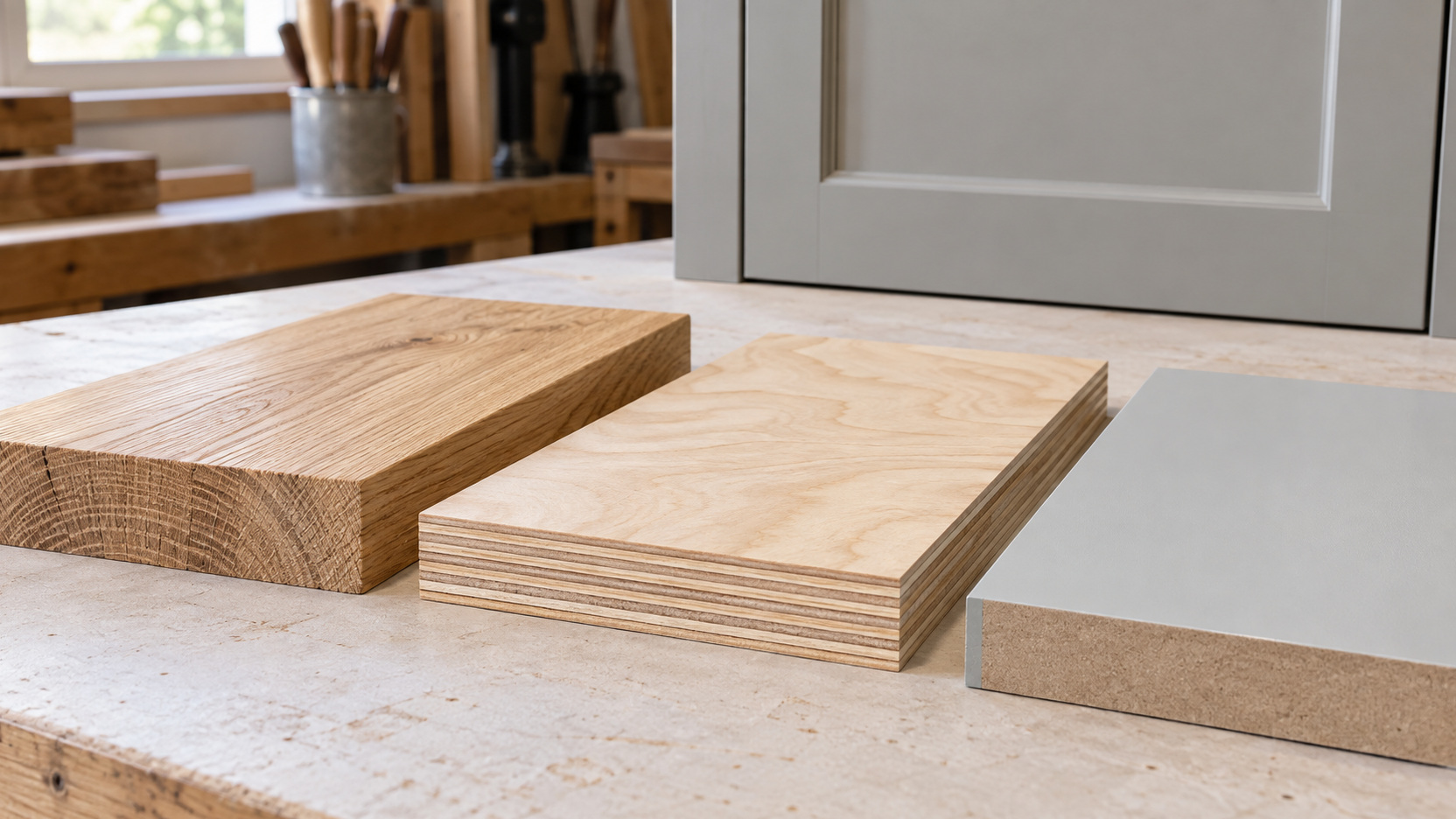
Solid wood and engineered panels can appear in different roles within furniture. Avoid treating the word engineered as a complete quality verdict or hardwood as proof of a lasting frame. Relevant information includes component use, connection design, and the maker’s intended loading and use conditions. A transparent explanation is more valuable than a simple ranking of material names.
Ask whether the provider can show construction photographs or a documented description for the selected model. Such information may clarify component roles that upholstery hides during a showroom visit. It should still be tied to the actual order rather than a generic factory image. Use it to support a focused conversation about the assembly, not to draw unsupported conclusions from a photograph of a different sofa.
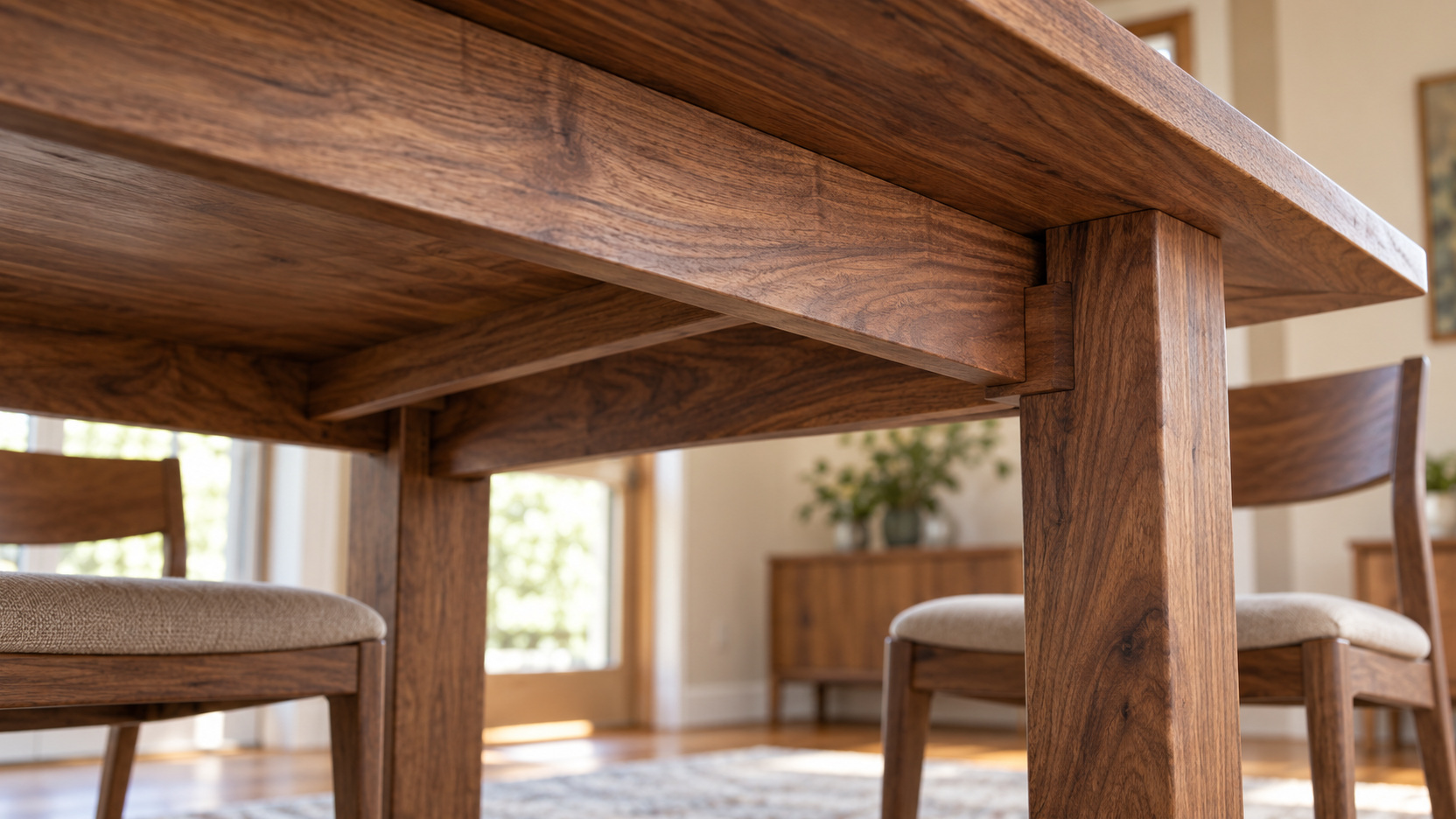
A useful construction answer might identify laminated hardwood rails, interlocking frame components, and reinforcement at the corners rather than only saying hardwood frame. Room & Board describes reinforced interlocking parts and corner blocks in its sofa-quality explanation. Those details show how material and connection work together. Compare them with a permitted construction image: a correctly fitted reinforcement is more informative than a decorative thick edge, while an unexplained opening joint needs assessment. Upholstery may hide the relevant areas, so request model-specific evidence rather than dismantling a display. A clear answer explains where the reinforcement is and which connection it supports.
Ask How Connections Are Made and Supported
Frame connections are where separate pieces must act as a coherent structure. A maker may describe joinery, fasteners, reinforcement, or adhesive as part of its method. Ask how those features relate to the assembly rather than collecting impressive terms. A named joint cannot establish execution quality without the rest of the construction context.
Reinforcement should have an identifiable role. For instance, a supplier might explain how a connection near a leg is supported or how an arm joins the seating frame. You do not need to become a furniture engineer to ask for that explanation. The point is to understand whether the provider can describe the load-bearing arrangement of the sofa you are buying.
Avoid destructive or exaggerated showroom tests. Rocking a sofa, levering an arm, or loading it beyond intended use can damage property and does not provide a controlled construction assessment. Use ordinary sitting and operation, then raise anything unexpected with the representative. If the product feels unstable or produces unexplained movement, obtain clarification before proceeding.
Understand What the Suspension Holds Up
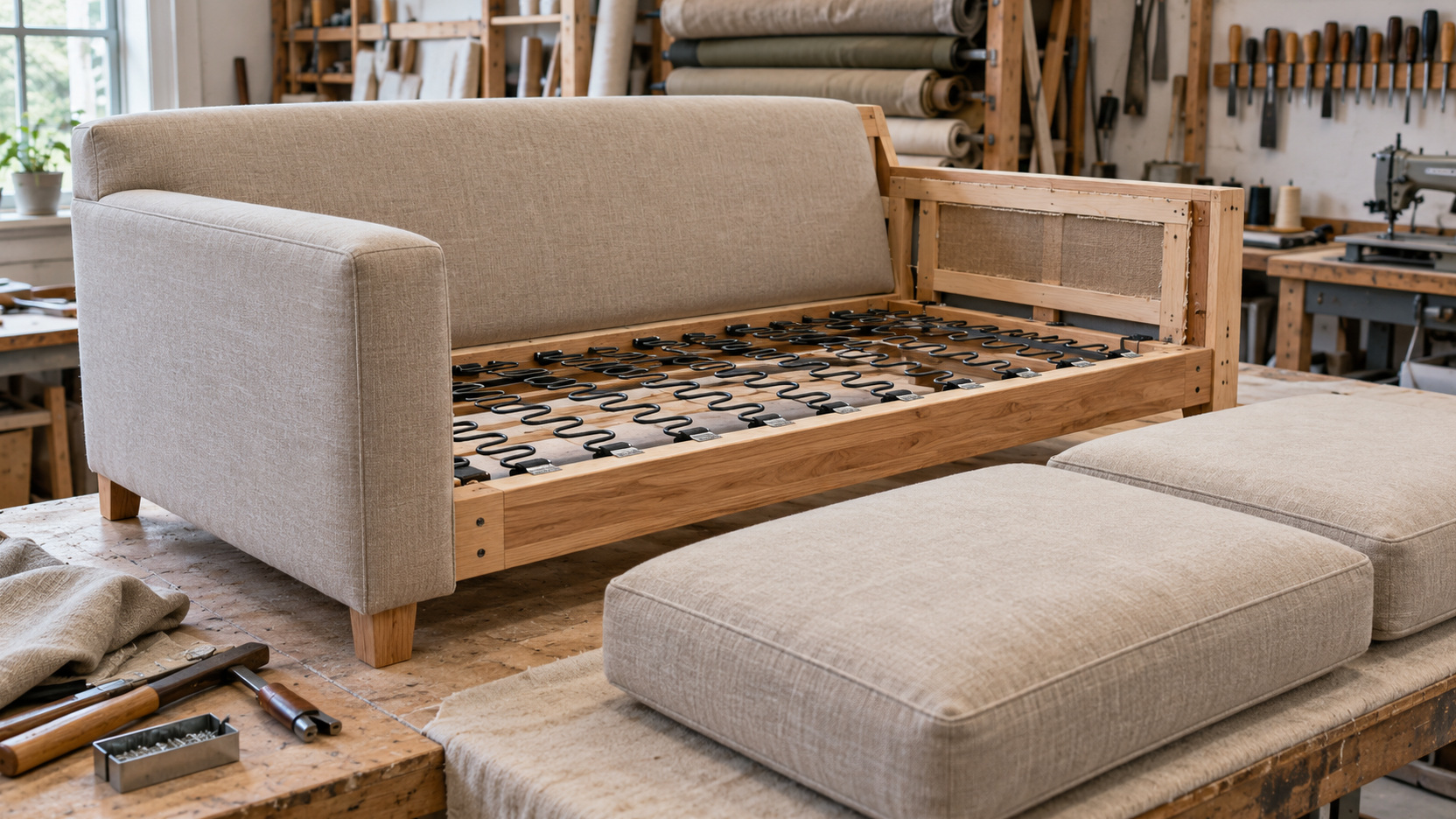
The suspension bridges the frame beneath the cushion. Sinuous springs use shaped wire members; webbing uses tensioned straps, and other sofa systems arrange support differently. Ask how the specified system is attached, supported across the seat, and serviced if a component changes. Do not infer quality from the name alone: spacing, attachment, frame support, and the cushion above all affect the complete seat. In a permitted ordinary sitting trial, an unexplained local drop or sharply different response between comparable seats calls for an explanation. The visible cushion can conceal that problem, so identify whether service concerns the insert or the support beneath it before treating extra padding as the answer.
Identify the Cushion Core and the Surrounding Layers
A cushion can combine a supportive core with softer surrounding material. That combination influences both the initial feel and the upkeep the maker expects. Ask what is inside the seat cushion, what surrounds it, and how the back cushions differ. A soft first impression may come from the outer layer rather than describing the whole cushion’s behavior.
The Linger example includes encased coils, high-resiliency foam, and surrounding fiber, feather, and down. Those are details about that offered cushion, not ingredients every lasting sofa must contain. Other constructions can serve different comfort preferences and maintenance routines. Compare the specified choices on their own terms and try the relevant configuration when possible.
Foam density measures mass per unit volume; firmness measures a different response to indentation. The Polyurethane Foam Association explains that higher polymer density generally helps retain the foam’s designed properties, while firmness can be independent of density. For a hypothetical sheet listing 2.2 pounds per cubic foot and a soft firmness, the two descriptions can therefore be compatible. Ask whether the density refers to the foam core and whether it is polymer density rather than added filler weight. Flex-fatigue information, when available, addresses changes in height or firmness under repeated compression. It still does not turn a density number into a guaranteed sofa lifespan. Interpret the core, its wrap, the suspension, and the actual sitting feel together.
Match Cushion Upkeep to Your Habits
Some cushions need regular reshaping or other prescribed care to retain the intended appearance and feel. Reversible or movable cushions may offer maintenance options, but only if their construction and instructions permit them. Ask what routine applies before choosing the fill. A cushion that suits your preferred softness may still be inconvenient if you dislike its expected upkeep.
Consider who will perform the routine and how accessible the cushions are. Large or heavy components may be awkward for the person doing most of the cleaning. Removable does not automatically mean washable, and a zippered cover does not define its permitted treatment. Keep the exact upholstery and cushion guidance together so maintenance remains practical rather than guessed.
Inspect Legs and Their Attachment in Context
Legs support the furniture as part of the whole assembly. Their material, attachment, and required fitting should be described in the product or installation instructions. Look for correct positioning and ordinary stability without trying to loosen or stress them. If legs are fitted during delivery, clarify who performs that work and how the completed setup is checked.
Examine Upholstery Beyond the Fabric Swatch
The cover needs to suit the way the sofa will be used and cared for. Look at the finished seams, alignment, and fit on a relevant showroom example, then ask which variations are expected. A small swatch cannot show how a material wraps around the arms or sits across a large cushion. Review both its appearance in the room and its documented care conditions.
Keep fabric performance claims tied to their actual meaning. A named treatment or test description may address one property without explaining every kind of household wear. Ask for the applicable information and avoid translating a single rating into a promised lifespan. Construction, use, cleaning, and exposure still contribute to the sofa’s experience in your home.
Think about how localized damage would be handled. A removable panel, replacement cover, or upholstery service may offer a route, but availability and matching need confirmation. Older material can differ in appearance from a newly supplied section. Knowing the possible outcome helps you decide whether the cover arrangement fits your expectations over time.
Give Mechanisms Their Own Examination
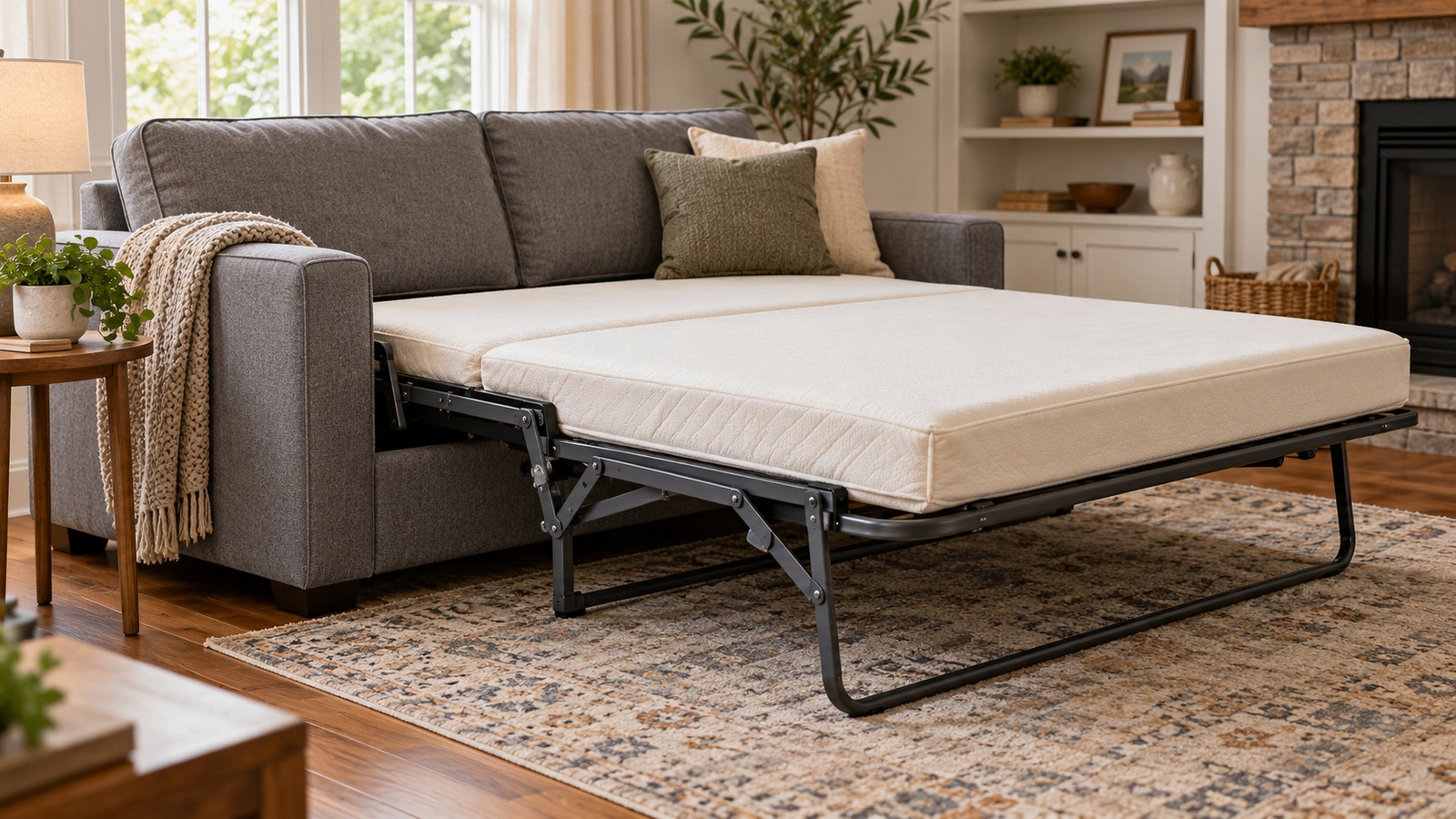
A sleeper, recliner, or adjustable feature adds another system to the sofa. Operate it as demonstrated and check the space it requires in the room. Ask about component service, fitting requirements, and access for repair. The construction conversation should include the mechanism rather than treating it as a bonus added to an ordinary sofa.
Confirm the exact operating configuration on the order. A mechanism may affect clearances, weight, delivery access, and how the furniture can be moved. Those conditions can influence whether the sofa works comfortably in your home even if its seating feels excellent. A complete purchase decision includes normal operation and future handling.
Verify What Can Be Replaced or Serviced
Serviceability is useful when the supply and fitting route is realistic. Ask whether seat inserts, covers, legs, or mechanism components can be obtained for the selected model. Availability may differ between parts and may change over time. Record the provider’s current information without turning it into a promise of indefinite supply.
The IKEA repair page offers an example of a retailer describing care and spare-part options for continued use. Apply that idea by asking specific service questions about the sofa you are considering. A general repair program cannot identify compatibility for your order by itself. Model records and defined components make later requests more manageable.
Review warranty coverage and the actual service process. A long term printed prominently may apply differently to frames, upholstery, mechanisms, and ordinary wear. Ask who assesses a claim, whether transport is involved, and what documents are needed. Warranty terms complement construction evidence rather than replacing it.
Compare Complete Seats Rather Than Isolated Claims
Sit on each shortlisted sofa in your usual positions and allow enough time to understand the support. Consider the height, depth, back angle, and arm arrangement alongside the construction information. Strong materials cannot make unsuitable geometry comfortable for your household. Test the exact cushion choice if it materially changes the experience.
Include other regular users in that evaluation when possible. Different bodies and sitting habits can produce different impressions of the same sofa. Discuss the compromises openly instead of seeking a universal comfortable specification. A sofa lasts usefully when people continue to enjoy using it, not merely when it remains intact.
Finish the comparison with a written summary of what each option offers. Record the actual frame and suspension description, cushion construction, upholstery care, fitting requirements, and service route. Note any missing information and decide whether it matters to your intended use. This summary is more reliable than recalling which salesperson used the most reassuring language.
Choose the sofa whose complete construction and fit support the job you need it to do. Arrange correct delivery and fitting, retain the product records, and follow the applicable care routine. No single material or component removes the effects of ordinary use, but a well-understood assembly gives you a better foundation for lasting service. The most useful quality claim is one you can connect to the furniture that arrives in your room.