Give the Cables a Deliberate Surface Route
Hiding TV wires without opening the wall starts with deciding where they should travel. A cable that takes the shortest path from the screen to an outlet may cut across the room’s most visible area, while a slightly longer route can follow the console, a wall edge, or a suitable cord cover. The aim is a calm-looking installation that remains accessible and works safely with the equipment. You do not need to pretend every wire has disappeared. When the visible route looks intentional and the excess stays organized, a television area can feel finished while the wall remains intact.
Map the Connections Before Buying Covers
Identify every cable leaving the television and the equipment it reaches. Include power, video connections, antenna or coaxial cables, and network connections where present. Follow each lead rather than guessing from its color. Similar-looking cords can serve different purposes, and a route plan depends on knowing which ones actually need to travel together.
Remove disconnected accessories and unused leads if they are no longer part of the setup. Do this while the relevant equipment is safely powered down according to its instructions. Keep any cable you may need later in a separate labeled storage location. A cover chosen for an unnecessary bundle can be larger and more noticeable than the room requires.
Mark the practical endpoints in a sketch or photograph of the room. Consider the TV connections, console access, and existing outlet position. Those endpoints matter more than a perfectly symmetrical line on the wall. The cleanest workable route often follows the equipment arrangement already available rather than forcing the furniture to disguise an awkward cable path.
Choose What Needs Concealing First
Look at the television area from the sofa and the main doorway. Those viewpoints reveal which stretches draw attention during everyday use. A short vertical drop below a wall-mounted screen may be the main distraction, while a cable behind a console is barely visible. Prioritize the exposed section before organizing every hidden inch to the same standard.
Notice whether a particular wire hangs loosely or contrasts strongly with the background. Sometimes supporting it along an existing furniture edge reduces the distraction without adding a wall cover. Test the proposed visual route before attaching anything. A deliberate line can look better than several small concealment products scattered around the TV.
Use Furniture as Part of the Path
A media console can provide a useful transition between the television and nearby connections. Guide suitable cables behind its structural edges or through openings designed for them, while leaving ventilation and equipment access clear. Avoid trapping a cord under the furniture’s weight or bending it sharply around an edge. The console should support the route, not hide damage or make a connection impossible to inspect. Leave enough access to move equipment for routine maintenance without pulling on the television ports.
Select a Cover for the Actual Cables
Compare a cord cover’s intended use, capacity, and mounting method with the route you mapped. A product described for one kind of cable is not automatically suitable for every combination in an entertainment setup. Read the manufacturer’s instructions about permitted cables and any separation requirements. Check that the base and cover can close without compressing the bundle.
Measure plug and connector access as well as the cable itself. The wire may fit inside a channel while an end connector cannot pass through a narrow opening. Consider how the cover opens for future changes. A system that can be accessed along its length may make maintenance easier than a route that requires disconnecting everything.
Do not assume that a TV cord-cover kit is adhesive-mounted or removable without tools. For example, Legrand’s CMK30 product information describes a paintable cover, while its mounting arrangements must be checked against the instructions. Product details matter more than a broad category name. Choose a method compatible with your wall and permission to attach items.
Separate an Intact Wall From a Damage-Free Promise
Not cutting into a wall does not necessarily mean leaving its finish untouched. Screw-mounted covers make small fixing holes, and adhesive-backed products can affect paint or wallpaper during removal. Read the removal instructions before choosing the attachment method. In a rental, confirm the permitted approach rather than relying on a product’s tidy appearance.
Check whether the surface meets the attachment manufacturer’s requirements. Texture, dust, fresh paint, and unsuitable finishes can affect performance. Follow the specified preparation and waiting conditions instead of adding stronger tape as an improvised fix. If the surface is unsuitable, consider a furniture-supported route or another approved attachment method.
Plan the Path Before Fixing Anything
Lay out the proposed route temporarily and inspect it from the room’s main viewpoints. Keep temporary materials away from hot equipment and avoid anything that damages the wall. Check that furniture can sit in its normal position without crushing the route. This rehearsal can reveal an awkward corner or an outlet that becomes inaccessible.
Use the fittings made for the chosen system when a route needs to change direction. An improvised sharp turn can make a cover difficult to close and put pressure on cables. Follow the product guidance for cutting and joining sections if that is part of its design. Do not force a straight channel around a corner it was not intended to handle.
Consider whether one simple vertical route or a longer route along an edge looks more balanced. The best choice depends on the wall, console, and outlet positions. Avoid adding decorative complexity merely to make every inch invisible. A short, neat cover can be less distracting than a complicated path across the room.
Leave Slack Where the Equipment Moves
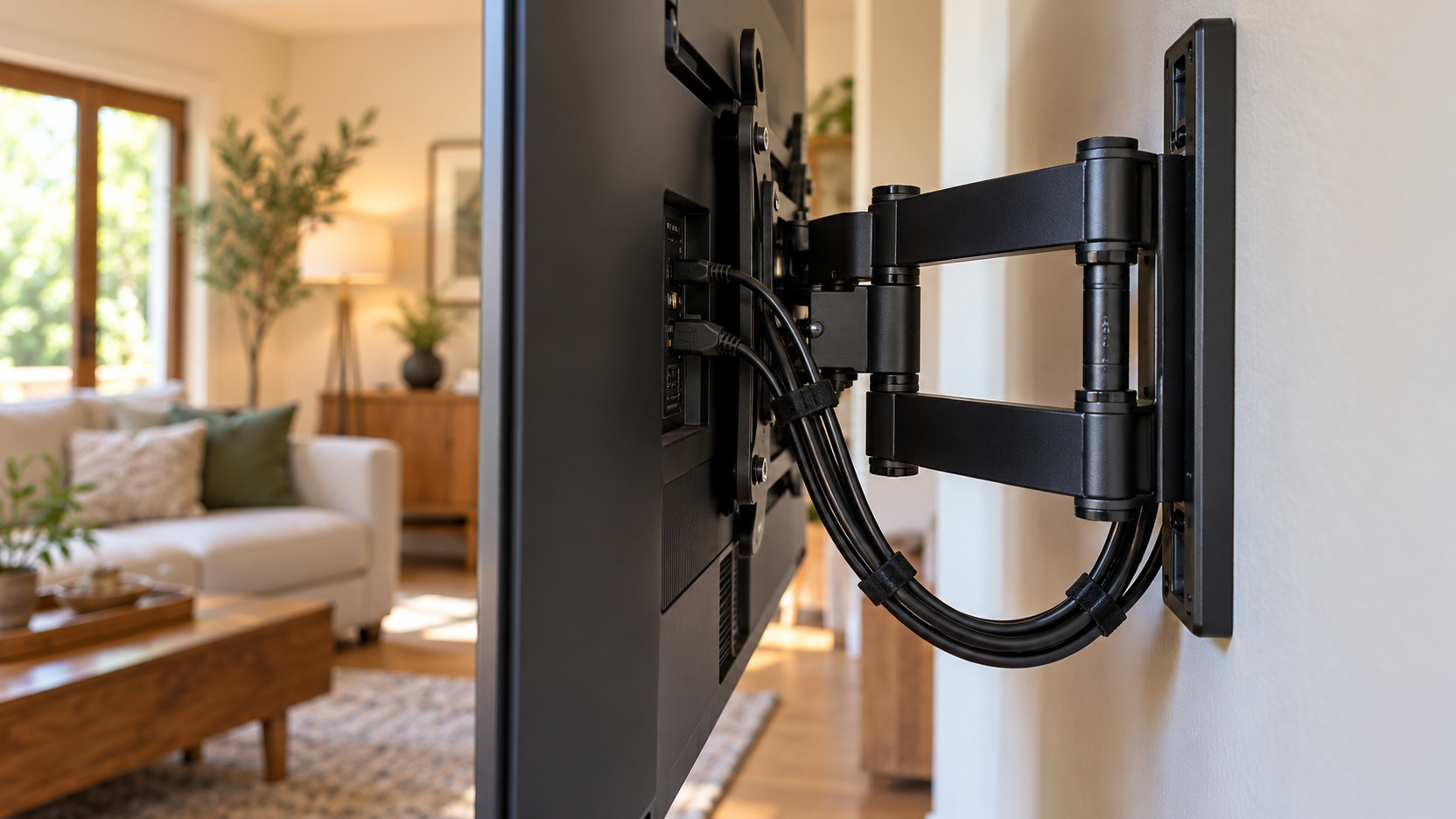
A television on an adjustable mount needs cable freedom throughout its approved movement. Test the route with the screen in the positions you normally use, following the mounting instructions and handling requirements. The cable should not become taut or snag at a hinge. Fixed furniture can also move during cleaning, so account for that ordinary motion.
Support excess length near a suitable accessible point rather than letting it hang in the visible drop. Use an organizer appropriate for the cable and avoid overtightening it. Keep connectors free from the weight of a hanging bundle. A little planned slack is better than a perfectly straight line that pulls at a port.
Keep Power Connections Appropriate
Surface concealment does not turn an ordinary power cord into an in-wall installation. Keep the television’s supplied cord out of the wall cavity and use products only for their stated purposes. ESFI’s extension-cord guidance warns against routing extension cords through walls or using them as permanent wiring. If the existing outlet arrangement is unsuitable, discuss a proper solution with a qualified electrician instead of hiding the problem.
Do not put cables beneath rugs to remove them from view. Avoid pinching them in doors, furniture joints, or routes where people will repeatedly step on them. A neat-looking room should still allow damaged or overheated connections to be noticed. Replace or assess suspect equipment through an appropriate professional or manufacturer channel before concealing it.
Check access to the outlet and any permitted power-distribution equipment. A removable cover should not make routine disconnection impractical or encourage adding more adapters behind furniture. Review the electrical products’ instructions and ratings for the actual equipment. Cable organization is a finishing step after an appropriate power arrangement exists.
Blend the Route With the Room
Choose a cover color that relates to the surface it crosses. A wall-colored vertical section usually draws less attention than a strongly contrasting one, while a furniture route may suit the console finish. If a product is paintable, follow its instructions for compatible paint and preparation. Do not paint electrical plugs, ventilation openings, or the cables themselves.
Organize What Remains Behind the Console
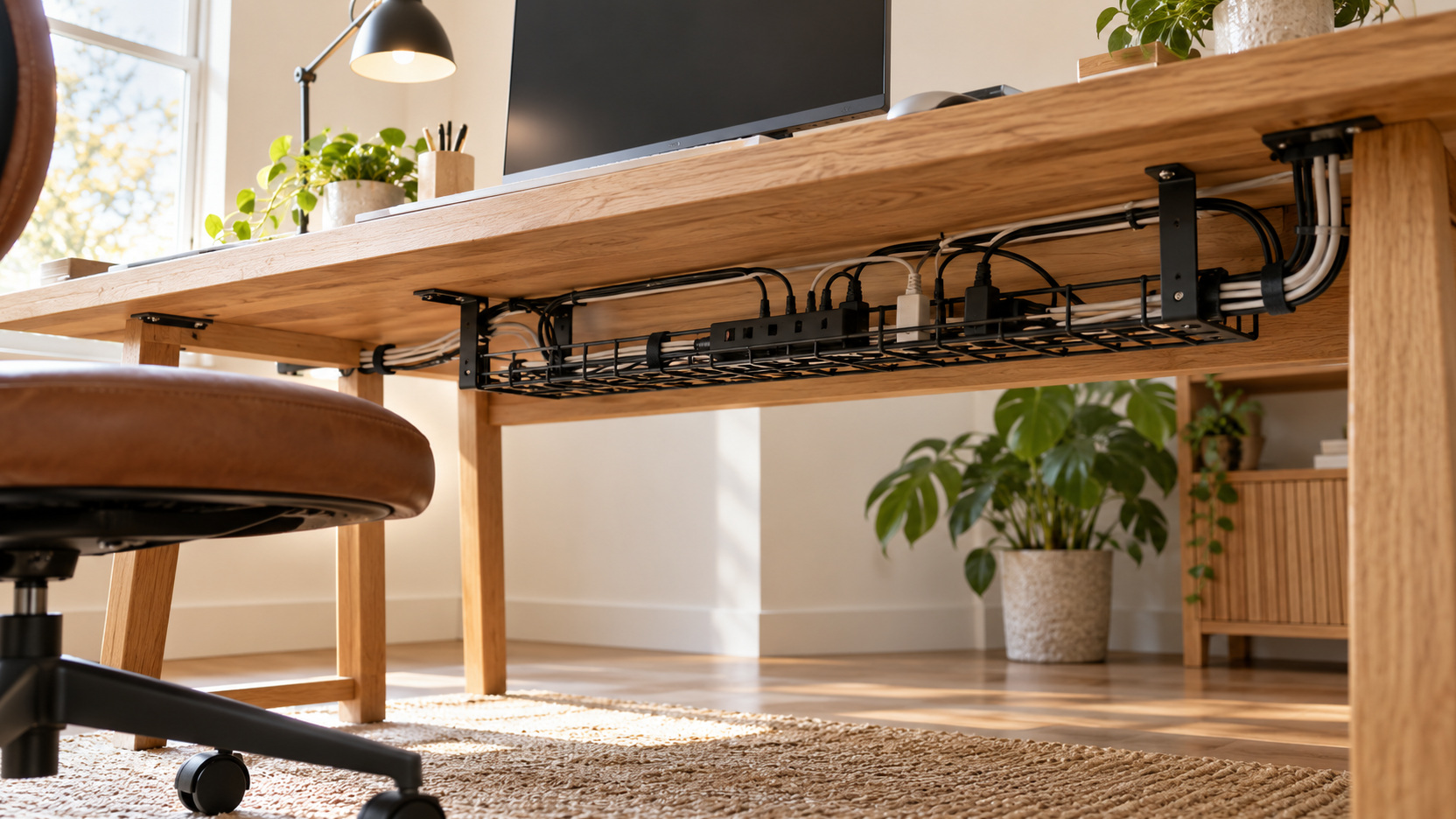
Gather only the excess length you need to manage, using loose, accessible loops suitable for the cables. Keep power adapters in positions that meet their ventilation guidance. Avoid turning several separate connections into one tightly compressed mass. The hidden area should remain understandable when an app player or game console needs replacing.
Label the ends of easily confused leads if that will help future maintenance. Use labels that do not interfere with connectors or cable flexibility. Keep the labels inside the accessible equipment area rather than adding visual clutter to the wall. A small connection record can reduce unnecessary unplugging when the family adds a device.
Finish With a Normal-Use Inspection
Turn the equipment back on and check the functions that depend on each routed cable. Watch a program, confirm sound, and test any connected console or antenna input the household uses. Move the television only within its supported range and inspect the slack again. A route that looks good when the screen is stationary may need adjustment when the mount turns.
Stand back from the sofa and doorway after everything is operating. Check whether the cover follows a clear line and whether an overlooked loose section still attracts attention. Make small corrections rather than rebuilding a functional route for perfection. The room should feel tidier without making the setup fragile or difficult to maintain.
Ask another household member to find the connection for a frequently used device. If they cannot trace it without pulling at the bundle, improve the labels or access. A clear route should remain understandable to the people who share the room.
Keep Removable Routes Useful in a Changing Room
For a rental living room with a television on its existing stand, a suitable furniture-mounted route may be enough. Let the fixed leads follow the console’s back edge with approved support, and keep regularly changed device-side plugs accessible in the equipment area. This reduces the exposed diagonal lines without assuming permission to attach anything to the wall. Check the organizer’s material and removal instructions against the furniture finish.
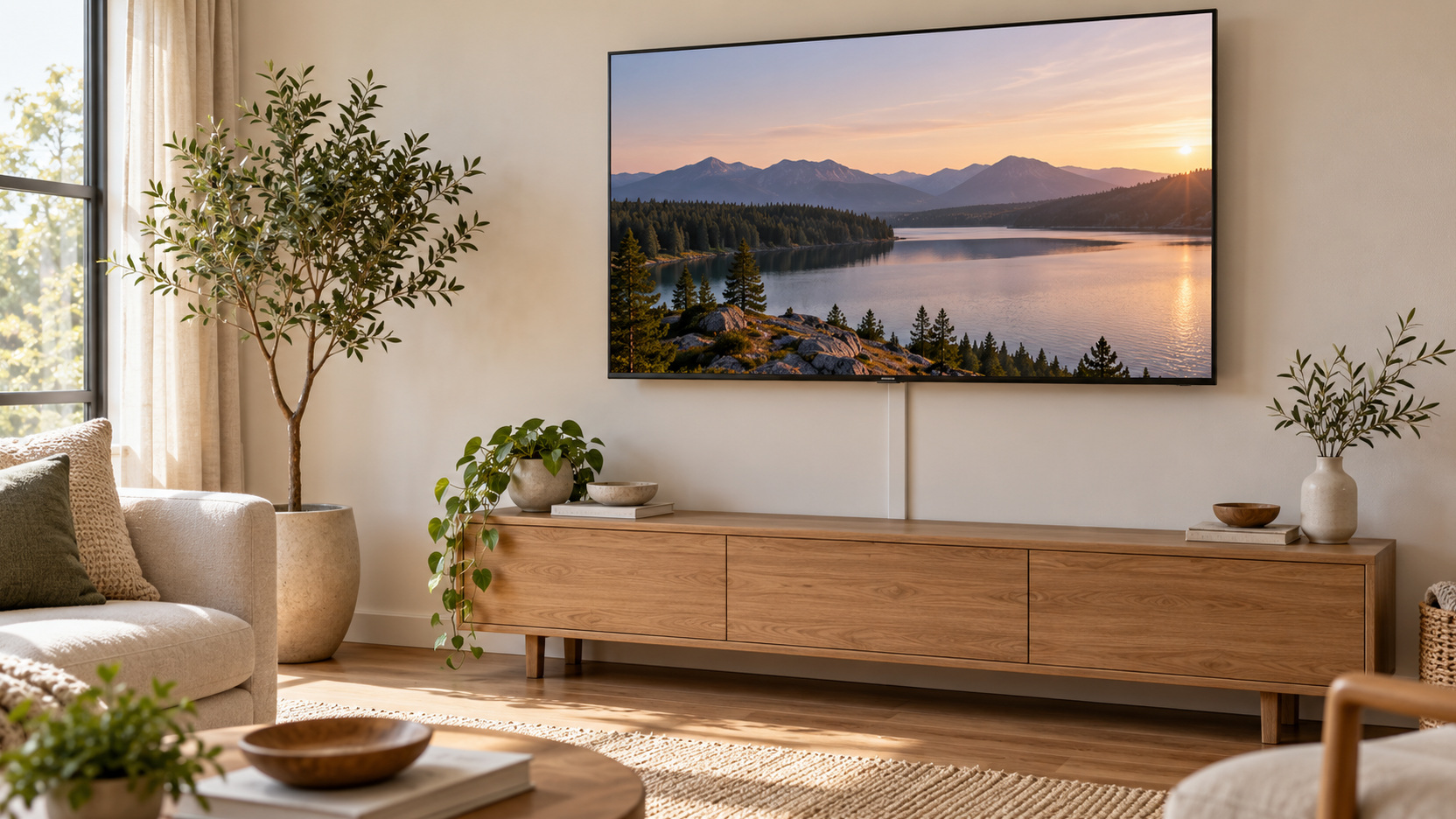
For a wall-mounted television, an appropriate surface cover may handle the visible span down to the console, while the console area remains the place for serviceable connections. Select the cover for its intended use, capacity, attachment method, and surface suitability. Its removal guidance matters in a rental even if the fitting is described as temporary. Do not assume that an adhesive product will leave every painted finish unchanged.
Trial the route with normal furniture movement before treating it as settled. Pull the console only as its handling and cable arrangement allow, then check whether a connection becomes taut or a cover would prevent access. If the household often swaps players, the stable wall span and changeable device ends should have different roles. A simple route that accommodates those changes is easier to maintain than layers of covers added to conceal each successive rearrangement.
After the first cleaning session, inspect the supported path and its accessible ends. A displaced clip identifies a particular support point to improve; it does not require tightening the whole bundle. Check that returning the console to its normal position leaves the device-side connections reachable, without pressing a plug against the furniture or pulling the fixed span. The practical result is a discreet route the household can understand and adapt.
Make Future Changes Easy
Keep spare fittings and the cover’s installation instructions with the household’s equipment information. They may be useful when a new player changes the cable bundle or furniture shifts a few inches. Record the attachment method so removal can follow the correct guidance later. A successful intact-wall route can adapt because its connections are accessible, its purpose is clear, and the family can maintain it without reopening the whole arrangement.